Eye Cancer in Dogs: Types, Symptoms, and Diagnosis


razyph/iStock / Getty Images Plus via Getty Images
Eye cancer in dogs typically occurs on the eyelid or in the eye’s orbit (the bony socket containing the eye). Tumors can start in the eye (primary) or spread to the eye from elsewhere in the body (secondary).
Key Takeaways
- Eye cancer in dogs is a medical emergency in which cells in or around the eye grow uncontrollably, creating a malignant (cancerous) tumor.
- There is no single cause of eye cancer in dogs, but factors such as UV light exposure, genetics, treatment for glaucoma, and viruses have been linked to the disease.
- Eye cancer recovery and management is different for every dog.
Summary
Eye cancer, also called ocular cancer, occurs when cells in or around the eye grow uncontrollably, creating a tumor.
Tumors can be noncancerous (benign) or cancerous.
Eye cancer in dogs is a medical emergency. If you notice any tumors or swellings in or near your dog’s eye, take them to a veterinarian immediately.
Types of Eye Cancer in Dogs
There are many types of eye cancer in dogs, including:
-
Melanoma: Melanoma is the most common type of ocular cancer in dogs and often occurs in the middle layer of the eye (uvea).
-
Adenocarcinoma: Adenocarcinoma is a common cancerous eyelid tumor that can also occur elsewhere. It typically does not spread.
-
Squamous cell carcinoma (SSC): SSC is often found on the eyelids or membrane that protects the eye (conjunctiva). SSC is usually slow-growing and does not spread.
-
Lymphoma: Lymphoma is the most common type of secondary eye cancer in dogs and involves the lymphatic system. It may occur in both eyes.
Other types of eye cancer in dogs include mast cell tumors, hemangiosarcoma, uveal schwannoma, and canine transmissible venereal tumors (TVT).
Symptoms
Symptoms of eye cancer in dogs include:
-
A visible mass
-
Squinting
-
Rubbing or pawing at the eye
Causes
There is no single cause of eye cancer in dogs, but factors such as UV light exposure, genetics, treatment for glaucoma, and viruses have been linked to the disease.
Labradors appear to be genetically predisposed to uveal melanoma, with younger individuals more likely to have an aggressively growing variety.
The Golden Retriever, Cocker Spaniel, and German Shepherd are similarly disproportionately diagnosed with uveal melanoma.
Dog breeds associated with outdoor activities may be more susceptible due to their increased exposure to UV light.
Blue-eyed dogs may be at higher risk for a rare eye cancer called uveal schwannoma of blue-eyed dogs. Siberian Huskies appear to be most often diagnosed.
Contrary to its name, cases have occurred in brown-eyed dogs.
Like most cancers, older dogs are more likely to be affected by the disease.
Diagnosis
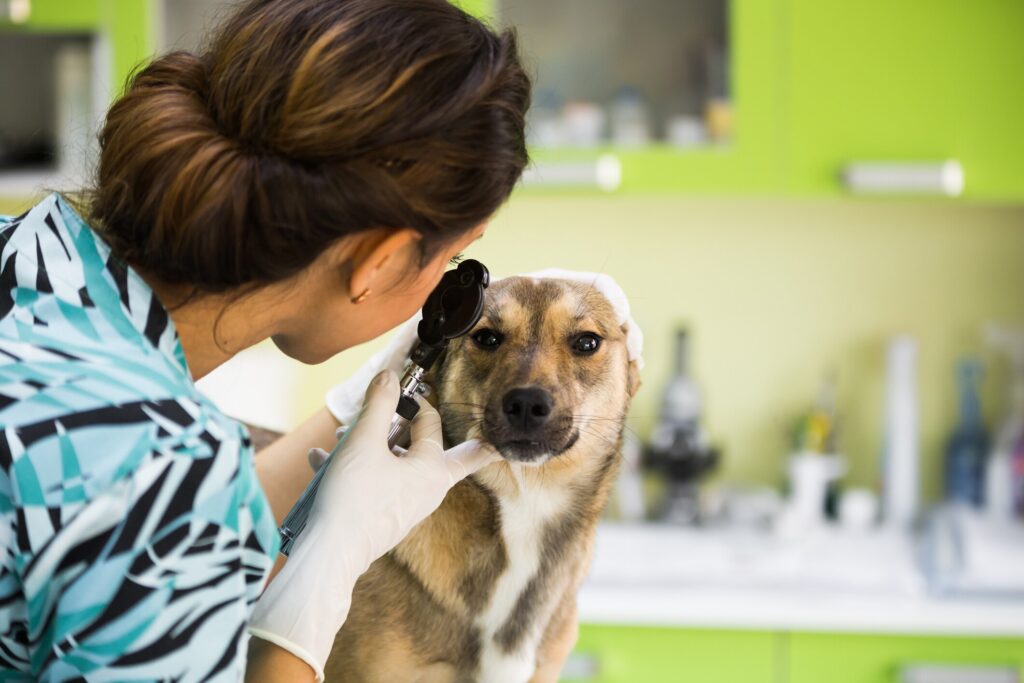
Your veterinarian will start with a physical exam, including an eye exam, and will evaluate your dog’s medical history.
You can help by confirming their medical history, along with any symptoms you’ve observed and when they started.
Blood work may be ordered to examine factors such as a white blood cell count, which can indicate that your dog’s body is fighting off malignant cell growth.
Eye cancer in dogs is a medical emergency. If you notice any tumors or swellings in or near your dog’s eye, take them to a veterinarian immediately.
Imaging tests may be ordered to confirm tumor presence, location, and extent. Imaging techniques may include ultrasound, computed tomography (CT scan), and magnetic resonance imaging (MRI).
A biopsy may be recommended to determine the type of eye cancer. Biopsies are commonly done via fine needle aspiration (FNA), which uses a small needle to collect cells from the tumor for viewing under a microscope.
The veterinarian may recommend eye removal (enucleation) prior to a definitive diagnosis, particularly if your dog has lost all vision. The extracted eye can then be examined by a veterinary pathologist for more information.
Your veterinarian may refer you to a canine oncologist or ophthalmologist at any point for more specialized care.
Treatment
Treatment of eye cancer in dogs depends on tumor location, type, size, aggressiveness, how long it has been present, and your dog’s overall health.
Surgery is common and many methods are available, with some used in tandem to fully remove a tumor.
-
Surgical excision: Surgical excision can often be used to remove eyelid tumors, such as melanoma. Surgical excision of tumors inside the eye may require the excision of eye structures, such as a partial iridectomy to remove part of the eye’s iris.
-
Enucleation: Tumors that have grown quickly, spread, are painful, or have led to complete vision loss may necessitate enucleation (removal of the eye).
-
Exenteration: More advanced tumors may require exenteration (removal of the eye socket and its surrounding tissues).
-
Cryosurgery: Cryosurgery harnesses extreme cold to kill cancer cells and may be used for tumors on the eyelid or surface of the eye.
-
Laser surgery: Laser surgery uses focused light energy to destroy cancer cells on the eye or eyelid or inside the eye.
Chemotherapy may be used when surgery is not an option, or in conjunction with surgery to treat aggressive eye tumors that have spread.
Dogs with more advanced or aggressive eye cancers who receive chemotherapy can have prolonged survival times of six months to two years.
Radiation is similarly used when surgery is not an option or additionally with surgery to target cancer cells.
Your veterinarian may refer you to a canine oncologist or ophthalmologist at any point for more specialized care.
Anti-inflammatory medications may be used to reduce inflammation and keep your dog comfortable.
Some eye cancers can be cured. For example, uveal melanoma does not typically spread and the prognosis for complete recovery is good. Alternatively, dogs with lymphoma have a poorer prognosis due to the cancer’s tendency to metastasize.
As part of your dog’s treatment and support plan, your veterinarian may prescribe medications, such as:
-
Corticosteroids, such as prednisone, to reduce inflammation.
- Topical steroid medications, such as dexamethasone ophthalmic solution.
Recovery and Management
Eye cancer recovery and management is different for every dog.
Recovery from surgery can take several weeks.
Your dog’s veterinarian will schedule an aftercare appointment 10 to 14 days after surgery to ensure your dog is healing and the surgery site is not infected.
Chemotherapy may have unpleasant side effects for your dog, such as nausea and gastrointestinal upset.
Radiation treatment for eye cancer can have immediate side effects, such as inflammation, vision loss, and chronic dry eye, as well as long-term side effects such as cataracts.
You can help your dog during their treatment and recovery by providing them with a quiet area with a bed and water and food bowls, along with regular bathroom opportunities.
Most dogs adapt well to vision changes and loss but may need extra support navigating and in adjusting to their surroundings.
Rates of recurrence depend on your dog’s type of eye cancer, its nature, and their treatment plan.
For example, surgical removal of eyelid adenocarcinoma is typically successful, but it has a high rate of recurrence if tumor cells are left behind.
Regularly scheduled appointments to check for signs of tumor recurrence or growth will likely be needed for the remainder of your dog’s life.
Your veterinarian may suggest products or medications to help your dog during their recovery process, such as:
-
Nonsteroidal anti-inflammatory drugs, like meloxicam, for pain relief
- A recovery cone to prevent your dog from disturbing the affected site
- A pet gate to keep your dog contained to one area during recovery
- A waterproof bed for rest
Prevention
Eye cancer in dogs does not have one known cause, but steps can be taken to help prevent the condition:
-
Schedule routine vet appointments to help catch any abnormalities with your dog’s eyes early on to improve their prognosis.
-
Protect your dog’s eyes from UV light by providing shady areas outside or outfitting them with protective eyewear, like Rex Specs.
Eye Cancer in Dogs FAQs
What does cancer in a dog’s eye look like?
Eye cancer in dogs can present as a mass of cancerous cells in or around the eye; it may or may not be visible to the human eye.
Eye cancer can cause symptoms such as swelling, excessive tearing up, discoloration, and bulging of the eye along with vision impairment and pain.
Can a dog survive eye cancer?
Many common types of eye cancer in dogs have high survival rates depending on the size, extent, and behavior of the tumor.
Early diagnosis is key to improving the likelihood of a positive outcome.
What is the cost of dog eye tumor removal?
The cost of dog eye tumor removal depends on tumor size, location, and postoperative support, among other factors.
Typical costs range from $500 to $2,000.
References
Baba AI, Câtoi C. Ocular and Otic Tumors. Comparative Oncology. The Publishing House of the Romanian Academy; 2015.
Brooks W. Eye Removal (Enucleation) in Pets. Veterinary Partner. Published January 1, 2001. https://veterinarypartner.vin.com/default.aspx?pid=19239&id=4951449
Conceição LFD, Ribeiro AP, Piso DYT, Laus JL. Considerations about ocular neoplasia of dogs and cats. Ciência Rural 2010;40:2235–2242.
Gelatt KN. Cancers and Tumors of the Eyes in Dogs. Merck Veterinary Manual. Published June 2018. https://www.merckvetmanual.com/dog-owners/eye-disorders-of-dogs/cancers-and-tumors-of-the-eye-in-dogs?query=eye%20cancer%20in%20dogs
Hamor RE. Ocular Neoplasia in Dogs. Merck Veterinary Manual. Published March 2022. https://www.merckvetmanual.com/eye-diseases-and-disorders/neoplasia-of-the-eye-and-associated-structures/ocular-neoplasia-in-dogs?query=eye%20cancer%20in%20dogs


