Anxiety Disorders in Cats


What Are Anxiety Disorders in Cats?
Cats are considered both predator and prey animals. This makes them especially prone to stress and anxiety because they must remain constantly vigilant.
While your cat likely doesn’t have to worry about wild animals interrupting their afternoon snooze on the couch, they can still be affected by anxiety disorders. According to some estimates, about 20–25% of feline veterinary patients exhibit anxious behaviors.
Feline anxiety is nervousness or worry triggered when a cat anticipates a danger or threat. This can occur even if no real danger is present. Anxiety causes the cat’s body to release hormones that prepare them to face the challenge or escape, typically referred to as the fight-or-flight response.
While an anxiety disorder is not a medical emergency for cats, prolonged stress can lead to serious health consequences, such as feline idiopathic cystitis (FIC) or dermatologic issues. Common anxiety issues in cats include:
-
General anxiety—Numerous issues can cause chronic generalized anxiety in cats.
-
Noise-associated anxiety—Many cats experience anxiety associated with loud noises.
-
Separation anxiety—Some cats experience anxiety when they are separated from their primary pet parent. Cats who are female, who live in a home with only one person or with no other pets, or who were abandoned are more likely to have separation anxiety. In addition, Siamese, Burmese, and Tonkinese cats seem to have a high risk for the condition.
-
Obsessive-compulsive disorder (OCD)—Some stressed cats develop OCD, a condition that causes them to exhibit excessive or repetitive behavior such as overgrooming, constant vocalization, and destructive chewing or scratching. Persians, Siamese, and Burmese cats are predisposed to OCD.
Symptoms of Anxiety Disorders in Cats
The symptoms a cat has of an anxiety disorder can depend on what is causing the anxiety. Cats who have separation anxiety, for example, may be extremely clingy and become agitated when they anticipate their favorite pet parent’s imminent departure. But there are also a variety of possible generalized signs when cats feel anxious.
Other feline anxiety disorder signs can include:
-
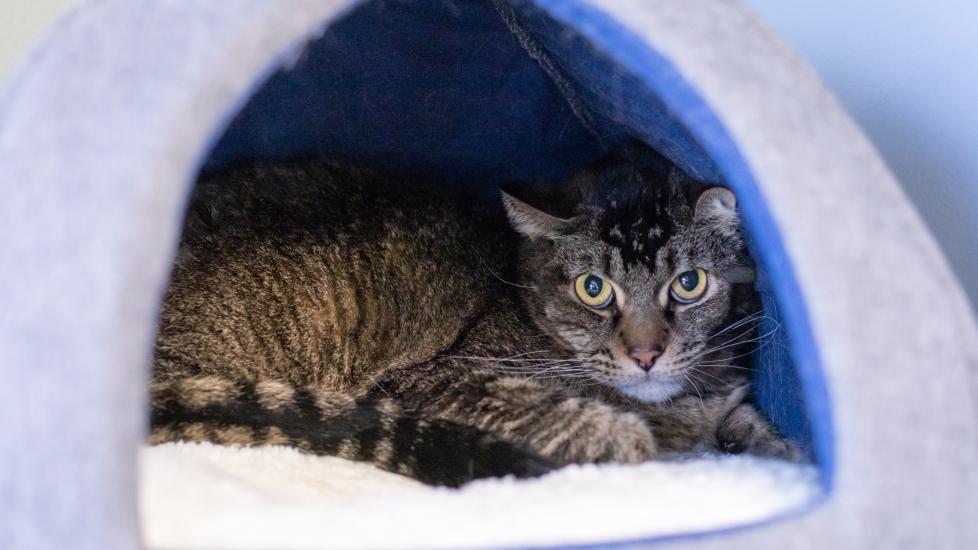
Body language changes—Your cat can’t speak, but they can tell you how they are feeling through their body language. Signs that indicate your whiskered friend is anxious include keeping their tail close to their body, avoiding eye contact, having dilated pupils, flicking their tail, staring, or holding their ears back.
-
Hiding or escaping—When threatened, many cats hide, and they may scratch or chew on doors or windows if they feel trapped.
-
Inappropriate urination—Anxious cats often avoid their litter box.
-
Overgrooming—Self-licking calms cats, and an anxious cat may groom excessively, in some cases causing hair loss or wounds at the grooming site.
-
Excessive vocalization—Cats often meow to get your attention, but anxious cats often meow excessively and typically in a different tone than their usual meow.
-
Appetite changes—As in humans, anxiety can cause your feline friend to eat less or more than usual.
-
Gastrointestinal (GI) issues—Some anxious cats experience GI issues such as vomiting or diarrhea.
-
Reactivity—Anxiety may make your cat act reactively toward you or other pets or people in your home.
Causes of Anxiety Disorders in Cats
Numerous factors can trigger a cat’s anxiety. Common causes of feline anxiety disorders include:
-
Illness—Any health problem can lead to feline anxiety, so if your cat is showing symptoms of anxiety, schedule an appointment with your veterinarian as soon as possible.
-
Pain—Arthritis is extremely common in cats, but they often show no physical signs, such as limping, to indicate they’re in pain. If left untreated, chronic pain can cause significant anxiety.
-
Trauma—If your cat undergoes a traumatic event, the fear they experience may trigger anxiety.
-
Loud noises—Loud noises such as thunder, fireworks, the vacuum cleaner, or nearby construction can cause phobia-type anxiety.
-
Change—Any change to your feline friend’s environment or schedule can lead to an anxiety problem. Examples include rearranging the furniture, visiting the veterinarian, introducing a new pet to the family, and children going back to school.
-
Improper socialization—Kittens should be exposed to numerous sights, sounds, and situations for the first several months of their life. If they aren’t properly socialized, new experiences can make them anxious.
-
Separation—If your cat is overly attached to you, they may experience anxiety when you are separated.
How Veterinarians Diagnose Anxiety Disorders in Cats
Seek veterinary care if your cat is showing signs of anxiety. Providing your veterinarian with a thorough history of changes in your cat’s environment helps them determine the cause of your cat’s anxiety. In addition, a video of your cat behaving anxiously is helpful.
Because illness and pain often cause feline anxiety, your veterinarian will perform diagnostic tests—which may include blood work, urinalysis, and X-rays—to rule out any underlying health issues.
Treatment of Anxiety Disorders in Cats
Any underlying health condition should be addressed as the first step in treating your cat’s anxiety disorder.
If your veterinarian determines that a health issue is not causing your cat’s anxiety disorder, the following treatment management strategies may be recommended to alleviate your cat’s anxiety:
-
Preventing exposure—When possible, prevent exposure to whatever triggers your cat’s anxiety.
-
Medication—Anti-anxiety medications and antidepressants can help manage your feline friend’s anxiety disorder. Your veterinarian can determine the right medication and dose for your cat.
-
Behavior modification—Techniques to modify your cat’s behavior can also help lessen their anxiety. Approaches include:
-
Desensitization—Desensitization involves exposing your cat to their anxiety trigger at a low enough level that they don’t react, and gradually increasing the intensity. For example, if your feline friend is afraid of a certain noise, play a recording of the noise at a low level and gradually increase the volume as long as they don’t show anxiety signs.
-
Counterconditioning—Through counterconditioning, you help your cat form a positive association with their anxiety trigger. For example, if your cat is afraid of the vacuum cleaner, give them a treat before and after you vacuum the house.
-
If these methods don’t successfully assuage your kitty’s anxiety or fears, and their anxiety disorder is affecting their (and possibly your) quality of life, it’s time to seek the help of a veterinary behaviorist.
Recovery and Management of Anxiety Disorders in Cats
Treatment for feline anxiety disorders is often long-term, and moderate or severe cases may require lifelong management.
Minimum treatment for mild cases typically lasts four to six months. To reduce your cat’s anxiety and stress, follow these tips:
-
Leave your cat’s carrier out so they aren’t frightened of it when they have to go to the veterinarian.
-
Don’t use incense, fragrance plug-ins, essential oils, or scented candles in your home—they can irritate your cat’s sensitive nose.
-
Ensure your cat’s litter box setup is acceptable by cleaning the box frequently, placing it in a convenient but quiet place, and providing at least two litter boxes for every cat in your home.
-
When having guests over, create a quiet cat-safe zone where your feline family member can stay during the gathering. Leave music playing at a low volume in that area to help mute the party noise.
-
Provide sufficient physical exercise and mental enrichment to prevent boredom and keep your cat engaged.
Certain over-the-counter calming products for cats can also help lower your kitty’s anxiety levels. Examples include:
-
Diffusers
Prevention of Anxiety Disorders in Cats
When adopting a new kitten, expose them to as many new experiences as possible. Teach your kitten to enjoy time alone by providing a fun food puzzle toy when you leave the house.
Anxiety disorders are a significant issue for our feline friends that can affect their health and quality of life. If you feel your cat is affected by an anxiety problem, contact your veterinarian to rule out a medical issue and to get advice on how to help relieve your whiskered friend’s stress.
Anxiety Disorders in Cats FAQs
Can cats have panic attacks?
Yes. Cats who have noise-associated phobias and other severe anxiety-related conditions experience feelings similar to those in people having panic attacks. This is why recognizing and treating these conditions is so important.
What's a natural way to help cats with anxiety?
Calming diffusers, collars, and sprays have synthetic feline pheromones to help your feline friend feel safe and secure, and calming supplements such as Zylkene® contain a natural ingredient found in cow’s milk that promotes relaxation in cats.
Featured Image: Cavan Images/iStock / Getty Images Plus via Getty Images