The Ultimate Guide to Cat Anxiety



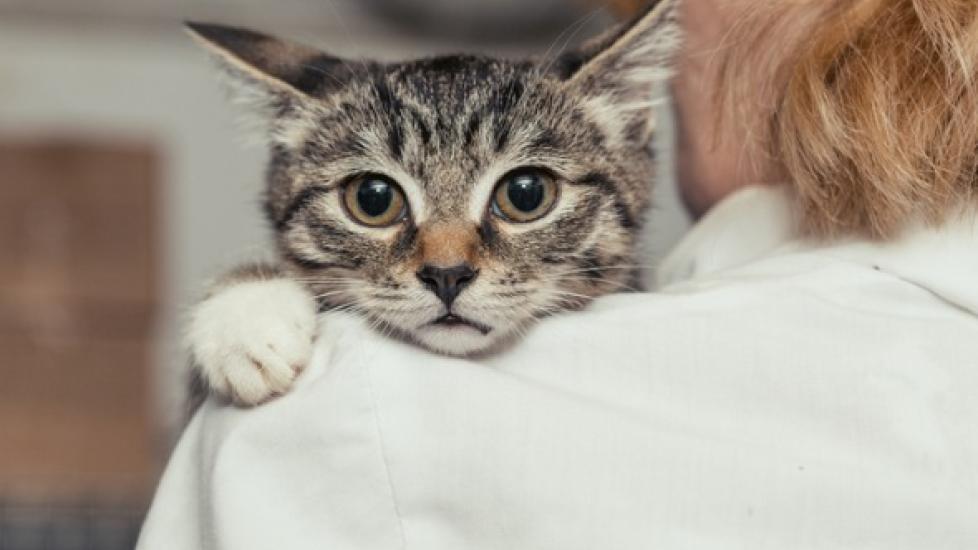
Anxiety is the anticipation of a danger or threat. So even though your cat is not actually in danger, they are anticipating it. Cat anxiety can cause bodily reactions and changes in your cat’s behavior.
An anxious cat may have physical reactions such as increased heart and respiratory rates, panting, trembling, and salivation. The most obvious behavior changes are increased movement, hiding, destruction, and excessive vocalization.
Many fears, phobias, and anxieties develop as a result of experiences in the first year of a cat’s life. Pet parents often first notice signs of cat anxiety between 5 months and 1 year of age. These anxieties usually get worse, or new concerns may develop when your cat is between 1 and 3 years old.
That’s why it’s important to take steps to treat your cat’s anxiety as soon as possible. This guide will explain common cat anxiety symptoms, what might be causing the anxiety, and treatment options you can try.
Signs of Cat Anxiety
If your cat has anxiety, you may notice pacing or restlessness, hiding, decreased appetite, vocalization, hypervigilance, trembling, salivation, and excessive grooming.
Here are some other signs of cat anxiety and fear, from mild to severe:
Mild Signs of Cat Anxiety
-
Avoiding eye contact
-
Shifting body or head away
-
Holding their tail close to their body
-
Slight tail flicking
-
Partially dilated pupils
Moderate Signs of Cat Anxiety
-
Ears partially to the side
-
Increased dilation of the pupils
-
Increased respiratory rate
-
Looking at the stimulus
-
Holding their tail tight against their body
-
Crouching and leaning away
Severe Signs of Cat Anxiety
-
Trying to escape or completely freezing in place
-
Fully dilated pupils
-
Holding their ears back
-
Hair standing up
-
Staring
-
Aggression
What to Do When Your Cat Is Anxious or Scared
If you see signs of anxiety, follow these tips.
Try Comforting Your Cat
When your cat is having a moderate or severe fear response, it is okay to attempt to comfort or soothe your cat. This does not “reward” the fearful behavior, contrary to popular belief.
Never Punish Your Cat
Absolutely avoid punishment for behavior related to fear, phobia, or anxiety, as this will only increase the fear response. It can even lead to aggression toward the person administering the punishment. This includes techniques like yelling at and squirting your cat with a water bottle.
Don’t Try to Confine Them
Don’t try to put your cat into a carrier when they are anxious, as not all cats calm down when crated. In fact, some panic when caged or confined and will injure themselves, biting or scratching at the cage until they have torn nails or broken teeth.
Causes of Cat Anxiety
Many things can cause cat anxiety, including:
Illness or Physical Pain
Any illness or painful physical condition can contribute to the development of your cat’s anxieties or exacerbate ones that already exist.
Aging-related changes in the nervous system, infectious diseases, and toxic conditions (such as lead poisoning) may lead to behavioral problems including fears, phobias, and anxieties.
Trauma
Fear often results from a traumatic experience.
Remember that an experience that didn’t seem traumatic to you may have seemed very traumatic to your cat—all that matters is that your cat found it traumatic, whether you think it was or not.
Improper Socialization
Cats that are deprived of positive social and environmental exposures during the socialization period (7 to 12 weeks of age) may become habitually fearful or anxious.
Cat anxiety and phobias can form when your cat can’t escape or get away from a stimulus, such as being confined during fireworks or living with a pet that frightens them.
Being Separated From You (Separation Anxiety)
Separation anxiety is a common specific anxiety in companion animals, making up 10-20% of cases referred to veterinary behaviorists. If a cat has separation anxiety, it means that when they’re alone, they exhibit anxiety or excessive distress behaviors.
Separation anxiety in cats can be caused by a history of rehoming, growing up in a home where people are home most of the time, having only one family member, and noise phobia. Being abandoned or rehomed because of separation anxiety can make it even worse.
How Do Vets Determine the Cause of Cat Anxiety?
Your veterinarian will first want to rule out other conditions that might be contributing to your cat's behavior, such as pain or thyroid disease.
This consists of a thorough physical exam, blood tests, and urine tests. Additional tests may be recommended depending on your cat’s results.
A thorough history is an essential part of establishing a diagnosis, and any videos you have of the behavior are also helpful. These will provide clues to the stimuli and situations that cause your cat to be anxious, if there is no medical cause found.
How Do You Treat Anxiety in Cats?
Treatment for behavior disorders like cat anxiety often involves a combination of management of your cat’s environment, giving supplements or medications for cat anxiety, and trying behavior modification. Any underlying medical conditions need to be treated as well.
If left untreated, these disorders are likely to progress. Most treatment options will be long-term, possibly years, depending on the number and intensity of symptoms and how long the condition has been going on. The minimum treatment averages four to six months.
Managing Cat Anxiety
Management involves avoiding situations that cause your cat fear or anxiety.
If your cat is severely affected and needs to be protected until medications can become effective, which can take several days to a few weeks, hospitalization may be the best choice.
Otherwise, you will need to care for your cat at home and provide protection from self-inflicted physical injury until your cat calms down.
Your cat may need to live in a protected environment with as few stressors as possible. A cat that has a fear of unfamiliar people, for example, should not be exposed to new houseguests.
Cat Anxiety Medicine
Most cats respond to some degree to a combination of behavior modification and treatment with cat anxiety medicine or supplements.
Medications like antidepressants take several weeks to work. They change your cat’s brain chemistry to reduce their stress. Some cats remain on them for years, and others can be weaned off after a few months.
The primary goal is for your cat to be calm and happy, not to turn them into a zombie or change their personality.
There are also shorter-acting medications for cat anxiety that work within one to three hours. These are good for predictable events that do not last very long. For example, your vet may prescribe something for your cat to take only before fireworks on the Fourth of July or before going to the vet.
As long as your cat is on medications, your veterinarian will want to follow up by conducting occasional blood testing to make sure your cat's blood chemicals stay in balance.
Behavior Modification to Relieve Cat Anxiety
If you try behavior modification, it will be up to you to put in the time and effort. As with all illnesses, it is best to start treatment early.
You will need to teach your cat some coping skills that can be used in a variety of settings. The goal of behavior modification is to change how your cat feels about a frightening stimulus (like thunder). This change improves a cat’s prognosis instead of indefinitely avoiding the stimulus.
Two methods of behavior modification that may be recommended by your vet are desensitization and counterconditioning. Both of these methods require specific timing and the ability to read your cat’s body language and decode your cat’s tail movements to notice the earliest signs of fear and stress.
Ask for help from your veterinarian or a veterinary behaviorist. If behavior modification does not work over the long-term, your veterinarian may want to modify the approach.
Desensitization
Desensitization is the repeated, controlled exposure to the stimulus that usually causes a fearful or anxious response. The key is that you expose your cat to the stimulus at a low level so that your cat does not show any signs of fear or stress.
A popular version involves playing a sound that your cat is afraid of at such a low volume that there is no fear or stress. After playing the sound three or four times at a low volume without a reaction, then you can increase the volume very slightly and repeat the process.
It is essential that your cat is showing no signs of fear or stress before you increase the volume. Note that desensitization does not mean exposing the cat to the frightening stimulus repeatedly and expecting their fear to suddenly resolve. This approach only makes your cat worse.
Counterconditioning
Counterconditioning alters the emotional response to a stimulus from a negative to a positive one.
For example, a cat that is afraid of the family dog could be fed her favorite treat every time she sees the dog. Over time, her response to seeing the dog can change from fear to the good feelings associated with the special treat.
Is There a Way to Prevent Newly Adopted Cats From Becoming Anxious?
When adopting a cat, look for one that is friendly with people and confident. The socialization period for kittens ends at 7 weeks old, but research has shown that proper socialization can benefit a cat up to 14 weeks old.
Expose your cat to a variety of social situations and environments in an overwhelmingly positive way when they are still young to decrease the likelihood of fearful behavior. This doesn’t mean forcing your cat to endure stressful situations. Remember that taking a cat into situations where it is clearly moderately or severely fearful for them will actually make things worse.
Featured Image: iStock.com/Okssi68