Pancreatitis in Dogs: Signs, Causes and Treatment



intek1/iStock / Getty Images Plus via Getty Images
Pancreatitis in dogs is inflammation of the pancreas that can cause abdominal pain, inappetence, and vomiting. Dogs with pancreatitis may also assume a “praying position,” with their hind end raised and their head bowed toward their front legs.
Pancreatitis can worsen quickly. Seek prompt veterinary care if you think your dog may have pancreatitis, as early intervention is critical for preventing worsening symptoms.
Key Takeaways
- Pancreatitis in dogs is inflammation of the pancreas that can cause abdominal pain, vomiting, inappetence, lethargy, and dehydration.
- Pancreatitis can be acute (sudden-onset) or chronic (long-term), with acute pancreatitis generally causing more serious clinical signs.
- Most cases of pancreatitis in dogs are idiopathic, meaning the cause cannot be determined.
- Treatment primarily involves supportive care, and severe cases may require hospitalization.
- Prompt veterinary treatment is important because pancreatitis can worsen quickly.
What Is Pancreatitis in Dogs?
Pancreatitis in dogs is an inflammatory reaction within the pancreas that can result in abdominal pain, inappetence, and vomiting.
The pancreas is an organ in the abdominal cavity. One of its roles is producing digestive enzymes, which help break down food products. When this normal process goes awry, the pancreas can become inflamed.
The inflammation results from the inappropriate, early activation of an enzyme within the pancreas, which causes the pancreas to digest itself.
Praying Position in Dogs With Pancreatitis
Dogs with pancreatitis may display a praying position. In this position, the dog raises their hind end in the air and bows their head down toward their front legs.
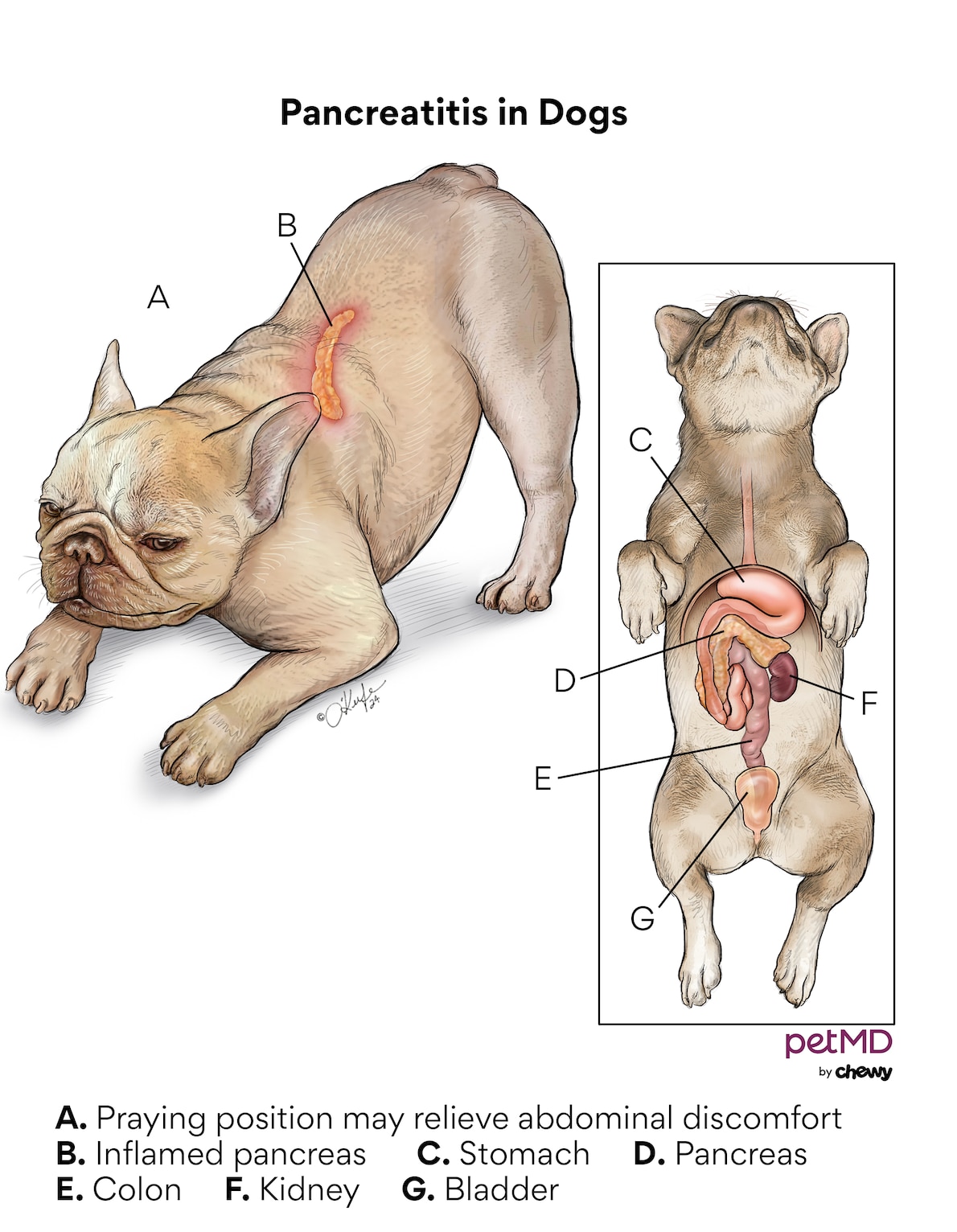
Download the medical illustration of pancreatitis in dogs.
This position relieves abdominal discomfort associated with an inflamed pancreas. Dogs with pancreatitis often experience significant dehydration because they are vomiting.
If left untreated, pancreatitis in dogs can become chronic and lead to weight loss and lethargy.
Seek prompt veterinary care if you think your dog may have pancreatitis. Early intervention is critical in helping dogs feel better and preventing worsening of symptoms.
What Are the Symptoms of Pancreatitis in Dogs?
Symptoms of pancreatitis in dogs depend on whether the condition is acute (sudden-onset) or chronic (long-term). Acute pancreatitis typically causes more serious clinical signs, while dogs with chronic pancreatitis are typically not as sick.
Acute Pancreatitis Symptoms
Clinical signs of acute pancreatitis in dogs may include:
- Severe lethargy
- Abdominal pain
- Persistent vomiting
- Diarrhea
- Severe dehydration
- Collapse and shock (sometimes)
Chronic Pancreatitis Symptoms
Clinical signs of chronic pancreatitis in dogs may include:
- Lethargy
- Decreased appetite or not eating at all
- Weight loss
- Abdominal pain and/or vomiting
In general, chronic pancreatitis in dogs is not as common as acute pancreatitis.
Dogs with chronic pancreatitis can suddenly develop worsening pancreatitis. In these cases, chronic pancreatitis presents acutely.
What Are the Signs of Worsening Pancreatitis in Dogs?
Signs of worsening pancreatitis in dogs include severe dehydration, lethargy, weakness, pain, and loss of interest in food.
Pancreatitis can worsen quickly if treatment is not started promptly after symptoms first begin. A dog that previously showed some interest in food may stop eating entirely as the condition advances.
If a dog's pancreatitis is worsening, hospitalization and supportive care are needed.
What Causes Pancreatitis in Dogs?
Most cases of pancreatitis in dogs are idiopathic, meaning the cause can't be determined. High-fat meals, certain breed predispositions, and some medications are also associated with pancreatitis.
Diet
Dogs diagnosed with pancreatitis may have eaten a high-fat meal or gotten into the garbage. However, this is not the most common cause of pancreatitis.
Dogs Predisposed to Pancreatitis
Some breeds are more prone to developing pancreatitis.
Miniature Schnauzers are a predisposed breed due to their tendency to have problems with high blood triglyceride levels.
Another example is the English Cocker Spaniel. Immune-mediated diseases—which result from abnormal activity of the immune system—are seen at a higher frequency in this breed, and the immune system attacking the pancreas is no exception.
Medications
Some chemotherapy medications and antibiotics can cause inflammation of the pancreas.
How Is Pancreatitis in Dogs Diagnosed?
Pancreatitis in dogs can be difficult to diagnose because the signs of illness are not specific to the pancreas. Pancreatic-specific blood tests and abdominal ultrasound can help with diagnosis, particularly in acute, severe cases.
Blood Tests
Routine blood tests are often not helpful in diagnosing pancreatitis. However, pancreatic-specific blood tests can be performed when a veterinarian has a high suspicion of pancreatitis.
Even these pancreatic-specific tests are not 100% accurate.
Abdominal X-Rays
Abdominal X-rays are also not very helpful in diagnosing pancreatitis in dogs.
However, in a dog that is vomiting, X-rays can be used to rule out a potential foreign-body obstruction of the intestine and/or stomach, such as something the dog ate.
Abdominal Ultrasound
The best method to image the pancreas is through abdominal ultrasound. However, the pancreatic tissue must be abnormal enough to be visible on ultrasound.
This is more common in dogs with acute, severe pancreatitis than in dogs with chronic, mild pancreatitis.
Overall, blood testing and abdominal ultrasound can be more helpful in diagnosing pancreatitis in dogs when the case is acute and severe.
How Is Pancreatitis in Dogs Treated?
Treatment for pancreatitis in dogs primarily involves supportive care, whether the condition is acute or chronic. Very mild pancreatitis may be treated on an outpatient basis, while severe pancreatitis requires hospitalization.
Supportive Care for Pancreatitis
Treatment for pancreatitis may include:
- Intravenous (IV) fluid and electrolyte support
- Pain medications
- Antinausea medications
- Stomach-protectant medications
- Nutritional support in the form of a feeding tube
- Appetite stimulants
- Antibiotics (sometimes)
- Immunosuppressants (in chronic cases)
How long treatment lasts depends on how severe the symptoms were when the dog arrived at the veterinary hospital and how long the symptoms had been present.
Diet for Dogs With Pancreatitis
A bland, low-fat diet is recommended during recovery. This may be a home-cooked and/or home-prepared diet.
A permanent diet change may be recommended, especially for predisposed breeds or dogs with a history of pancreatitis.
Cost of Treating Pancreatitis in Dogs
The cost of treating pancreatitis varies based on severity. Pet parents can expect to pay anywhere from $500–5,000 for treatment.
Recovery and Management of Pancreatitis in Dogs
The prognosis for dogs with pancreatitis depends on the severity of the illness. Dogs with mild pancreatitis generally recover within one to two weeks, while dogs with severe pancreatitis have a poor to grave overall prognosis and a higher risk of loss of life.
Recovery at Home
To help keep your dog comfortable during recovery, follow your veterinarian's instructions closely for prescription medications and provide your dog with a quiet space to rest.
Appetite stimulants, such as mirtazapine, may be helpful for dogs that are not interested in eating.
Recurrent Pancreatitis
Some dogs may experience multiple bouts of mild pancreatitis during their lives and benefit from a strict low-fat diet, such as Blue Buffalo Natural Veterinary Diet Gastrointestinal Support Low Fat Dry Dog Food, and management of any concurrent health issues.
Possible Complications
A dog that has recovered from even a single episode of pancreatitis may develop extensive scarring within the pancreatic tissue.
Scarring of the pancreas can lead to diabetes mellitus and/or a condition called exocrine pancreatic insufficiency (EPI).
The earlier the diagnosis and treatment, the better the chance for recovery.
How To Prevent Pancreatitis in Dogs
Pancreatitis in dogs can be difficult to prevent because most cases have unknown causes. However, avoiding table scraps and high-fat foods and managing underlying health conditions may help reduce your dog's risk.
Dogs with underlying health conditions, such as Cushing's disease, are at an increased risk of pancreatitis.
Bringing your dog to follow-up appointments and giving medications as prescribed for chronic health conditions will reduce their risk for pancreatitis.
Pancreatitis in Dogs FAQs
What are the signs of pancreatitis in dogs?
Signs of pancreatitis in dogs can include abdominal pain, vomiting, decreased appetite, lethargy, diarrhea, dehydration, and weight loss. Symptoms vary depending on whether the pancreatitis is acute or chronic.
What is the difference between acute and chronic pancreatitis in dogs?
Acute pancreatitis is a sudden-onset illness that typically causes more serious clinical signs, such as severe lethargy, abdominal pain, persistent vomiting, diarrhea, and severe dehydration.
Chronic pancreatitis is a longer-term illness that may cause lethargy, decreased appetite, weight loss, abdominal pain, and vomiting.
What does the praying position look like in a dog with pancreatitis?
A dog in the praying position raises their hind end in the air and bows their head toward their front legs. This position can relieve abdominal discomfort associated with an inflamed pancreas.
How long does pancreatitis last in dogs?
Dogs with mild pancreatitis generally recover within one to two weeks. How long treatment lasts depends on the severity of the symptoms and how long they were present before treatment.
Can pancreatitis in dogs be fatal?
Yes. Severe pancreatitis can have a poor to grave overall prognosis and a higher risk of loss of life. Dogs with mild pancreatitis generally have a better prognosis.


