Vomiting in Dogs



Nevena1987/E+ via Getty Images
What Is Vomiting in Dogs?
Dog vomiting, also called emesis, occurs when a pup’s body actively expels stomach contents. These contents may be partially digested food or liquid-like. Some dogs may vomit yellow bile or have vomit that contains blood or mucus, depending on the underlying cause.
In severe cases of vomiting, dogs may expel intestinal contents or feces rather than passing them normally in a bowel movement. Vomiting feces is uncommon but can be an indication that your dog may be eating fecal matter. It may even be a sign of a much more serious condition, such as an intestinal blockage.
Types of Vomit in Dogs
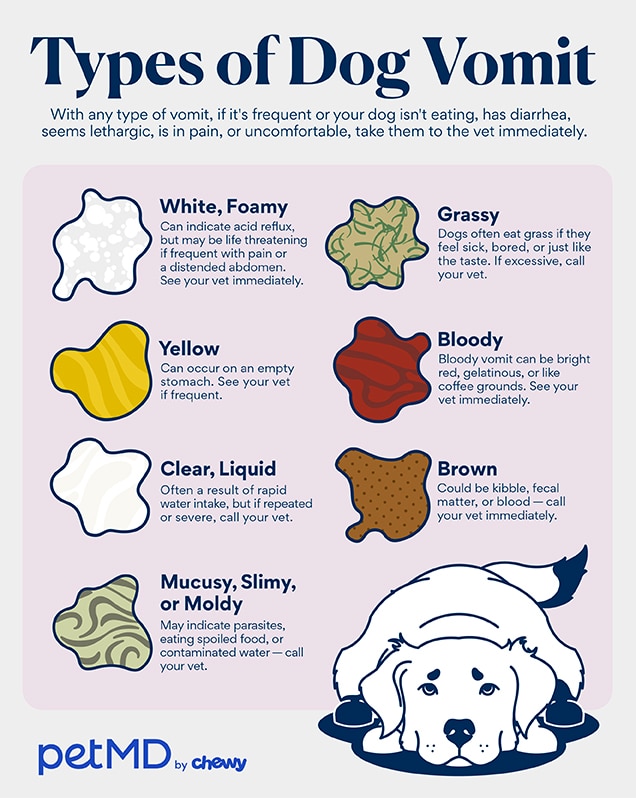
A few common types of dog vomit include:
Yellow Vomit
Yellow vomit can occur on an empty stomach if a dog has not eaten for a prolonged period. It may also occur after repeated episodes of vomiting, or due to acid reflux (GERD). If yellow vomit occurs infrequently and the dog is otherwise healthy, this doesn’t typically require a veterinary visit.
White, Foamy Vomit
White, foamy vomit may be a sign of acid reflux in some dogs, which may not require a veterinary visit if the episodes are infrequent. However, if foamy vomit is repeatedly expelled with no other contents, or if the dog has a distended abdomen or appears to be in pain, this could also be an indication of life-threatening bloat or gastric-dilatation-volvulus (GDV) and your dog should be taken to a vet immediately.
Clear, Liquid Vomit
Rapid intake of water with overexpansion of the stomach can lead to expulsion of clear, slimy fluid. If vomiting occurs as an isolated episode, veterinary attention is normally not needed. But if the dog has repeated or severe episodes of vomiting, call your vet.
Mucusy, Slimy, or Moldy Vomit
Vomiting of mucus, slime, or moldy stomach contents may occur secondary to parasites, ingestion of spoiled food or trash, or ingestion of contaminated water sources (such as lakes or puddles with visible surface algae). Take your dog to the vet.
Bloody Vomit
Take your pup to the vet immediately if your dog is vomiting blood. If possible, try to collect a small sample of bloody vomit in a clean sandwich baggie or container and take it with you to the vet. This can be helpful in identifying or ruling out the underlying causes.
Bloody vomit in dogs can be bright red, gelatinous, or like coffee grounds, depending on the location of bleeding in the digestive tract.
Brown Vomit
Brown vomit may be digested kibble, fecal matter, or digested blood from lower in the digestive tract, which may look like coffee grounds. If your pup is experiencing this type of vomit, take them to their vet immediately.
Grassy Vomit
Dogs may eat grass if they don’t feel well. However, a singular episode of grassy vomit is not a medical emergency. Some dogs will eat grass out of boredom, as a response to their body’s need for additional fiber, or because they like the taste or texture of the grass.
If you see your dog eating excessive amounts of grass—accompanied by foamy or bile-stained vomit—this may be a red flag that there’s an underlying medical issue, which should be evaluated by a veterinarian.
Health Tools
Not sure whether to see a vet?
My Dog Is Vomiting. What Should I Do?
A singular episode of dog vomiting isn’t always a medical emergency. You can manage vomiting at home by withholding food for a few hours or offering a bland diet and a high-quality probiotic supplement, such as FortiFlora®, for a few days.
After the vomiting stops, begin offering your dog a very small amount of a bland diet, such as cooked chicken breast and rice, and monitor for continued vomiting. You can allow your dog to continue to have access to fresh water, but offer only small amounts at a time. Another option is to offer ice cubes in a shallow dish to allow your dog to take in water more slowly as the ice melts.
Once your dog can consistently eat small meals and drink without vomiting (usually 24 hours at a minimum), slowly reintroduce their regular food by mixing it with the bland diet. This reintroduction should ideally take place over 24 to 48 hours.
If vomiting persists, contains blood, or if your pup ingested something toxic or an item that could cause a blockage, seek veterinary attention immediately. Dogs showing signs of bloat or GDV should also be treated as an emergency.
Causes of Vomiting in Dogs
Potential causes of dog vomiting include:
-
Bloat
Dog vomiting can occur in any age or breed, but there may be a slightly increased risk in young, unvaccinated puppies that are exposed to contagious disease or in immunocompromised senior dogs.
How Veterinarians Diagnose Vomiting in Dogs
It’s important to share any important information with your vet during your visit. Veterinarians diagnose dog vomiting and its underlying cause using certain tests, including:
-
A physical exam
-
Taking a complete medical history, including if your pup has ingested something they shouldn’t
-
A fecal exam
-
Blood work
-
Urinalysis
-
Ultrasound
-
Endoscopy
Treatment of Vomiting in Dogs
Treatment of dog vomiting includes:
-
Medications—Metoclopramide (if there is no intestinal blockage), Cerenia®, and ondansetron or dolasetron. Some medications are used to coat the stomach lining and protect against gastric ulcers, including sucralfate, famotidine and omeprazole.
-
Fluid therapy—This can be helpful if the dog is dehydrated.
-
Antacids—Antacids may be given to dogs if acid reflux is suspected.
-
Probiotics—To help restore “good” gut bacteria by prohibiting colonization of the intestinal mucosa with pathogenic bacteria.
-
Ginger—Fresh or powdered ginger is a safe, natural option for pups who are nauseated.
-
Giving your pup a bland diet—This can include giving your dog chicken, rice, scrambled egg, lean ground beef, plain yogurt, and plain canned pumpkin puree.
-
Natural nausea relief aids such as acupressure or aromatherapy bands can be used with supervision if a dog is still unable to hold anything down orally.
Additional recommended products to relieve dog vomiting include:
Recovery and Management of Vomiting in Dogs
The timeline of recovery for dog vomiting depends on the underlying cause.
However, dogs that have been treated for vomiting should be returned gradually to their normal diet over several days by mixing in small amounts of a bland diet. Adding probiotics to your pup’s routine is also helpful, as they assist in firming up stools.
Prevention of Vomiting in Dogs
There’s no foolproof way to prevent dog vomiting, but you can take steps to reduce or minimize your pup’s risk by following these guidelines.
-
Don’t change your dog’s food or treats abruptly.
-
Don’t feed spoiled or rancid dog food.
-
Don’t feed unhealthy human food. While giving your dog table scraps may seem like a treat for them, many human foods can cause vomiting, diarrhea, and pancreatitis.
-
Don’t allow pets to play with toys that are easily destroyed.
-
Probiotic supplements can help minimize the risk of a stress-induced colitis.
-
Keep all medications safely stored out of your dog’s reach.
-
If your dog does accidentally receive a double dose of their regular medication or you find that they have ingested a human medication, call the Pet Poison Helpline at 855-764-7661 and your regular veterinarian (or an after-hours emergency veterinary clinic) immediately.
-
-
Clean up all fecal matter in your yard.
-
Keep pesticides, household cleansers, automotive supplies, oil diffusers, household plants and flower bouquets out of your dog’s reach.