Dandruff in Cats


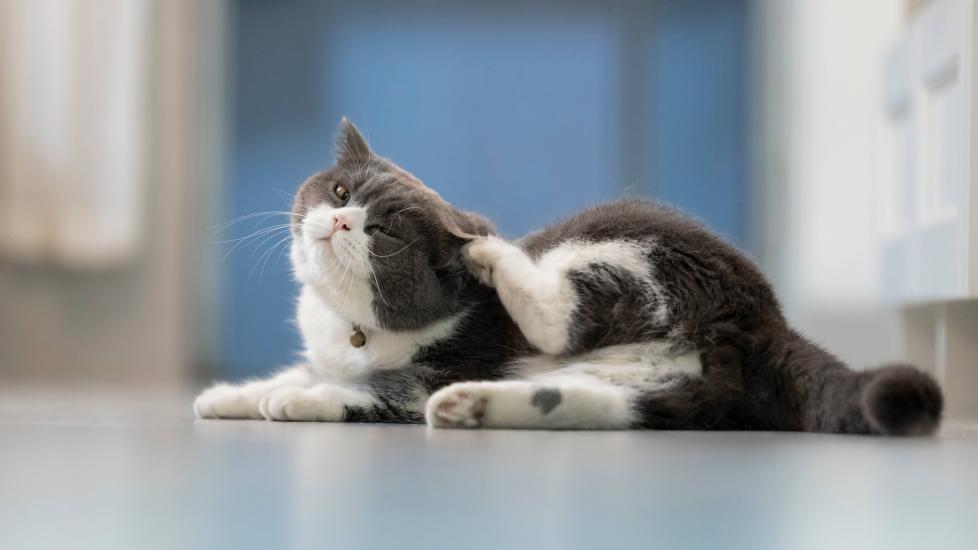
Seborrhea, otherwise known as scaling of the skin, is an uncommon condition in cats. This scaling is made of dead skin cells (called corneocytes) that accumulate on the skin, hair follicles, or hair coat. When this scaling builds up on the hair coat, it’s called dandruff. Dandruff can be caused by several conditions that affect a cat’s entire body.
Is Cat Dandruff Just Dry Skin Shedding?
Dandruff often appears as small white flecks or flakes that appear throughout a cat’s fur or attached to their skin. You may see it all over their body or in specific areas, most commonly the base of the tail or hind end. Sometimes these flakes are paired with skin irritation, such as lesions, redness, or scabbing.
Dandruff can be caused by dehydration, stress, malnutrition, and/or poor grooming habits. It can also be a sign of more concerning medical conditions that require investigation.
Cat Dandruff or Cat Dander?
Cat dandruff differs from cat dander. Dander refers to the microscopic dead skin cells from normal shedding. Dander is an allergen and often the underlying cause of human allergies to cats. All cats produce dander, but not all cats produce dandruff. Dandruff can be seen by the naked eye, while dander is microscopic.
Cat Dandruff or Flea Dirt?
Cat dandruff also differs from flea dirt, but often, these two conditions happen together. Flea dirt, which is the feces of fleas, is often seen as small black or brown flecks on the skin or at the base of the fur.
Most commonly, flea dirt is found at the base of the tail or hind end. Fleas and flea dirt often cause allergies in cats, leading to redness, fur matting, itching, and scabbing. Thus, dandruff often happens alongside fleas and flea dirt.
Why Does My Cat Have Dandruff?
Causes of dandruff in cats include:
-
Primary seborrhea, an inherited condition in Persian cats
-
Secondary seborrhea, caused by:
-
Allergies: flea, food, genetic, or environmental
-
Hormonal issues: hyperthyroidism or diabetes mellitus
-
Malnutrition or poor diet: diets lacking omega-3 fatty acids
-
Temperature/humidity changes
-
Obesity: Overweight animals have a difficult time grooming themselves, leading to dandruff buildup.
-
Orthopedic disease such as arthritis: Pain can deter cats from grooming appropriately, leading to dandruff buildup
-
How Vets Diagnose Dandruff in Cats
Taking a thorough health history and doing a physical examination are the first steps in diagnosing dandruff in cats, followed by investigating the underlying cause. Testing may include:
-
Full blood work: complete blood count, serum chemistry, thyroid levels, and electrolytes to assess for systemic disease
-
Fecal testing: to rule out intestinal parasite infection, which can lead to dry skin and poor haircoat
-
Skin scraping or hair plucking: to assess for mites, lice, fleas, or ticks
-
Skin culture: to assess for bacteria or ringworm on the skin
How to Get Rid of Cat Dandruff
Treatment of dandruff is based on the underlying cause, which often requires investigation by your veterinarian. If blood work and skin testing uncover no obvious medical conditions, your vet can recommend diet changes, environmental/grooming changes, and/or holistic supplements to help treat the dandruff.
Over-the-counter treatments that can be considered include omega-3 fatty acid supplements. Your veterinarian can make recommendations for feline-specific options that avoid heavy metals or other elements that may be toxic to cats but are often found in human supplementation.
Anti-seborrheic shampoos and topical treatments such as Douxo-S3 or DermaBenSs can be helpful. Sometimes oral antibiotics, steroids, and/or immunosuppressive medications need to be considered if holistic supplements, appropriate grooming, appropriate diet, and appropriate temperature/humidity maintenance fail to help.
Veterinarians may recommend changing to a novel protein (such as duck, whitefish, venison, rabbit) or a hypoallergenic diet if food allergy is suspected. Brushing and flea prevention are also recommended, especially for outdoor cats and/or cats that cannot groom themselves appropriately due to arthritis or obesity.
If your cat has dandruff lasting more than a couple weeks, if it is paired with scabbing, itching, changes in behavior, vomiting, lethargy, or decreased appetite, or if you see fleas, mites, or ticks on your cat, schedule an appointment with your veterinarian.
Featured Image: Adobe/chendongshan