Anemia in Cats


Summary
Anemia in cats is the deficiency of red blood cells and hemoglobin (or both) in a cat’s blood.
Red blood cells (RBCs), which are made by the bone marrow, are the main way oxygen is carried to the body’s tissues and organs. Specifically, an iron-containing protein in RBCs called hemoglobin carries the oxygen.
When a cat is anemic, the decrease in RBCs and/or hemoglobin leads to decreased oxygen flow to the body’s organs. This decrease in oxygen may result in damage to organs like the heart, lungs, and kidneys, potentially causing failure.
Anemia in cats is often a medical emergency and can become life-threatening. If you are noticing that your cat has pale gums, is lethargic, is collapsing, and/or has other signs of anemia, seek emergency veterinary attention.
Some causes of anemia, though emergent, may be treatable and have a good prognosis. Other cases, such as cats who are anemic with chronic kidney disease, may have a shortened life expectancy.
Types of Anemia in Cats
Anemia in cats is broadly categorized as either regenerative or non-regenerative.
-
Regenerative anemias—When the bone marrow produces enough RBCs to correct the anemia. The cat will have a low red blood cell count, but there will be immature RBCs in circulation, indicating the body is trying to replace what it has lost.
-
Non-regenerative anemias—When the bone marrow is not able to correct for the deficiency of RBCs, either because it’s not functioning properly or because the body’s resources have been exhausted. An anemia can also be non-regenerative if it’s caught too early before the body has had a chance to respond to the loss of RBCs.
There are many potential causes of anemia, and some causes can co-exist at the same time.
Symptoms
Symptoms of anemia include some—or all the following:
-
Lethargy
-
Pale gums (sometimes the gums are yellow, indicating jaundice)
-
Increased heart rate
-
Weakness or collapse
Causes
Anemia isn’t a disease itself but rather secondary to diseases or conditions in the body that cause anemia. The causes of anemia can be broken down into three broad categories. This includes blood loss, destruction of RBCs, and a failure to produce new RBCs.
Blood loss can be internal (inside the body), external (outside the body), or both. Some common causes of blood loss in cats include:
-
Trauma, such as being hit by car
-
Fleas/ticks that suck blood from the body—this can be significant in newborn kittens
-
Hookworm infestations that feed on the blood in the intestines
-
Bleeding tumors
-
Diseases that prevent proper blood clotting such as hemophilia
-
Anticoagulant rodenticide toxicity (when a cat ingests rat poison that prevents blood clotting, leading to bleeding)
-
Post-surgical complications, such as a suture on a blood vessel coming undone or breaking
Destruction of RBCs (also called hemolysis) can occur due to the following:
-
Immune mediated hemolytic anemia (where the cat’s immune system attacks and destroys its RBCs)
-
Feline leukemia virus (FeLV) infection or feline infectious peritonitis (FIP)
-
Certain blood parasites such as Mycoplasma haemofilis (formerly known as Haemobartonella felis), Cytauxzoon felis, and Babesia felis which are spread to cats through tick bites
-
Toxins and chemicals from onions, zinc, copper, or acetaminophen (Tylenol)
-
Drugs, including reactions to antibiotics and antiparasitic agents
-
Genetic diseases such as pyruvate kinase deficiency in Abyssinian and Somali cats
-
Neonatal isoerythrolysis, a condition in newborn kittens when the blood type of the kitten and the mother cat are not compatible
-
Low phosphate, seen in refeeding syndrome, which occurs in cats who have been starved and then suddenly start eating a lot again, causing electrolyte abnormalities
Failure to produce new RBCs means the bone marrow that produces RBCs is unable to keep up with the demand for new ones. When a cat is anemic, the bone marrow should be able to produce more RBCs to compensate.
Reasons for failure to produce new RBCs include:
-
Anemia of chronic disease—Any chronic disease or illness can lead to anemia due to long-term inflammation that decreases RBC production. Chronic conditions include chronic infection, tumors, and disorders of the hormone system (such as hypothyroidism). This is the most common type of anemia in animals.
-
Chronic kidney disease—The kidneys produce a hormone called erythropoietin, which stimulates the development of RBCs by the bone marrow. With significant kidney disease, the kidneys do not produce enough erythropoietin, decreasing RBC production (which leads to anemia).
-
Severe nutritional deficiencies or imbalances
-
Feline leukemia virus (FeLV) or feline immunodeficiency virus (FIV)
-
Autoimmune disease or inflammation affecting the bone marrow
-
Chemicals or toxins affecting the bone marrow
-
Cancer affecting the bone marrow or RBC directly
Diagnosis
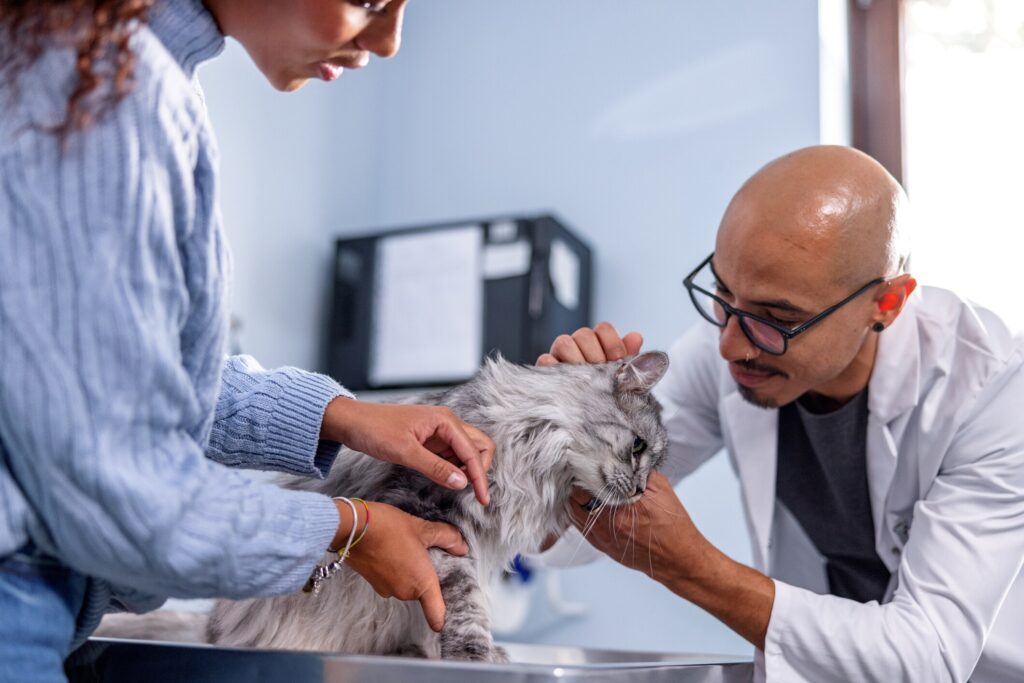
Your vet will perform a physical exam on your cat, followed by blood work. The blood work will show that your cat has a low red blood cell count or a low hematocrit (percentage of blood that is made of RBCs). The blood work may show other changes, such as a low platelet count or high white blood cell counts, which your veterinarian may use to help determine what type of anemia your cat has.
After a pet is diagnosed with anemia, your veterinarian will recommend additional tests to determine the underlying cause of the anemia.
If there are no signs of external blood loss (bleeding from wound, nose, etc.), internal bleeding will be ruled out. This is done using diagnostic imaging such as X-rays and/or ultrasound.
If no signs of bleeding are noted, your veterinarian will perform additional blood tests. They may also recommend testing for diseases spread by tick bites, or other specialized tests.
A urinalysis should be performed to check your cat’s organ function and assess other causes of anemia. Your vet may also take a fecal sample from your cat. This is to rule out parasites.
A FeLV/FIV snap test is another important test to help your vet determine the cause of your cat’s anemia.
If there is concern the cat’s bone marrow is not responding properly, your veterinarian may recommend a bone marrow aspirate or biopsy to collect a sample of bone marrow for analysis. For this procedure, your cat is usually under anesthesia. A needle is inserted into the bone to collect a sample of the marrow. The sample is then sent to a specialty lab that can examine the bone marrow under a microscope.
Often, severely anemic cats will be sent to a local veterinary emergency hospital for hospitalization, 24-hour care, blood transfusions, advanced diagnostics, and consultation with specialists.
Treatment
In cases of severe anemia, a blood transfusion will likely be needed.
Once the cat is stabilized, attention will be directed at identifying and treating the underlying cause of the anemia. Treatment will vary based on the underlying cause of the anemia but may include:
-
Steroids (prednisolone) and other immunosuppressive medications like cyclosporine or chlorambucil
-
Antibiotics
-
Gastroprotectant medications, which are medications that coat any ulcers and prevent worsening of vomiting if present
-
Surgery in the case of a bleeding tumor or a complication from a previous surgery
-
Darbepoeitin, a medication given to cats with chronic kidney disease to replace erythropoietin
-
Iron supplementation
If your cat has gone through trauma, surgery may be needed to stop the bleeding and address the anemia. If the anemia is severe or persistent, additional transfusions, oxygen therapy, and other supportive care may be needed.
Recovery and Management
Severely anemic cats will likely need to be hospitalized for two to seven days while they receive treatment. Severely anemic cats or those with autoimmune conditions or cancer can have poor or uncertain prognosis. These cats may need long-term treatment.
Many cats with mild anemia—when treated early, and in overall good health—will typically make a full recovery and have no long-term effects. However, some cats with mild anemias, such as those with chronic kidney disease, may get progressively worse, even with treatment.
The prognosis for cats with blood loss, secondary to trauma, will vary depending on the extent of the trauma and how quickly they receive treatment.
Prevention
Not all causes of anemia in cats are preventable, but there are steps you can take to decrease your cat’s overall risk. These include:
-
Keep your cat indoors to reduce the risk of trauma and transmission of diseases like FeLV or FIV.
-
Vaccinate your cat against FeLV.
-
Keep your cat on parasite prevention that includes intestinal worms, fleas, and ticks.
-
Follow your veterinarian’s recommendations for how often your cat needs wellness exams and blood work. This will help you catch conditions, such as chronic kidney disease, early. Earlier intervention can slow progression.
-
Keep toxic substances, such as onions or acetaminophen, out of reach of your cat.
-
After surgical procedures, follow your veterinarian’s recommendations regarding activity restriction.
Anemia in Cats FAQs
How do I get an anemic cat to eat?
Anemic cats may benefit from appetite stimulants like maropitant citrate (Cerenia®). You can also try feeding something extra special like warm canned food. Follow your veterinarian’s recommendations for managing the underlying cause of anemia.
What causes low blood count in cats?
A low blood count can be caused by blood loss, the destruction of red blood cells, or a failure of the body to make enough red blood cells.
Featured Image: AzmanJaka/E+ via GettyImages




