Entropion in Dogs: Causes, Symptoms, and Treatment


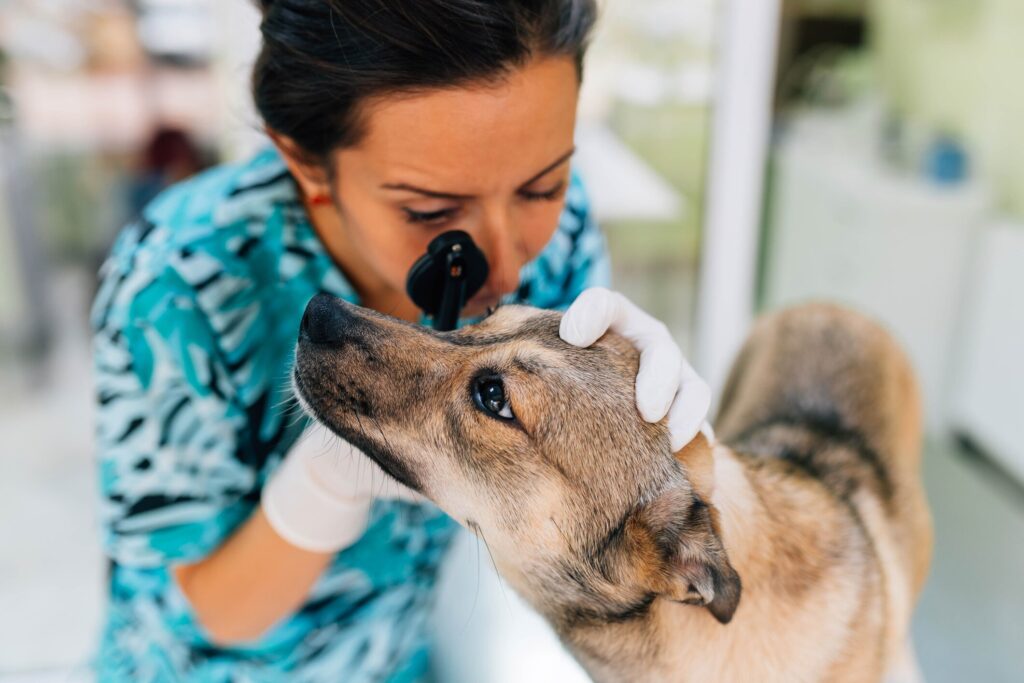
Entropion in dogs is an eyelid abnormality in which the eyelid rolls in on itself. Because the eyelid is rolled inward, the eyelashes and hairs on the eyelid rub on the cornea (the outer, clear layer of the eye).
The rubbing of the hairs on the cornea can cause pain and corneal ulcers (sores).
Key Takeaways
- Entropion in dogs is an eyelid abnormality in which a dog's eyelid rolls in on itself.
- Entropion is usually a hereditary condition that develops in growing dogs.
- A dog can also develop entropion secondary to something irritating their eye.
What Is Entropion in Dogs?
Entropion can occur on the upper eyelid, the lower eyelid, or both. It’s the most common eyelid abnormality in dogs.
Although entropion is painful, it’s not generally considered a medical emergency. If you are concerned that your dog has entropion, contact your veterinarian for an appointment.
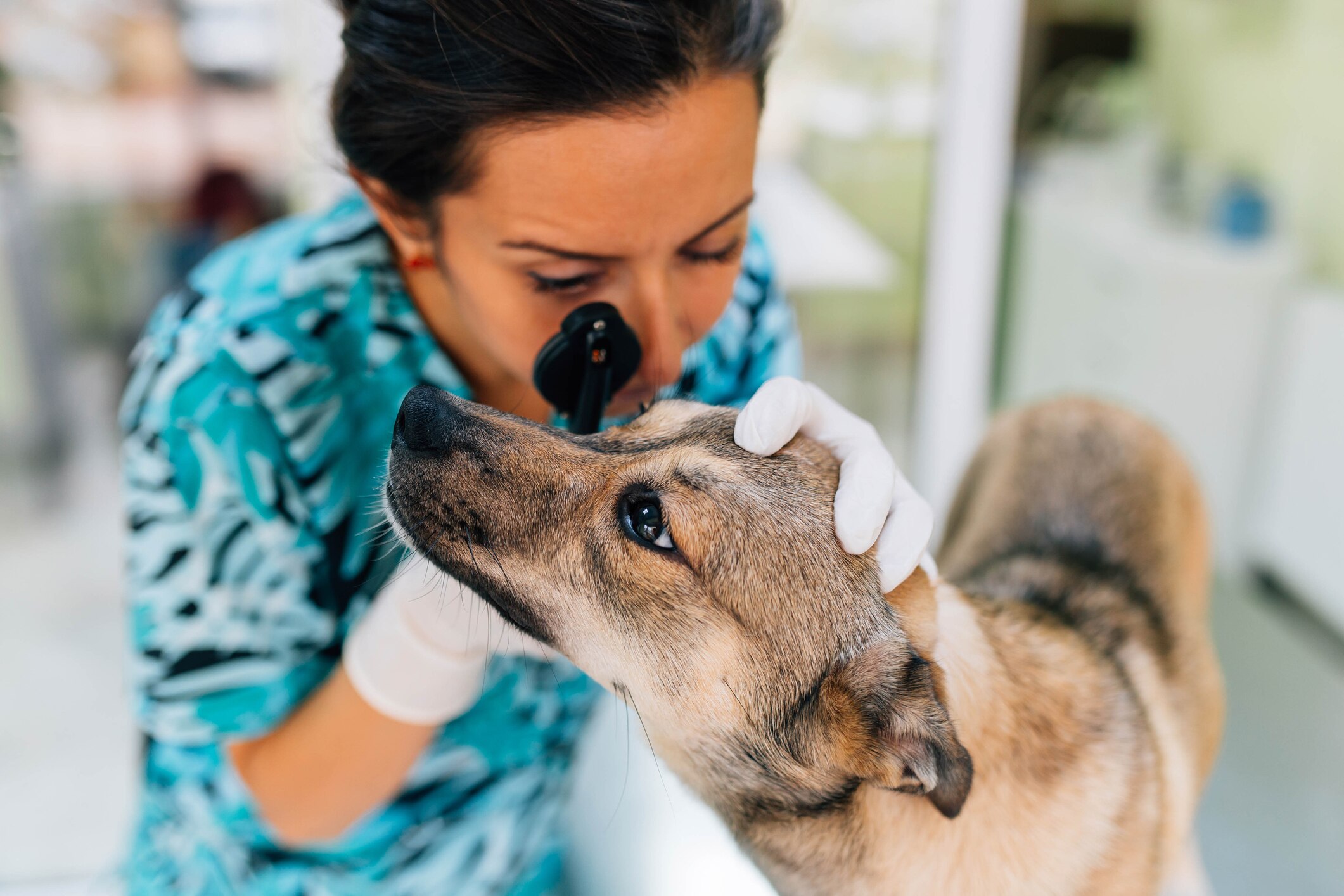
To download this medical illustration, click here.
Symptoms of Entropion in Dogs
Symptoms of entropion in dogs include:
-
Squinting of one or both eyes
-
Holding the eye(s) shut
-
Goopy (mucoid) discharge from the eye(s)
-
Visible blood vessels or brown pigmentation on the cornea
-
Ulcers (sores) on the cornea(s)
-
Pawing at the eyes
Causes of Entropion in Dogs
Entropion in dogs is usually a hereditary condition that develops in growing dogs.
It’s most diagnosed in dogs that are under a year old. Because it’s hereditary, you can expect it to develop more commonly in specific breeds, such as:
Occasionally, a dog can develop entropion secondary to something irritating their eye.
For example, dogs with corneal ulcers can have spasms of the eyelids that result in entropion.
Unfortunately, these spasms can cause the eyelashes and fur of the eyelids to rub on the ulcer, perpetuating the issue.
In some cases, scarring of the eyelids from old injuries can also cause the eyelids to roll inward, resulting in hairs rubbing on the cornea.
How Veterinarians Diagnose Entropion in Dogs
Entropion in dogs is usually diagnosed when the veterinarian identifies the eyelid abnormality during physical examination.
If your dog is showing signs of entropion, your veterinarian will likely put a numbing drop called proparacaine in your dog’s eye to see whether the eyelid unrolls.
If the eyelid unrolls, it suggests that the entropion was due to spasm rather than a developmental abnormality. Spastic entropion usually occurs secondary to another eye condition, such as a corneal ulcer.
Your veterinarian will also likely put a stain (fluorescein) on your dog’s eye to check for corneal ulcers. If an ulcer is present, this stain glows when examined under a cobalt blue light.
Other tests and procedures might include a Schirmer tear test, to see whether the eye is making enough tears, and tonometry, to test the pressure in the eye.
Treatment of Entropion in Dogs
For hereditary entropion, treatment is surgical and is performed under general anesthesia.
In a puppy, your vet might temporarily suture the eyelids into a more normal position. Once your puppy’s face has grown, your vet can perform a more permanent fix if necessary.
The most common permanent fix is called a Hotz-Celsus procedure. During this surgery, your vet will remove a sliver of skin and then suture the sides of the skin back together, which pulls the eyelid out of its inverted state.
In some cases, your dog might need a second minor procedure after they recover from the first surgical repair.
This is because if your veterinarian removes too much skin the first time, your dog could develop ectropion. Instead, the vet will sometimes err on the side of removing too little skin, knowing that they can always take more later if needed.
For entropion that occurs due to an ulcer or eye injury, your veterinarian will treat the underlying issue.
This can include having your dog wear a recovery cone and using pain medications, such as atropine, and antibiotics, such as neomycin, polymyxin B, and bacitracin ophthalmic drops.
Other treatments might include serum drops or ocular repair gels like BioHAnce™.
Recovery and Management of Entropion in Dogs
Recovery from surgery for entropion generally takes 10 to 14 days.
During this time, your dog should always have their recovery cone on. Most veterinarians use absorbable sutures that dissolve on their own so that there is no need to remove sutures near the dog’s eyes.
Your pup will usually go home with a pain medication like carprofen.
If there was an ulcer present on the eye, treatments might include topical pain medications such as atropine drops, antibiotic drops, serum drops, or ocular repair gels.
Prevention of Entropion in Dogs
There is generally no way to prevent your puppy from developing entropion.
However, if your dog has entropion, it’s recommended that you avoid breeding your pet, since the condition can be hereditary.
Entropion in Dogs FAQs
How do you treat entropion in dogs?
Most cases of entropion are surgically repaired by removing a sliver of skin from around the eyelid, which causes the eyelid to return to a normal position.
Entropion that occurs due to something like a corneal ulcer is managed by addressing the underlying cause.
How much does it cost to fix entropion in dogs?
Entropion repair costs between $500 and $2,000, or more. Cost differs depending on whether one eye is affected or both, which eyelids are affected, the complexity of repair, and whether surgery is being performed by a specialist.
Lower-cost surgeries might be available through non-profit clinics.
What happens if entropion is left untreated in dogs?
If entropion isn’t treated, dogs can develop painful corneal ulcers.
Ulcers can become severe enough that they lead to inflammation inside the eye, which might lead to blindness. Deep ulcers can also cause the eyeball to rupture, leading to blindness.
The eye may need to be surgically removed.


