High Blood Pressure in Dogs



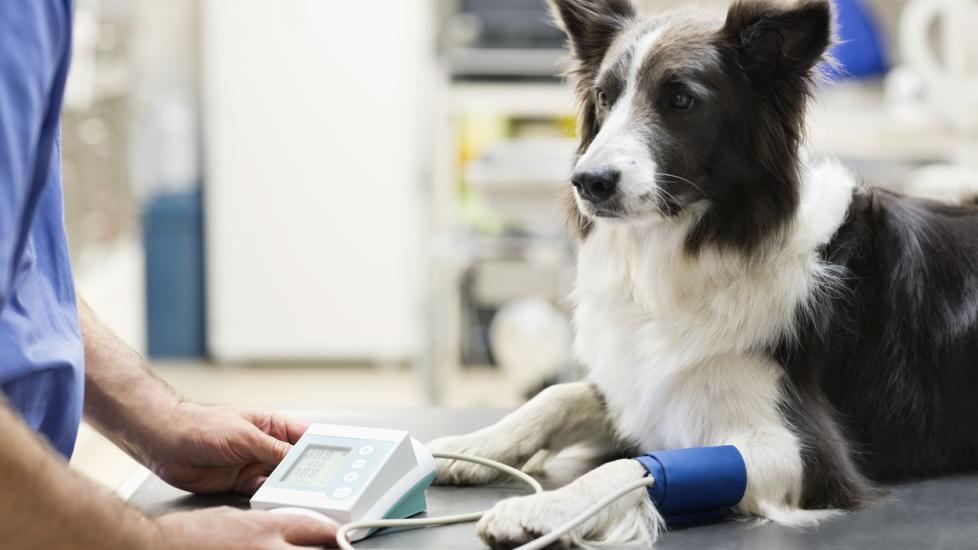
What Is High Blood Pressure in Dogs?
Blood pressure is the pressure or amount of force exerted by the blood against the arterial vessel walls, measured in millimeters of mercury (mmHg). It is measured by two numbers:
-
Systolic: the pressure measured during heart contraction
-
Diastolic: the pressure measured when the heart relaxes
With every beat of the heart, oxygen-rich blood and nutrients are pumped throughout the body and delivered to the tissues. Higher blood pressure, also called systemic hypertension, means a higher workload, or strain, for the heart and vessels, which will cause damage to the vessels themselves as well as damage to other organs such as the eyes, kidneys, and brain.
What Is a Normal Blood Pressure in Dogs?
It is difficult to measure diastolic blood pressure in dogs—so, systolic blood pressure is often used as a sole criterion for diagnosing high blood pressure. In dogs, a blood pressure less than 150mmHg is considered normal, but a blood pressure of 160mmHg should be investigated as pre-hypertension. Hypertension is diagnosed when the blood pressure is measured consistently above 180mmHg.
Symptoms of High Blood Pressure in Dogs
In most dogs with high blood pressure, there won’t be noticeable or overt symptoms. However, damage is often caused to the internal organs, causing or worsening kidney disease, and affecting the heart or brain.
Heart murmurs and clot formation may develop, and blindness can occur suddenly with lesions seen in the retina. There may be blood in the eye, in the urine, or out of the nose (epistaxis). Behavioral changes and weakness, as well as seizures, coma, and death can occur.
Causes of High Blood Pressure in Dogs
High blood pressure has three different causes:
-
Primary, or idiopathic: means the cause is unknown (this cause typically is uncommon in dogs)
-
Secondary: often attributed to an underlying disease such as:
-
Pheochromocytoma (adrenal tumor)
-
Diet
-
Polycythemia (increase in red blood cells)
-
Side effects of certain medications (phenylpropanolamine and steroids)
Dogs with any of the above conditions should have their blood pressure measured in part to treat the condition itself.
- “White coat effect”: Similar to what has been described in humans, this is a short increase in blood pressure often occurring due to fear or anxiety. For example, when your pet is taken to the vet and is clearly nervous or stressed, this will trigger a higher blood pressure than normal during this event. This condition doesn’t require treatment and normalizes when the cause is removed.
How Veterinarians Diagnose High Blood Pressure in Dogs
There are some methods to measure a dog’s blood pressure in the hospital, and each has its own limitations and accuracy:
-
Direct via arterial measurement: Although the most accurate, this method is also the most invasive (and risky), as it requires puncturing an artery. (This method is typically reserved for dogs in critical condition.)
-
Indirect oscillometer: Readily available and easy to use, this method is less accurate than direct measurement.
-
Indirect via Doppler: More accurate than the oscillometric method and easy to use, using a Doppler will enable the vet to obtain only a systolic blood pressure reading.
Prior to diagnosing high blood pressure, multiple readings over the course of a few visits or occurrences should be done, to ensure the accuracy and decrease the “white coat effect.” Measuring trends and allowing the dog to acclimate to the machine and testing can be helpful in decreasing stress-related elevations.
Treatment of High Blood Pressure in Dogs
In most cases, even when the underlying disease is managed, dogs with high blood pressure will require lifelong medication for treatment. The goals of treatment are to prevent organ damage and symptoms. Usually, a single medication is prescribed, but multiple drugs may be required if the response to a single medication is minimal. Drugs such as enalapril (an ACE-I) or amlodipine (calcium channel blocker) are most common; others like phenoxybenzamine or atenolol (alpha and beta blockers), or even hydrochlorothiazide and furosemide (diuretics) can be used. In emergency settings, drugs like hydralazine and nitroprusside are routinely prescribed.
Recovery and Management of High Blood Pressure in Dogs
The good news is that, for some dogs, high blood pressure can be resolved once the underlying disease process is either treated or managed effectively. However, most dogs will require lifelong medication to manage high blood pressure.
Additionally, dogs should be re-examined and their blood pressure measured within a few weeks of starting medication, as the goal of therapy is to obtain a normal blood pressure (<150mmHg). It should be measured again every couple of months thereafter. Follow your veterinarian’s recommended recheck guidelines going forward.
Additional tests such as bloodwork and urine testing may also be recommended at these appointments, which are important to determine any damage to other organs from the disease or side effects of the medication. Your dog probably already has follow-up appointments to manage his other underlying disease.
High Blood Pressure in Dogs FAQs
How can pet parents help their dog with high blood pressure?
Desensitizing your dog to having his blood pressure taken can be done at home with practice and patience. Ask your veterinarian to borrow a cuff or purchase one yourself—anything to make the process of reading his blood pressure easier and less stressful will be helpful toward managing his condition.
Decreasing stressful events (for example, exposure to thunderstorms, fireworks, and strangers) can be immensely helpful in maintaining a more stable blood pressure. Salt restriction is often not necessary, but a high salt intake should be avoided. Talk to your veterinarian about possible dietary recommendations.
How long can dogs live with hypertension?
The timeframe is variable, but with proper care, follow-up, and monitoring, a better prognosis can be afforded when your dog’s blood pressure is adequately controlled. The risks of developing more serious complications are also decreased.
Featured Image: iStock.com/Robert Daly