English Foxhound



dageldog/E+ via Getty Images
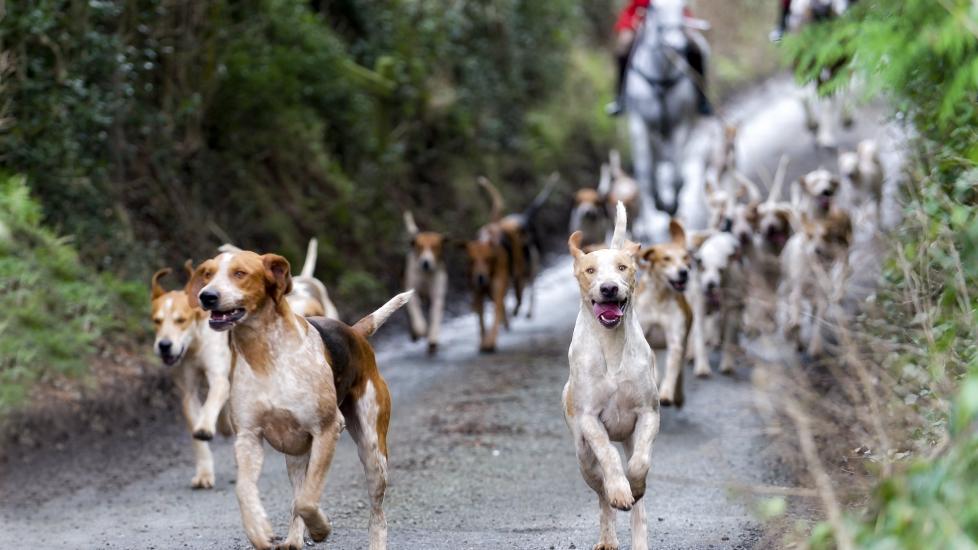
English Foxhounds are one of the rarest dog breeds in the U.S. This scarcity is in part because fox hunting—the sport for which the breed was developed in England—is no longer a popular pastime. And the breed characteristics that make English Foxhound dogs ideal for bounding across the countryside in search of prey don’t always translate well to house pet life.
English Foxhounds are hound dogs, weighing between 60–75 pounds and standing about 24 inches in height. But they top the charts when it comes to energy, prey drive, and barking.
And yet, if you can provide your pup with plenty of time and space for play, in addition to proper socialization and training, you’ll be rewarded with a gentle, affectionate companion.
Caring for an English Foxhound
The English Foxhound breed isn’t a great fit for every home. For example, their barking talents and extensive exercise needs mean they’re not the ideal dog for apartment living.
And while English Foxhounds are highly intelligent and capable learners, they’re also pretty opinionated, which can make training difficult for inexperienced pet parents. Moreover, with a mind bent on hunting small prey, homes with small pets may pose problems.
Homes with other medium-to-large dogs, however, are a plus. The English Foxhound breed is pack-oriented and highly sociable, and not just with other canines. These hunting dogs love people of all ages, though their energy dictates that all interactions with small children be closely supervised to avoid accidental injury.
As with most working breeds, English Foxhounds require very little grooming. Their short, double coat sheds a moderate amount but isn’t prone to matting.
English Foxhound Health Issues
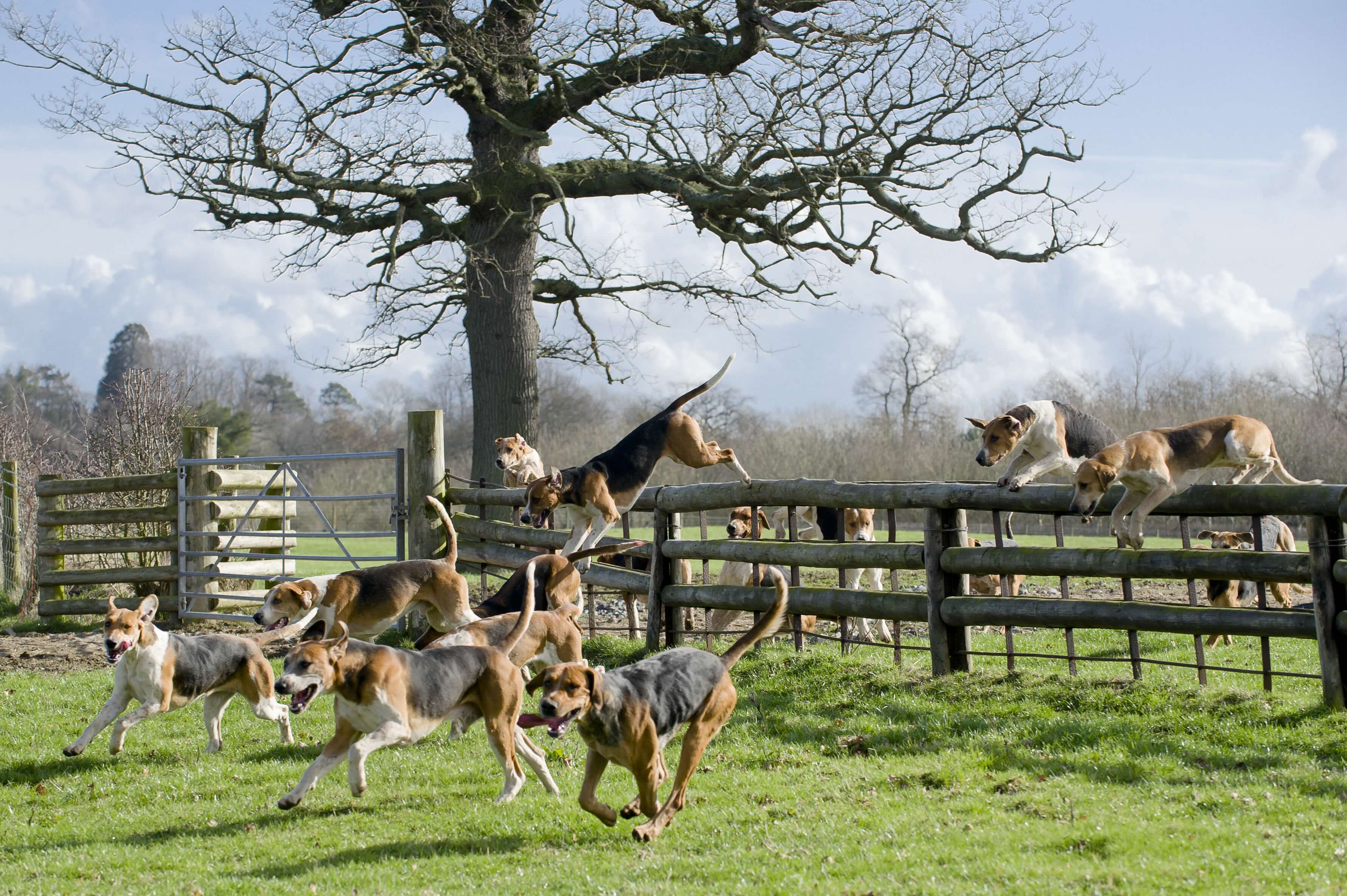
English Foxhounds are generally healthy dogs with a lifespan of 10–13 years. However, like all breeds, they’re prone to certain health conditions. It’s important to partner with a breeder who prioritizes health over profit.
Bloat and Gastric Dilatation-Volvulus (GDV)
Bloat in dogs is when gas and food cause the stomach to expand. Bloat can also progress into gastric dilatation-volvulus (GDV), a condition when the dog’s stomach twists and cuts off blood flow to and from the stomach and spleen.
GDV is painful and a life-threatening emergency, and it’s more common in large, deep-chested breeds like English Foxhounds. It’s important for pet parents to know the signs of bloat, including:
-
Retching or dry heaving without vomiting
-
Swollen, distended abdomen
-
Sudden anxiety, pacing, or inability to get comfortable
-
Panting and drooling
-
Collapse
If you notice any of these symptoms in your English Foxhound, seek veterinary care immediately.
Hip Dysplasia
Hip dysplasia is a condition in which the hip joint doesn’t develop properly. This ultimately leads to a loose joint and osteoarthritis in dogs. Mild cases can be treated with anti-inflammatory medication, weight management, and physical therapy, but severe cases may require surgery to correct the hip dysplasia.
Common signs of hip dysplasia include:
-
Limping
-
Bunny-hopping
-
Difficulty climbing stairs and getting on or off furniture
-
Reluctance to get up or jump
What To Feed an English Foxhound
Partner with your veterinarian to choose the best food for your dog. Your vet will help you find a food that meets Association of American Feed Control Officials (AAFCO) standards.
The food you choose must be nutritionally complete for your pet’s lifestyle, size, and health, and formulated for your dog’s life stage. For example:
-
English Foxhound puppies need a high-quality puppy food.
-
Adult dogs must eat an adult-formula food.
-
Older dogs may benefit from senior food, at your veterinarian’s recommendation.
How To Feed an English Foxhound
Take these steps during mealtimes to reduce your English Foxhound’s risk of bloat:
-
Feed your dog multiple smaller meals throughout the day instead of one big meal. Most English Foxhounds do well with two meals per day: one in the morning and one in the evening.
-
Offer food in a slow feeder bowl so your dog eats more slowly.
-
Avoid using raised food bowls, which may increase the risk of bloat.
-
Do not exercise your dog just before or after they eat.
You can also ask your veterinarian if your dog is a good candidate for a gastropexy procedure, in which the stomach is attached to the abdomen wall to prevent twisting.
How Much Should You Feed an English Foxhound?
Consider your English Foxhound’s age, weight, body condition score, lifestyle, and health needs when determining how much they need to eat every day.
Looking at the portion guidance on your dog’s food bag is a helpful starting point. Then you can work with your veterinarian to individualize this guidance to your own dog.
Nutritional Tips for English Foxhounds
Your English Foxhound should receive all needed nutrients through their AAFCO-compliant dog food. However, your vet may recommend additional dog supplements to address certain health conditions, such as joint supplements for hip dysplasia.
Never give your dog a supplement without your vet’s guidance.
Behavior and Training Tips for English Foxhounds
English Foxhound Personality and Temperament
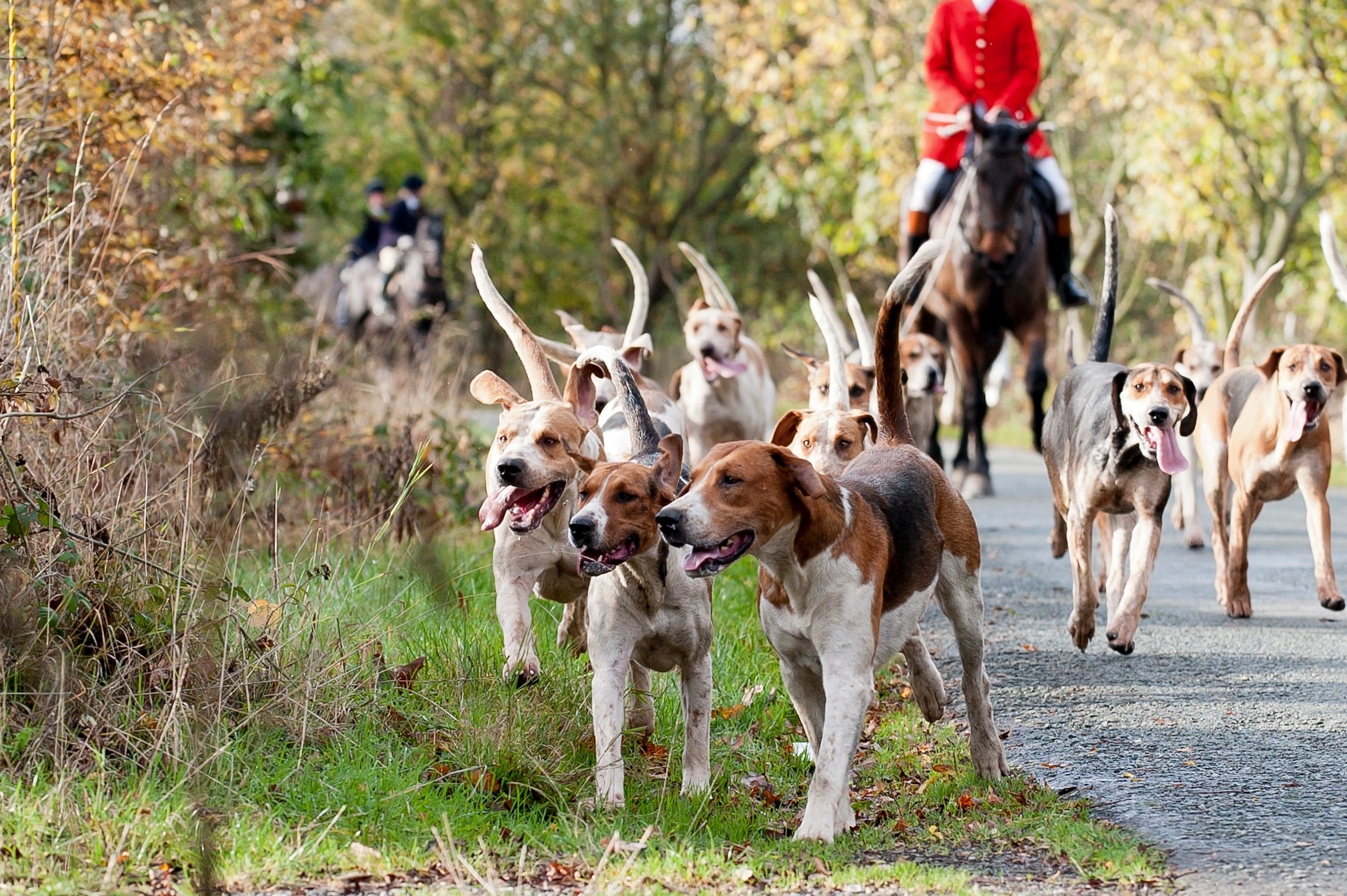
English Foxhounds are high in intelligence, energy, prey drive, and barking abilities. While these qualities are highly prized in foxhunting, they are less popular in a home setting.
But with proper socialization and training, plus enough mental stimulation and physical exercise, English Foxhounds can offer affectionate, playful companionship.
As a sociable breed, English Foxhounds enjoy the company of other dogs—as long as they aren’t small enough to be mistaken for prey to chase after, of course. English Foxhounds also love people of all ages, but it’s important to note that their size and stamina means all interactions with small children should be closely supervised to keep both dog and child safe from accidental injury.
English Foxhound Behavior
Bored, lonely English Foxhounds with energy to spare are more likely to engage in unwanted behaviors, like excessive and loud barking (the breed’s specialty).
Due to their prey drive instincts, English Foxhound dogs should always be either on a leash or within a securely fenced area when exercising outdoors. Otherwise, they’ll be tempted to chase squirrels, rabbits, neighborhood cats, and even small dogs out on a walk.
English Foxhound Training
It’s important to begin socializing your English Foxhound puppy to new animals, people, environments, activities, and objects as soon as you bring them home. This will help your puppy feel comfortable in new situations they’ll experience throughout their life. Ask your vet for tips on age-appropriate socialization ideas.
Begin training your dog when you begin socialization. English Foxhounds are fast learners—if you can keep them focused and motivated. Like all dogs, English Foxhounds respond best to consistent, positive, rewards-based training.
Training is also a great way to provide your pet with crucial mental and physical exercise while building that important human-animal bond.
Fun Activities for English Foxhounds
-
Tracking
-
Skills training
English Foxhound Grooming Guide
The English Foxhound’s coat is short, dense, and shiny. It requires very minimal upkeep.
Shedding is moderate, although it typically picks up twice a year (spring and fall). During this time, your hound may need more brushing—and your clothes may need more lint roller swipes.
Skin Care
If your English Foxhound loves roaming the countryside, you’ll want to regularly check for burrs, sticks, and other debris that can get stuck in their fur and irritate their skin. Checking your dog for ticks and keeping up with flea and tick prevention is important, too.
Bathing frequency partly depends on your dog’s lifestyle (like how often they go traipsing through mud or splashing in puddles). Talk to your veterinarian about how often your dog needs a bath. Keep in mind that overly frequent bathing can strip the skin of healthy oils.
Coat Care
English Foxhounds aren’t prone to matting. A once-a-week brushing should be enough to reduce shedding.
Eye Care
Call your veterinarian if you have concerns about your English Foxhound’s eyes. Watch for signs like redness, discharge, cloudiness, or apparent changes in vision.
Ear Care
English Foxhounds have low-hanging ears that are prone to infection. Talk to your veterinary team about how and how often you should clean your dog’s ears and which ear cleaning products to use.
Call your vet if you notice signs of an ear infection, such as redness, odor, pain, itchiness, and head shaking.
Considerations for Pet Parents
Here are some questions to consider before adding an English Foxhound to your family:
-
Do I have the time and energy to provide a dog with rigorous physical and mental exercise every day?
-
Do I live in a home with enough land for a dog to run within a securely fenced area, and that’s far enough from neighbors that barking won’t be a problem?
-
Am I home enough to provide a dog with close companionship?
-
Do I have the skills and patience to provide early socialization and lifelong training using positive reinforcement?
-
Am I financially prepared to provide veterinary care?
-
Can I provide a dog with a loving home for their lifetime, which could be 13 years or more?
If you can answer these questions with an enthusiastic “Yes!” you may be ready to parent a English Foxhound.
English Foxhound FAQs
Do English Foxhounds make good pets?
English Foxhounds are excellent dogs, but they aren’t a great fit for every home. While they are sweet, social, and smart companions, they are loud barkers and are famous for their stamina. English Foxhounds do best with active, experienced pet parents who can provide their pup with plenty of room to run.
Why is the English Foxhound the least popular dog?
The English Foxhound breed is a very rare in the U.S. and is often ranked at the bottom of the American Kennel Club’s registration list. This is primarily because the dogs were bred for fox hunting, which is no longer a popular pastime.
What is the difference between an American Foxhound and an English Foxhound?
English and American Foxhounds are closely related. In fact, George Washington was influential in developing the latter, which is a mix of English Foxhound and hounds imported from France. The resulting American Foxhound is taller and slimmer than their English relative.