Cat Pregnancy: Signs, Stages, and Care



Prostock-Studio/iStock / Getty Images Plus via Getty Images
To ensure the birth of healthy kittens, it’s important to understand how to take care of your pregnant cat.
While pregnant cats are usually self-sufficient mothers and are known to have kittens through all types of adversity, there are several things a pet parent can do to make the process safer and easier for mother cats.
In this article, you’ll learn everything you need to know about cat pregnancy—from diet and care to pregnancy stages and how to build a nest for your cat.
Key Takeaways
- The gestation period for cats is about two months, or 63–65 days.
- Pregnant cats should be vaccinated before pregnancy, checked for worms, and fed a special high-calorie diet.
- Most cats will deliver their entire litter of kittens within six hours.
How Long Are Cats Pregnant?
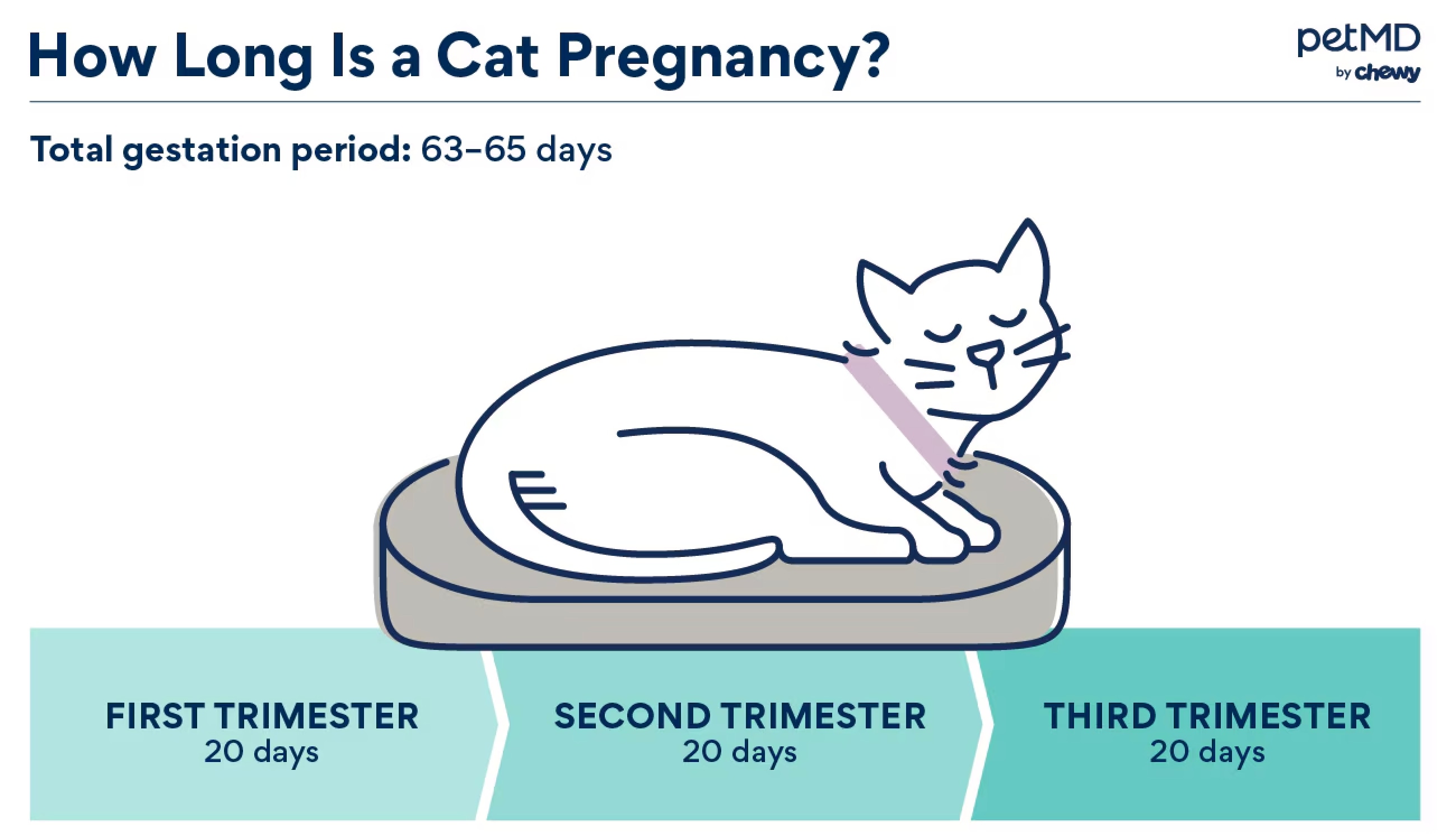
The cat gestation period is around two months (averaging 63–65 days).
It can be divided into approximately three trimesters of 20 days each, although the first two trimesters can be difficult to differentiate at home.
How To Tell if a Cat Is Pregnant
Detecting pregnancy in cats can be very challenging in the first two trimesters.
As a pet parent, you may be wondering—what does a pregnant cat look like?
Early signs of cat pregnancy may include nipple changes. This occurs about 16–20 days into the pregnancy, known as “pinking up.”
This is where a queen’s nipples become pinker and more prominent. Cats in the first two trimesters are often very friendly and more docile than usual.
In the last 20 or so days of pregnancy, a cat’s belly will appear distended, and their nipples/breast tissue will be noticeably swollen.
This means that the kittens are continuing to grow, and the cat’s body is starting to prepare for birth.
Queens may exhibit increased grooming of their belly and the area under their tail. They will also often search for suitable locations in which to nest or give birth.
Cat Pregnancy Stages
The pregnancy cycle of cats should last between 63–65 days.
A cat’s pregnancy timeline is divided into three trimesters, which last approximately 20 days each.
First Trimester
In the first trimester (day one to 21), there are little to no changes seen by most pet parents.
Sometimes there is a subtle increase in appetite and the nipples can start to change.
Second Trimester
In the second trimester (day 21–42), more physical signs start to appear. This includes your cat developing a larger belly and noticeable behavioral changes, such as becoming calmer and cuddlier.
Third Trimester
In the last trimester (day 42–63), pregnancy changes are more significant. Your cat’s belly will swell and there will be increased nipples and breast changes.
Their appetite can become voracious, start licking their belly and vulva often. Your cat will start nesting to prepare a spot for their kittens, often hidden away from any disruptions.
How To Tell How Far Along Your Cat Is
Unless a cat has been intentionally bred, determining her due date can be very tricky.
-
A veterinarian may be able to palpate (feel) fetuses about two and a half weeks into the pregnancy.
-
Kitten heartbeats can be seen by ultrasound at three to four weeks into the pregnancy.
-
Kittens can be seen on an X-ray once their skeletons have calcified, at about six weeks.
Combining these developmental milestones—along with noting physical changes and observing your pregnant cat’s behaviors—can help you determine how far along your cat is in her pregnancy.
However, keep in mind that cats have such short pregnancies. Because of this, some degree of error can occur.
A veterinary visit can also help rule out a rare condition known as pseudopregnancy, or false pregnancy.
Pseudopregnant cats may exhibit mammary development and even lactation without carrying kittens.
Caring for a Pregnant Cat
Pregnant cats have a few special requirements when it comes to general health care.
Making sure they have a quiet, comfortable spot in the home is essential to having a successful pregnancy and birth.
This should consist of a lot of cat blankets, cat towels, and/or old sheets lining a cardboard box or a covered cat bed.
The bed should be secluded but also in an area where she can be observed from afar to ensure the birth is progressing safely.
Diet for a Pregnant Cat
Pregnant cats need a high-calorie diet to support the growth of healthy kittens.
To ensure adequate nutrition, feed a commercial cat diet labeled either specifically for pregnancy and lactation or labeled for kittens (growth). A good food for pregnant cats is Royal Canin® Mother & Baby Cat dry food and wet food.
Mother cats should be transitioned to this high-calorie diet by at least the end of the first month of pregnancy and should be fed the same food until weaning, when kittens are no longer nursing.
Pregnant queens should receive frequent meals throughout the day.
You may notice the amount they eat may decrease as the kittens develop and take up more space in the abdomen, making it important for them to have more opportunities to eat smaller meals.
Vaccinations for Pregnant Cats
Ideally, cats should be vaccinated prior to pregnancy to prevent illnesses, birth defects, and the risk of pregnancy loss due to infectious diseases.
Vaccinated queens can also pass on protection against these diseases to their kittens through nursing via antibodies.
If your cat was not vaccinated and becomes pregnant, it’s recommended to wait to vaccinate her until after she gives birth.
Live vaccines should never be given to pregnant animals, as there is significant risk to developing fetuses. But killed vaccines, such as most rabies vaccines, can be given if your veterinarian feels it’s appropriate.
Parasite Prevention for Pregnant Cats
Parasite prevention does not need to be discontinued in pregnant cats, but it’s important to use products that are safe.
For example, Frontline Plus is licensed to safeguard pregnant cats against fleas and ticks. Talk to your veterinarian about products safe for your pregnant cat.
Bring a fecal sample to your vet to have it checked for worms.
Some intestinal worms are easily passed from mother to kittens during pregnancy and nursing, and worms can make growth very difficult for a kitten.
A variety of dewormers can be used in pregnant cats, and your vet can help choose one that will be effective against any parasites found in the fecal sample.
Illness in Pregnant Cats
Cats are very good at hiding when they are not feeling well, so it is important to monitor your pregnant queen for any subtle signs of illness.
If your cat isn’t eating, has diarrhea, or is vomiting, take her to the vet.
Vaginal discharge, especially blood, is not normal at any stage of gestation. Take your cat to an urgent veterinary visit if this occurs.
Preparing for Labor and Delivery
As your cat enters her last trimester, provide her with a designated area to nest.
Cats prefer a quiet, private area to give birth. If they are not provided with one that you can observe easily, they may choose someplace less convenient for you!
The perfect birthing nest allows you to monitor the cat and kittens for issues, while still giving them plenty of space.
A cardboard box lined with old pillowcases or towels is ideal. A soft blanket is OK to use as well—however, be careful there are no loose stings or fabrics as that could lead to intestinal obstruction.
The location should also be free of drafts, as kittens are sensitive to temperature fluctuation and should not be at risk of getting cold.
Signs Your Cat Is in Labor
There may be changes in your pregnant cat’s behavior before birth.
Most queens will stop eating the day before labor begins. They will often scratch at their chosen nesting spot and seem slightly agitated.
If you are monitoring rectal temperatures, a drop below 100 F indicates that labor is set to start within the day. During this first stage of labor, contractions are beginning but are usually not visibly noticeable.
In the second stage of labor, a cat will show active signs of straining. This is the stage where the kitten passes through the pelvis.
It usually takes five to 30 minutes for a single kitten to be delivered. Kittens are born inside a sac of fetal membranes and normally come headfirst.
The third stage of labor is more passive, as the rest of the fetal membranes and placenta for that kitten are passed. It’s normal for these membranes to appear greenish black. One placenta should be passed for every kitten.
The second and third stages often alternate for each kitten, but it’s not unheard of for a second kitten to be born before this stage is completed for the previous kitten. It is normal for queens to eat these membranes.
As previously noted, it is important for you to monitor your cat during labor. But unless there are signs of a complicated birth, try not to interact with your cat or interfere.
There may be changes in your pregnant cat’s behavior before birth. Most queens will stop eating the day before labor begins. They will often scratch at their chosen nesting spot and seem slightly agitated.
Cats can pause labor in between kittens, and this break can last 24–36 hours. It’s thought that they are more likely to do so if they do not feel safe in their environment.
Most cats will deliver all their kittens within six hours, unless there is an interrupted labor as described above.
A longer period between kittens with no contractions may be normal; however, prolonged and intense contractions are not.
If your cat is having visible contractions for more than 20 minutes without producing a kitten, or if it takes longer than 10 minutes to pass a kitten that is visible in the birth canal, call a veterinarian.
Postpartum Cat Care
Once all kittens have been born, ensure that they are dry and that their noses and mouths are clear.
If it can be done without disturbing the new family, clean away any soiled linen in the nesting box to ensure the kittens stay dry and warm.
Ideally, the nesting box temperature should stay between 85–90 F for the first week.
Typically, healthy kittens need minimal assistance finding their first meal.
Monitor your cat to make sure she is allowing normal nursing behaviors.
If you are concerned that your cat is rejecting her kittens, call your your vet.
Cat Pregnancy FAQs
At what age can a cat get pregnant?
Cats can get pregnant as young as four months old, although 5–6 months old is most common.
To avoid unwanted pregnancy, female kittens should be kept separate from intact male cats until they’re spayed.
How long does it take a cat to give birth?
Cats are pregnant for 63–65 days.
When cats go into labor, usually the kittens are born, and the entire birthing process is over within six hours.
What does a pregnant cat look like?
A cat will not have many physical changes until later in her pregnancy.
At that time, cats will start to have a distinctly enlarged abdomen and their nipples might become darker.
Right before they are ready to give birth, pregnant cats’ nipples and breast tissue will also start to enlarge as they begin to produce milk.
Can a cat get pregnant while nursing?
Yes, cats can get pregnant while nursing.
Cats are seasonally polyestrous, meaning they come into heat multiple times a year. Nursing does not affect when they come into heat or their ability to get pregnant.