Doxycycline for Dogs



Boogich/E+ via Getty Images
PetMD’s medications content was written and reviewed by veterinary professionals to answer your most common questions about how medications function, their side effects, and what species they are prescribed for. This content shouldn’t take the place of advice by your vet.
What Is Doxycycline Used for in Dogs?
Doxycycline is a prescription antibiotic medication that treats a wide variety of bacterial infections. It can be prescribed for various types of pets, including dogs, cats, horses, small mammals, birds, and reptiles.
In dogs, doxycycline is commonly used to treat tick-borne diseases like Lyme, Rickettsia (Rocky Mountain Spotted Fever), Anaplasma, and Ehrlichia. It’s also prescribed to treat leptospirosis and heartworm disease.
In addition to capsules and tablets, doxycycline is also available as a gel called Doxirobe Gel (doxycycline hyclate), which is FDA-approved to help control and treat periodontal disease in dogs.
Is Doxycycline FDA-Approved?
Doxycycline is FDA-approved for use in humans under its generic name and the brand names Avidoxy, Doryx, and Oracea.
Doxycycline is currently not FDA-approved as a veterinary medication, except for Doxirobe Gel. However, it is readily utilized in the veterinary field, and veterinarians can legally prescribe certain human drugs for use in animals in certain circumstances. This is called extra-label or off-label use because this use is not described on the drug label.
Speak with your veterinarian about whether doxycycline is right for your dog.
Compounded Doxycycline
In certain circumstances, your vet may recommend a compounded formulation of doxycycline.
Compounded medications are prescribed, for example, if:
-
There’s a specific reason your pet’s health can’t be managed by an FDA-approved drug, such as if your pet has trouble taking pills in capsule form
-
The dosage strength is not commercially available
-
The pet is allergic to an ingredient in the FDA-approved medication
Compounded medications are not FDA-approved. They are formulated by your veterinarian and dispensed either by a licensed pharmacist or veterinarian on an individual basis to best suit a patient’s particular needs.
How Doxycycline Works in Dogs
Doxycycline is classified as an antibiotic in the tetracycline class, which work by blocking the bacteria’s ability to make essential proteins required for their survival. Without these proteins, the bacteria’s cell wall becomes compromised, along with their ability to properly replicate and grow.
Doxycycline Considerations in Dogs
Doxycycline and other antibiotics of the tetracycline class should be used with caution in dogs with liver disease, pregnant animals, and young animals (because it can permanently stain teeth and disrupt bone growth).
Tetracyclines such as doxycycline can also cause increased sensitivity to sunlight. Direct or prolonged sun exposure should be avoided for dogs on this medication.
Giving doxycycline with certain medications can result in health risks to your pet, so it’s important to discuss your pet’s medications, including vitamins and supplements, and medical conditions with your veterinarian.
How To Give Doxycycline to Dogs
Follow the directions on the drug label or as provided by your veterinarian.
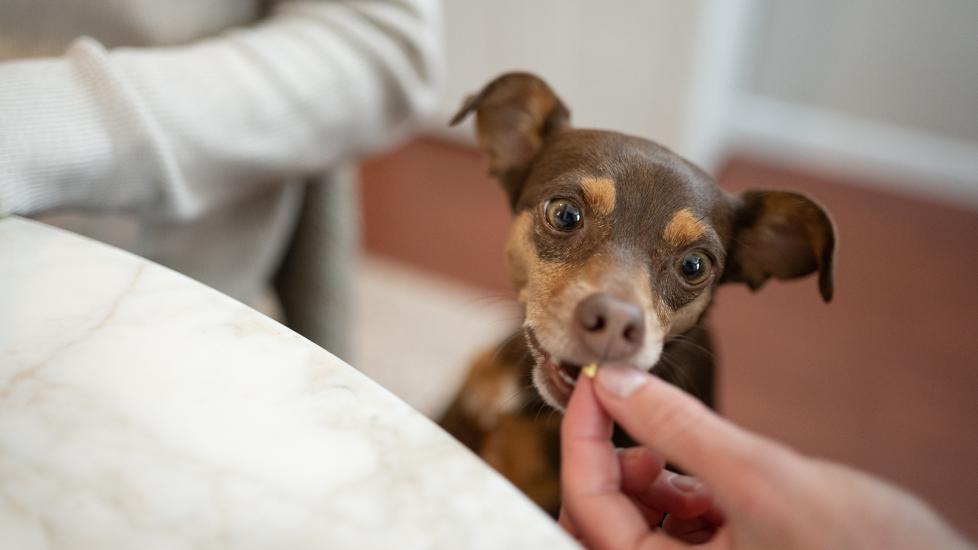
This medication must be given with food, like a treat or a small meal, to avoid stomach upset. Doxycycline can cause irritation or ulceration to the esophagus if it spends too much time in the esophagus before reaching the stomach.
Missed a Dose?
Speak with your veterinarian about what to do if you forget to give a dose of doxycycline.
Generally, your vet may instruct you to give it when you remember, or if it is almost time for your dog’s next dose, to skip the missed dose and resume your normal dosing schedule.
Do not give extra or double doses.
Possible Side Effects of Doxycycline in Dogs
Doxycycline can cause gastrointestinal side effects including:
An additional side effect may include liver irritation (elevated liver levels).
Human Side Effects
Due to possible side effects, humans should never use medicine dispensed for their pets and pets should not be given any medicine dispensed for a human’s use. Doxycycline frequently has dosages different from those prescribed for your pet by a veterinarian.
If you accidentally ingest a pet medication, seek medical attention in person or call Poison Control at 800-222-1222.
Monitoring Your Pet
No specific monitoring is required for this medication, but your veterinarian may recommend routine testing depending on your dog’s individual needs, other medications they may be prescribed, and/or the issue that initially caused your pet to be placed on this medication.
When To Call Your Vet
Call your veterinarian if you see any of the following:
-
Severe side effects (above)
-
Your pet’s condition worsens or does not improve with treatment
-
You see or suspect an overdose
-
If you have additional questions or concerns about the use of doxycycline
Doxycycline Overdose Concerns in Dogs
Doxycycline overdoses are rare, due to its wide margin of safety. The most common signs of overdose may include digestive upset such as vomiting, diarrhea, and loss of appetite.
If you suspect an overdose, immediately seek emergency veterinary care or contact an animal poison control center. Consultation fees often apply.
-
Pet Poison Helpline 855-764-7661
-
ASPCA Animal Poison Control 888-426-4435
How To Store Doxycycline for Dogs
Keep the following storage tips in mind for this medication:
-
Oral formulations of doxycycline should be stored at controlled room temperatures between 68–77 F (20–25 C).
-
Keep the container tightly closed to protect from moisture and light.
-
Always confirm storage temperatures by reading the label.
-
Compounded medications should be stored according to the compounding pharmacy’s label.
-
Keep out of reach of children and pets.
Doxycycline for Dogs FAQs
How long does it take for Doxycycline to work in dogs?
Doxycycline will start working in your dog’s system in just a few hours, but it can take several days for symptoms to improve.
Where can I buy doxycycline for dogs if I don’t have a vet prescription?
Doxycycline is only available by prescription through your veterinarian. Your veterinarian’s professional expertise is necessary to properly diagnose your dog’s medical condition and to determine if this medication is the appropriate treatment for your dog.
How much does doxycycline for dogs cost?
The cost for doxycycline for dogs can vary depending on the dosage, formulation, and frequency schedule your veterinarian prescribes, your dog’s weight, and the reason for prescription.
What foods should dogs avoid while taking doxycycline?
It’s recommended to separate foods rich in certain minerals such as calcium (dairy products, like milk, cheese, and yogurt) and iron (some commercial dog foods and supplements may contain added iron) from the doxycycline dose by two hours. If given together, these minerals can bind to doxycycline and prevent it from effectively absorbing into the body.
When in doubt, ask your veterinarian if certain foods or treats you currently give your dog should be off-limits.
What intestinal infections does doxycycline treat in dogs?
Doxycycline is not used for the treatment of intestinal infections in dogs.
No vet writer or qualified reviewer has received any compensation from the manufacturer of the medication as part of creating this article. All content contained in this article is sourced from public sources or the manufacturer.