Elbow Dysplasia in Dogs: Symptoms, Causes, and Treatment



Chewy
Elbow dysplasia in dogs is a painful joint condition commonly seen in large breeds. This developmental disorder involves abnormal growth or formation in the elbow joint, which can lead to arthritis and mobility issues.
Early detection and treatment, such as surgery, pain medications, weight management, and joint supplements, can help you improve your dog’s quality of life.
Key Takeaways
- Elbow dysplasia is a genetic condition where the bones in a dog’s elbow joint don't fit together properly, leading to arthritis and pain.
- Symptoms include limping, joint swelling, and decreased activity, especially after exercise.
- Diagnosis often involves X-rays, CT scans, or arthroscopy to identify joint abnormalities.
- Treatments include surgery, medications, joint supplements, weight management, and physical therapy to manage pain and slow progression.
What Is Elbow Dysplasia in Dogs?
The canine elbow is a complex joint made up of three bones: the humerus, the radius, and the ulna. These bones work together to allow a dog to bend, run, and play.
Elbow dysplasia is a condition related to abnormal bone growth and/or development that alters the function of this joint, leading to pain and arthritis—which most certainly affect a dog’s ability to bend, run, and play.
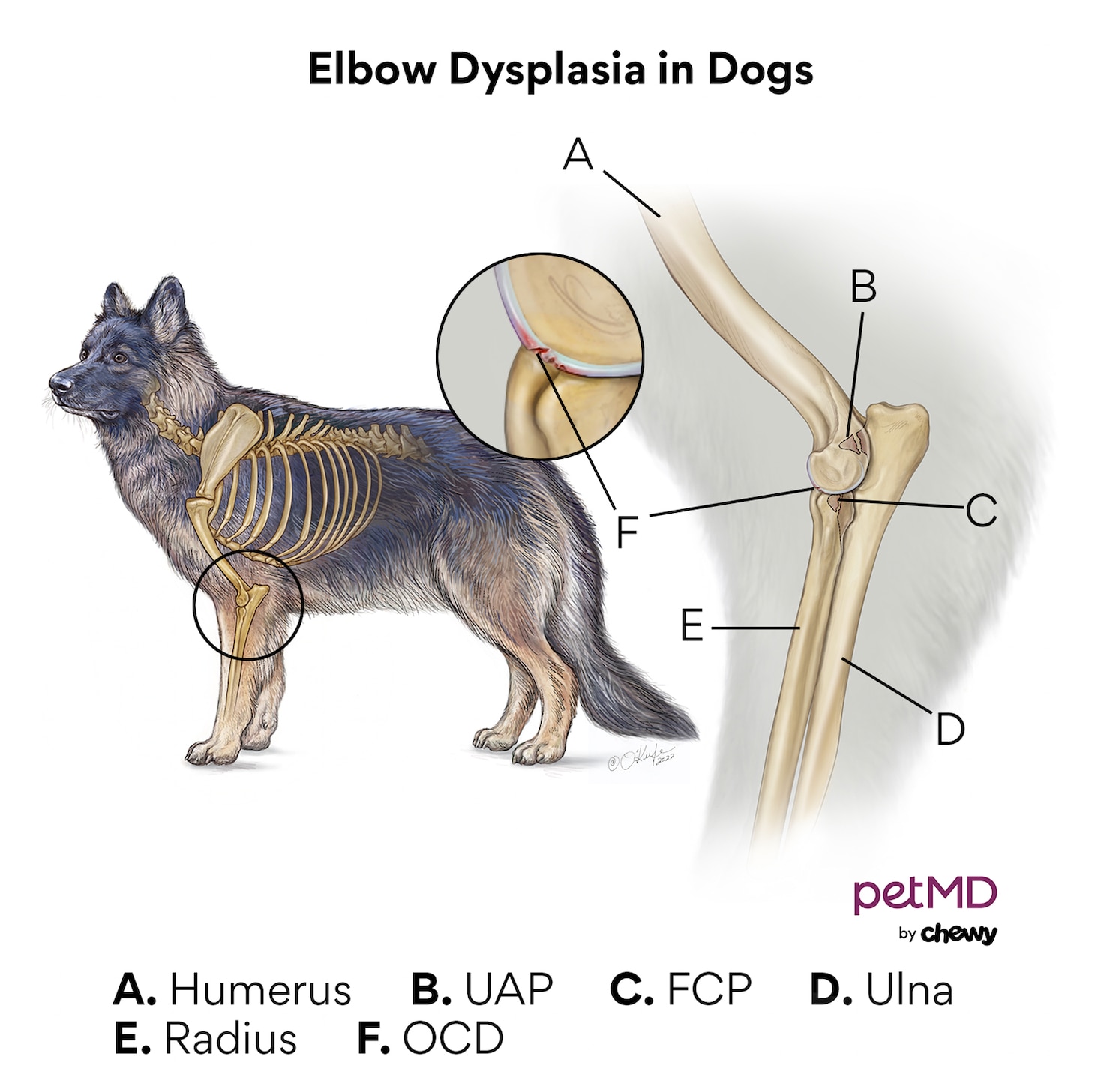
Click here to download this medical illustration.
Elbow dysplasia is seen more often in younger, large-breed dogs.
Elbow dysplasia can make the elbows look swollen and may encourage the dog to position them abnormally, such as pointing them outward.
Typically, elbow dysplasia is diagnosed when a dog has at least one of these four lesions, involving different parts of the joint:
-
Ununited anconeal process (UAP): UAP occurs when there has been separation of the bone at the top of the ulna. This is usually noted at 4 to 8 months of age.
-
Fragmented coronoid process (FCP): FCP occurs when part of the ulna fails to attach to the rest of the bone. This leads to laxity, inflammation, and arthritis.
-
Osteochondrosis of the medial humeral condyle (OCD): During development, cartilage eventually turns into bone, but in this case, that process doesn’t occur. So, where bone should be, cartilage takes its place. The cartilage can subsequently flake off, causing pain, swelling, and lameness.
-
Medial compartment disease (MCD): MCD is a term used to describe each of the above conditions together. It occurs when an abnormal amount of pressure from one joint surface erodes another joint surface, causing bone to become exposed, inflamed, and painful. This process is irreversible and carries a poor prognosis.
Symptoms of Elbow Dysplasia in Dogs
Most symptoms of elbow dysplasia in dogs are typically noticeable. However, some can be subtle, making the condition hard to diagnose. Dogs most often experience:
-
Lameness or limping in one or both forelimbs, sometimes seen with a head bob. Most dogs will still be able to bear weight on the limb.
-
Swollen elbow
-
Thickened joint
-
Decreased range of motion
-
Pain when moving the elbow
-
Elbow bulges out toward the side
-
Abnormal gait
-
Hesitant to run or play as before
Causes of Elbow Dysplasia in Dogs
Elbow dysplasia in dogs is thought to be an inherited condition, but it has also been associated with:
-
Prior trauma
-
Nutritional imbalances or deficiencies
-
Defects in cartilage growth or bone development
-
Hormonal factors
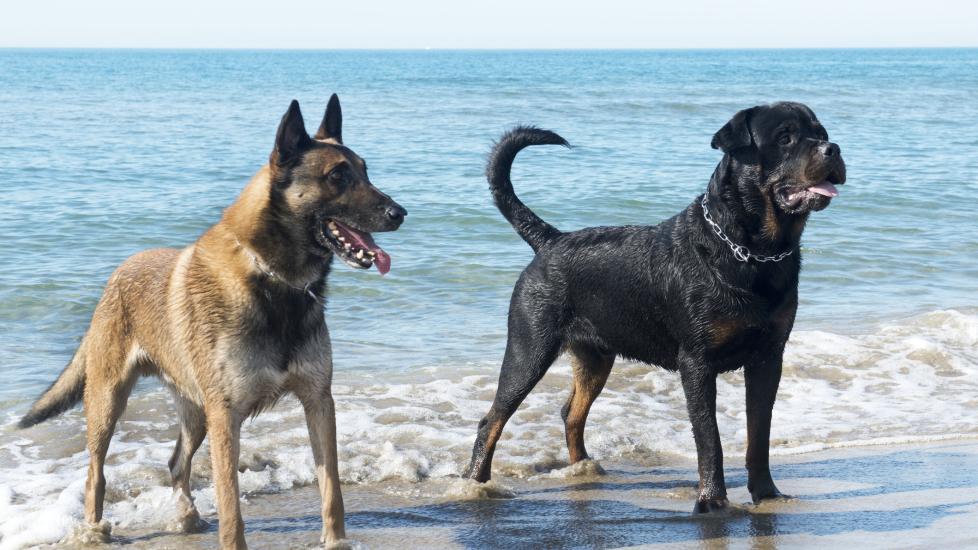
Certain large breeds are predisposed to elbow dysplasia in dogs, which often affects both elbows rather than one.
These include:
How Veterinarians Diagnose Elbow Dysplasia in Dogs
A physical exam will help localize the source of pain and discomfort to the elbow before X-rays will be taken of the limb. X-rays will be taken of both front legs for comparison and an accurate diagnosis.
Sometimes, to obtain more accurate diagnostic images, your dog may need to be sedated or anesthetized.
If elbow dysplasia can’t be determined through X-rays, a CT scan or arthroscopy (scoping, using a camera called an arthroscope, to take images of the elbow joint) may be recommended.
In some cases, treatment of the condition can also occur during the arthroscopic procedure.
Treatment of Elbow Dysplasia in Dogs
The goal of any treatment for elbow dysplasia in dogs is to slow the progression of arthritis and allow the dog to use the elbow properly. There is no cure for the disease.
Surgery, such as an ulnar osteotomy, is the most common course of treatment, not only to remove any diseased or damaged tissue but also to return functional ability to the joint. Surgery should be performed as soon as possible to prevent further joint trauma.
Cost and the ability to properly care for your dog post-op and throughout the rehabilitation process should be strong considerations in determining the best course of treatment for your dog.
Of course, this should be a conversation you have with your veterinarian, but most surgeries cost $1,500–$4,000 per elbow, depending on your region.
However, even with surgery, some degree of arthritis will develop. This is because the joint parts may not fit perfectly together following surgery, allowing them to rub against one another causing wear and tear.
Given the skill needed for repair, arthroscopic surgery is often preferred, as it is minimally invasive. This is usually performed by a veterinary orthopedic surgeon.
Dogs who are not candidates for surgery are treated supportively with:
-
Medications aimed at decreasing pain and inflammation, such as nonsteroidal anti-inflammatory drugs (NSAIDs) like Galliprant, which is an easy-to-give daily medication that can be used at the earliest signs of osteoarthritis. Other prescription NSAIDs include carprofen and meloxicam.
-
Joint supplements containing glucosamine and chondroitin, which help decrease inflammation, promote healing, and retain water, give the joint more cushioning (similar to WD-40 for gears)
-
Weight management, as any additional weight is that much more problematic for the joint
-
Adequan, an injectable medication that inhibits cartilage loss, to help restore joint lubrication and relieve inflammation
-
Librela, an injectable monoclonal antibody designed to reduce pain associated with osteoarthritis in dogs
Recovery and Management of Elbow Dysplasia in Dogs
The prognosis for elbow dysplasia in dogs is good long-term, especially if degeneration is minimal.
The recovery period is often several weeks followed by several more of physical therapy and rehabilitation. It’s important to follow your vet’s recovery plan for your dog, as this will often lead to a faster recovery and better outcome than surgery alone.
Rehabilitation with passive range-of-motion exercises, massage, acupuncture, or even physical therapy will be recommended by your vet.
Additionally, exercise restriction will be important long-term, along with minimizing the impact of running, especially on hard flooring.
Dogs who can’t undergo surgery, such as those with some underlying health issues, can live a long time with the condition. However, degenerative changes will develop over time, along with osteoarthritis, and your dog will suffer chronic pain. Medications like Galliprant and others mentioned above may be prescribed, along with joint supplements and diets formulated to support joint health.
Prevention of Elbow Dysplasia in Dogs
Because elbow dysplasia in dogs may have a genetic component, any pets with elbow dysplasia should be spayed or neutered to keep them from passing on the condition. Additionally, the parents shouldn’t be bred again.
Minimizing trauma or additional stress to the joints—by, for example, keeping your dog from jumping down from furniture or going up and down stairs—may be helpful, as well as maintaining a healthy weight.
Screening your puppy for this condition with X-rays would be advisable if your puppy is a breed that’s at-risk of developing elbow dysplasia.
Elbow Dysplasia in Dogs FAQs
How long will my dog live with elbow dysplasia?
Dogs can live normal lives with elbow dysplasia if the associated pain and inflammation is well-managed with medication and supportive care.
How much does elbow dysplasia surgery cost for dogs?
Elbow dysplasia surgery costs can vary depending on the type and the location of the veterinary hospital. However, typical costs range from $1,500 to $4,000 per elbow.
What is the success rate for dogs that get elbow dysplasia surgery?
With treatment, 85% of cases will show some signs of improvement.
Should I walk my dog with elbow dysplasia?
Yes, you can walk a dog with elbow dysplasia, but exercise should be low-impact and consistent. Short, controlled leash walks are usually recommended to maintain joint mobility and muscle strength without overexerting the joint. Always follow your veterinarian’s guidance on the appropriate activity level for your dog’s condition.