Parvo in Dogs and Puppies: Causes, Symptoms, and Treatment for Canine Parvovirus


ArtistGNDphotography/E+ via Getty Images
Canine parvovirus (CPV, or parvo) is the most serious virus that dogs and puppies can get. Thankfully, it’s preventable with proper vaccination—though it’s still widely prevalent, especially in puppies and poorly vaccinated adolescent dogs.
Let’s look at everything you need to know about parvo in dogs and puppies—how to protect your pup, parvo symptoms to look for, and what to do if your dog gets sick.
Key Takeaways
- Canine parvovirus commonly causes severe illness in young and unvaccinated dogs.
- Parvo in dogs and puppies is spread by contact with contaminated feces, but you don’t have to see feces for the virus to be present. It can live on surfaces that have been contaminated.
- There is no specific cure for parvovirus in dogs and puppies, so treatment revolves around supporting a pup so their body can fight it off.
What Is Parvo in Dogs and Puppies?
Canine parvovirus is an infectious DNA virus that commonly causes severe illness in young and unvaccinated dogs.
It primarily affects the body’s rapidly dividing cells, meaning the intestinal tract and bone marrow are the most affected.
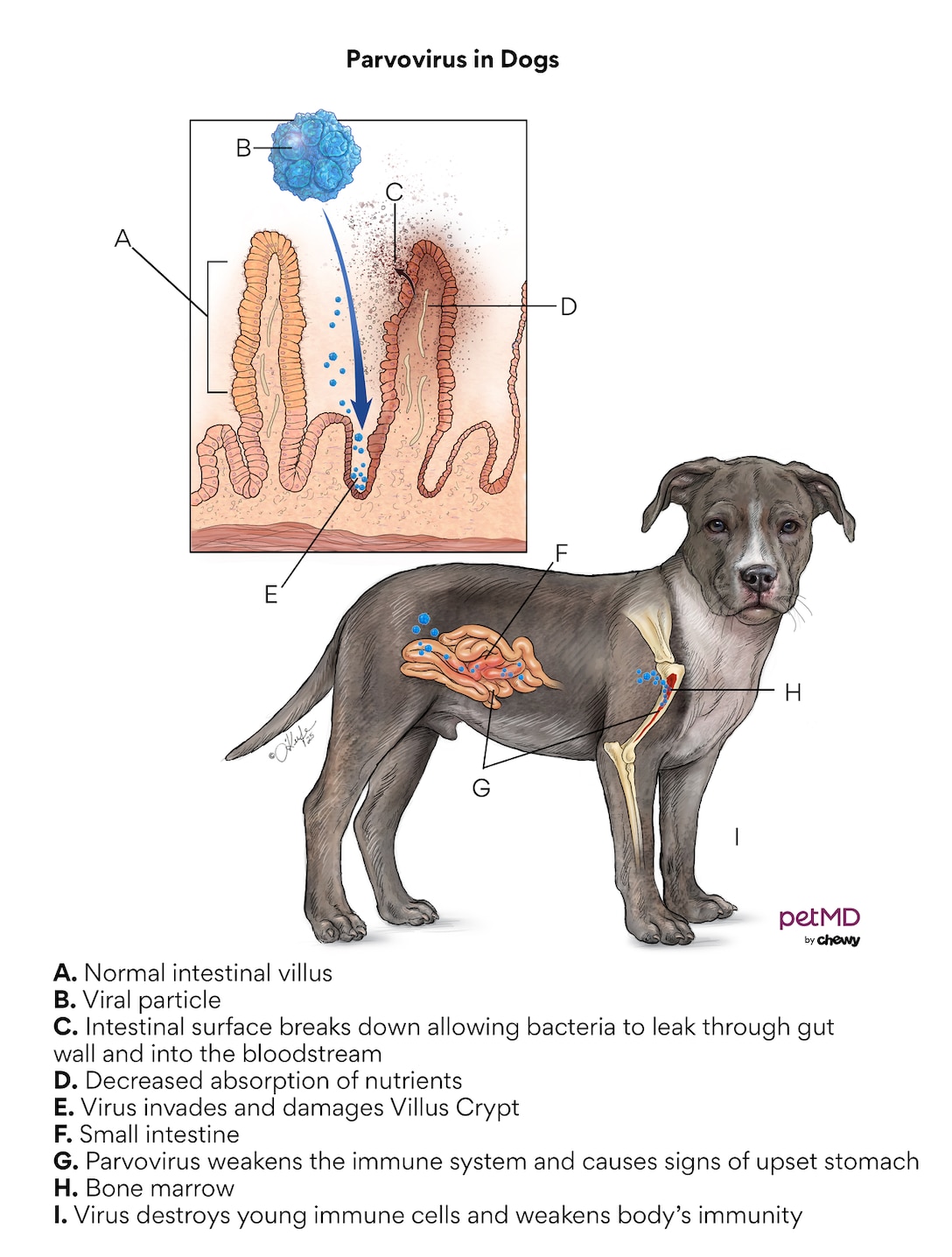
Click here to download this medical illustration.
Heart muscle cells of very young puppies can also be damaged by parvovirus.
Can Adult Dogs Get Parvo?
Although parvovirus is most common in puppies and adolescent dogs, it can also affect adult or senior dogs, especially if they are unvaccinated.
Parvo Symptoms in Dogs and Puppies
A dog with parvovirus will usually start to show symptoms within three to seven days of infection. Early signs of parvo include:
As the virus progresses, your dog may begin to experience:
Puppies with parvovirus may:
-
Collapse
-
Have a high heart rate
-
Have low white blood cell (WBC) counts
-
Be hypothermic
-
Be hypoglycemic
How Do Dogs and Puppies Get Parvo?
Parvo in dogs and puppies is spread by contact with contaminated feces, but you don’t have to see feces for the virus to be present. It can live on surfaces that have been contaminated, including on:
-
The ground
-
Kennels
-
Peoples’ hands
-
Objects
-
Clothing
Dogs can also carry parvovirus on their fur or paws if they’ve encountered contaminated material.
Parvovirus in dogs is a highly contagious disease that spreads quickly and efficiently.
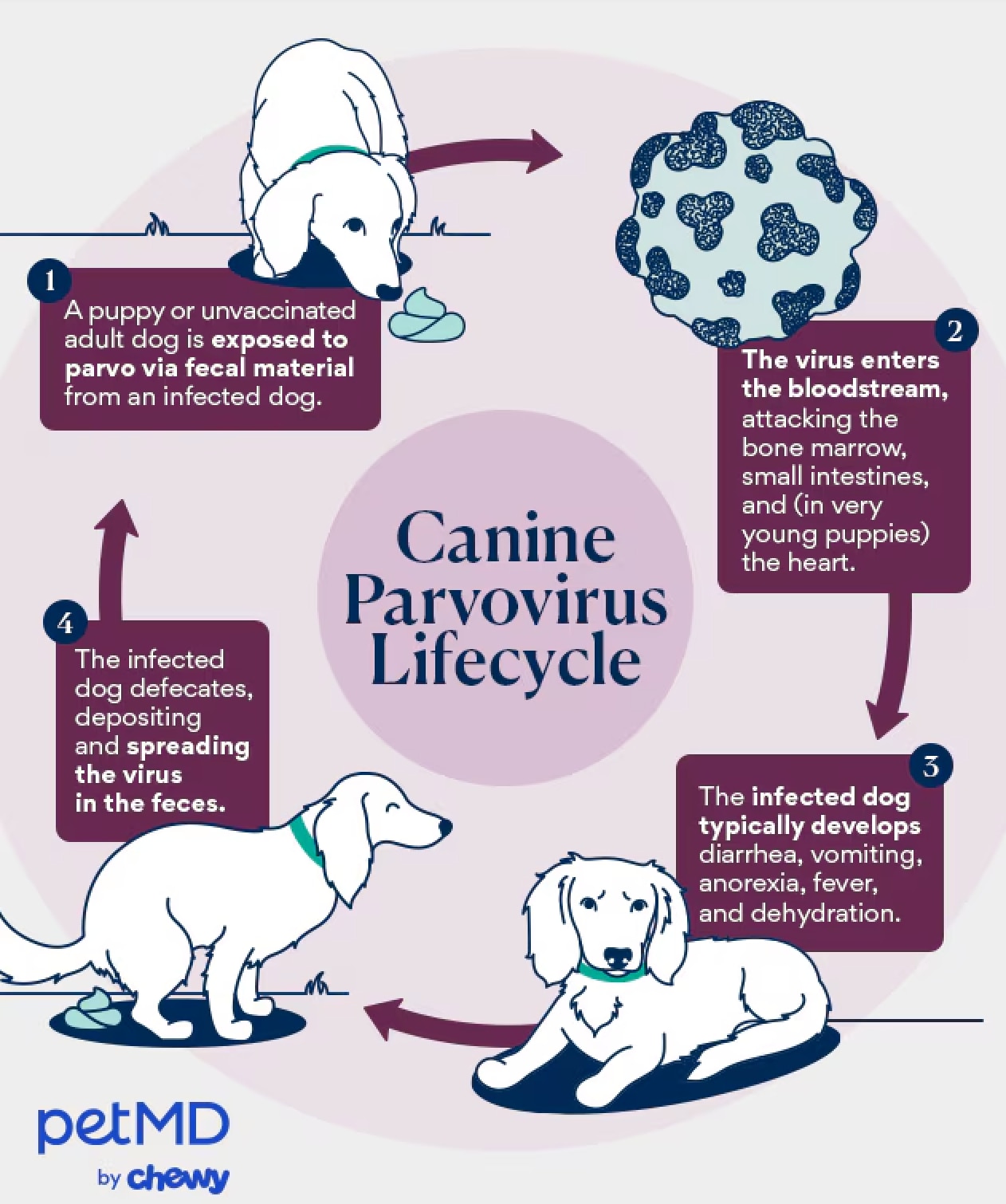
Parvovirus can survive in a dog’s environment for months—if not years—and it’s resistant to many disinfectants.
However, it is susceptible to diluted bleach and some specialized cleaners commonly used in veterinary hospitals.
Can Humans Get Parvo?
Parvovirus is species-specific, so humans have their own version of the virus. This means that humans can’t get parvovirus from dogs, and dogs can’t get parvovirus from people.
However, it’s still important to use the utmost caution by wearing personal protective equipment if you encounter a parvo puppy. While you may not get parvo, the virus could be spread to another dog via your hands or clothes.
How Is Parvovirus Diagnosed in Dogs and Puppies? Are There Parvo Tests?
Fecal SNAP ELISA tests (parvo SNAP tests) are the most common way of diagnosing parvo in dogs and puppies. The test requires a fecal swab and takes about 10 minutes.
While this test is accurate, a negative result does not necessarily rule out parvovirus in a symptomatic dog, as they may not be shedding the viral antigen at the time of testing.
Further testing may be needed in these cases.
Stages of Parvo in Dogs and Puppies
There are three stages of parvo in dogs and puppies—infection, incubation, and illness.
1. Infection
The puppy (or adult dog) is exposed to parvovirus via fecal material from an infected dog.
It’s important to note that a dog can be infected from the environment (ground or surface) or an object that encountered an infected dog even when the presence of feces is undetected.
2. Incubation
There is an incubation period (usually three to seven days) in which the dog is infected with parvovirus but not yet showing symptoms.
During this period, the virus specifically seeks out the most rapidly dividing cells in the body—typically, it starts attacking the tonsils or lymph nodes in the throat. By targeting these rapidly dividing cells, the virus can multiply effectively and efficiently to invade other parts of the dog’s body.
Once parvovirus has multiplied and entered the bloodstream, the virus will seek out other sources of rapidly diving cells. The most hard-hit affected areas are:
-
Bone marrow
-
Cells that line the walls of the small intestines
In very young puppies, parvovirus can also infect the heart, which causes inflammation of the heart muscle, poor heart function, and arrhythmias.
3. Illness
When parvovirus infects the bone marrow, it attacks the young immune cells, which leads a drop in protective white blood cells.
This weakens the body’s ability to protect itself and allows the virus to invade the gastrointestinal (GI) tract more easily, where the worst damage occurs. The virus attacks the lining of the small intestine, which prevents the dog’s GI tract from being able to:
-
Absorb nutrients
-
Prevent fluid loss into the stool
-
Stop bacteria from moving into the gut wall and then into the bloodstream
This leads to serious health issues.
While parvo in dogs is not always fatal, those that do not survive typically die from dehydration or shock—along with the damage caused by the septic toxins from the intestinal bacteria escaping into the bloodstream.
Parvo Treatment in Dogs and Puppies
There is no specific cure for parvovirus in dogs and puppies, so treatment revolves around supporting a pup so their body can fight it off.
Fortunately, with prompt and aggressive medical intervention and care, most (85–95%) puppies will survive parvovirus.
Supportive care for parvo generally includes:
-
Hospitalization with intravenous fluids
-
Antiemetics to stop vomiting
-
Focusing on nutrition, with a feeding tube, if necessary
-
Correction of any electrolyte imbalances or low blood glucose
-
Some vets may also recommend treatment with a canine parvo monoclonal antibody (CPMA)
Puppies exhibiting signs of sepsis require antibiotic therapy. Puppies with a high fever or low white blood cell count may also receive antibiotics.
How Much Does Parvo Treatment Cost for Dogs and Puppies?
The cost of treatment for parvovirus in dogs varies based on the severity of the illness, length of the hospital stays, and location of the veterinary clinic.
Costs could start around several hundred dollars for outpatient treatment and go up to several thousand dollars for a severe case with hospitalization. On average, expect treatment to cost upward of $5,000.
It’s much more cost-effective to have your dog fully vaccinated than to have them contract parvovirus. A parvo vaccine typically costs $30–$50.
Recovery and Management of Parvo in Dogs and Puppies
Recovery from parvovirus in dogs and puppies varies.
Full recovery may take time depending on the severity of the disease and the damage that’s occurred. Dogs that can recover from infection are often sick for five to 10 days after symptoms begin.
It’s important that puppies with parvovirus receive adequate nutrition so their intestines can heal. Dogs recovering from a parvo infection should be fed a bland, easily digestible diet.
Hill’s Prescription Diet, Purina, and Royal Canin all make veterinary diets that are carefully formulated to be nutritionally balanced and gentle on the GI tract.
Hospital stays generally last around five to seven days, but this varies depending on the severity of symptoms. The highest risk of death occurs around 24–72 hours after you see symptoms of parvo in dogs.
If a parvo puppy is hospitalized, given lots of supportive care, and monitored closely, the survival rate is usually around 85–95%.
Survival is more difficult if the dog is not given veterinary attention quickly after showing clinical signs or if the dog is not hospitalized with sufficient supportive care.
Prevention of Parvo in Dogs and Puppies
Parvo in dogs is a preventable disease.
Starting around six weeks of age, your dog should be vaccinated and then boostered every three weeks thereafter until around the age of 16 weeks.
As an adult, the parvo vaccine should be administered again at one year and then every three years thereafter. Proper vaccination provides your pup with the best defense at staying healthy.
Additionally, a few additional things you can do to help prevent parvo in your dog include:
-
Wiping your dog’s paws off when coming in from outside
-
Keep your dog away from feces
-
Limiting/preventing access to dog parks, wooded areas, grooming salons, pet stores, or other heavily frequented locations
-
Allowing socialization with other, properly vaccinated dogs
-
Keep unvaccinated puppies off the ground and away from unknown dogs by using a dog stroller
- Avoid contact with known infected dogs and their environments
- Wipe down shared crates or training equipment with a disinfectant that's proven to kill parvo, like Top Performance 256
Parvo in Dogs and Puppies FAQs
What are the first signs of parvo in a puppy?
Early signs of parvo in puppies include lethargy, decreased appetite and fever. Vomiting and diarrhea are soon to follow and can be quite debilitating in puppies leading to dehydration, shock, and death.
At what age is a puppy safe from parvo?
Theoretically, puppies are never safe from parvo; however, puppies between the ages of 6 and 20 weeks are most susceptible to the disease as well as unvaccinated or incompletely vaccinated dogs.
Can I touch my puppy with parvo?
Because parvovirus is highly contagious and the virus itself is hardy in the environment, it is easily spread.
One of the ways in which parvo is spread is through human contact. Whereas you can't contract your dog’s parvo, you can spread it to him if you have been in contact with other infected dogs.
Whether through your hands, shoes, or clothing, when in doubt, do not encounter susceptible dogs.
Will a puppy with parvo survive?
Fortunately, with prompt and aggressive medical intervention and care, most (85–95%) puppies will survive parvovirus.
If your puppy is showing signs or you’re concerned, it is best to seek care immediately.
References
Chalifoux NV, Parker SE, Cosford KL. Prognostic indicators at presentation for canine parvoviral enteritis: 322 cases (2001‐2018). Journal of Veterinary Emergency and Critical Care. 2021;31(3):402-413.
Horecka K, Porter S, Amirian ES, Jefferson E. A Decade of Treatment of Canine Parvovirus in an Animal Shelter: A Retrospective Study. Animals. 2020;10(6):939.
Parvovirus: Transmission to treatment. Cornell University College of Veterinary Medicine.


