Bloat in Dogs


dmussman/iStock / Getty Images Plus via Getty Images
What Is Bloat in Dogs?
Bloat in dogs is a condition in which food or gas stretches a pup’s stomach, causing abdominal pain. While it’s more common in large breed or deep-chested dogs, any breed can develop bloat.
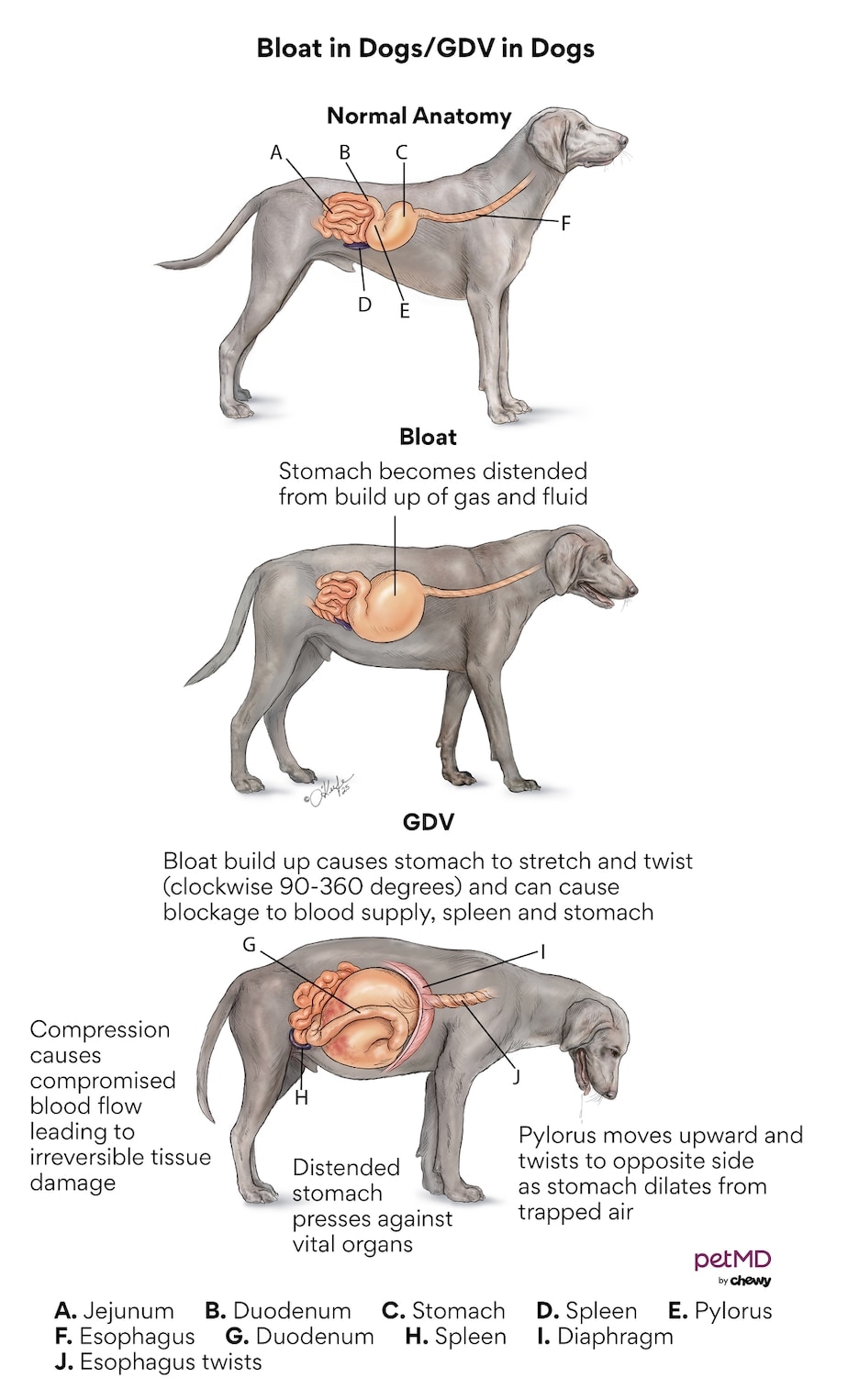
When bloat occurs, a dog’s stomach begins to expand, or distend, and cuts off blood flow to the abdomen as well as the stomach itself.
Click here to download this medical illustration.
This may cause injury or death of the stomach wall and without treatment, other organs. Bloat can also put pressure on the diaphragm, a thin muscle that separates the chest from the abdomen. This can cause difficulty breathing in dogs.
In severe cases of bloat, a dog’s stomach flips, or twists, and fills with gas. This is called gastric dilatation and volvulus (GDV).
Bloat with GDV cuts off blood flow to a pup’s stomach and the lower half of their body, making it impossible for food to pass into the intestine. In extreme cases of GDV, a dog’s stomach can rupture, and the spleen can also be injured.
All cases of bloat are medical emergencies, and require veterinary intervention to determine the severity. If untreated, a dog with GDV will die within hours. If bloat and GDV are treated immediately, they are often curable.
Symptoms of Bloat in Dogs
Bloat is an uncomfortable and painful condition. Symptoms of bloat in dogs include:
-
Dry-heaving (also called retching) without vomiting any food. Sometimes a dog might spit out white foam when trying to vomit, which is usually mucus from the esophagus or stomach.
-
Abdominal swelling (this might not be visible in the early stages of bloat)
-
Sudden anxiety, pacing, an inability to get comfortable or constantly moving around the room/house.
-
Positioning the body in a downward-facing pose, where the dog’s back half is up, and upper half is down
-
Rapid heart rate (tachycardia)
Causes of Bloat in Dogs
It’s unknown why bloat and GDV occurs in dogs.
While these conditions can affect in any pup, there are suspected risk factors that can increase the chance of bloat in dogs. These include:
-
Dogs that ingest large amounts of food or water too quickly
-
Dogs that weigh more than 99 pounds
-
Dogs that are male
-
Dogs that are older
-
Dogs that are of large breeds and deep-chested
-
Dogs that exercise immediately after eating
-
Dogs that eat from an elevated food bowl
-
Dogs with a family history of bloat
-
Dogs that eat dry food with fat or oil listed in the first four ingredients
How Veterinarians Diagnose Bloat in Dogs
A veterinarian may suspect bloat and/or GDV by simply seeing a dog’s distressed behavior and physical appearance, but they usually perform tests to confirm the diagnosis.
Veterinarians diagnose bloat in dogs with:
-
Abdominal X-rays—These are taken to confirm the diagnosis and to determine the severity of bloat.
-
An X-ray can indicate if a dog has simple bloat, where the stomach appears very distended and round and is usually full of food or gas. X-rays also show if bloat has progressed to GDV. They will show if the stomach is distended and has a “bubble” on top of the swollen stomach (sometimes referred to as a “double bubble”).
-
-
Blood work—Your vet may perform blood tests to get an understanding of your dog’s overall health.
Treatment of Bloat in Dogs
If caught in time, bloat is curable. However, treatment of bloat in dogs depends on the severity.
There are no home remedies for bloat in dogs. Dogs with simple bloat are usually hospitalized to receive of intravenous (IV) fluids and medication for pain or nausea as needed. They’re also walked often to stimulate movement of the gastrointestinal tract to help move the gas and food quickly through the body.
A dog with GDV requires more intense care. This typically includes:
-
IV fluids with electrolytes to aggressively treat shock and improve circulation to vital organs.
-
Pain medications and antibiotics to treat discomfort, shock, and any death of tissues from the loss of circulation.
-
Trocharization, a procedure often used to decompress the air out of the stomach to restore the blood flow.
-
Electrocardiogram (ECG) to monitor for any heart abnormalities.
-
Surgery, which is performed as soon as the dog is stable. Depending on the severity of bloat, a vet may have to untwist the dog’s stomach and/or spleen. They may also remove any part of the stomach wall that has died due to loss of blood flow. The vet will also stitch the stomach to the body wall in a procedure called a gastropexy. This significantly reduces the risk of rotation of the stomach in the future.
Recovery and Management of Bloat in Dogs
After diagnosis, dogs with simple bloat tend to bounce back into their normal lives and routines one to two days after receiving fluids and taking frequent walks.
Following a gastropexy procedure, a dog will remain in the hospital until their pain is controlled and the dog is eating and drinking normally on their own.
The duration of a pup’s hospital stay depends on their health history and severity of bloat. Their stay may be anywhere from one to two days, to up to seven or more.
Follow your vet’s discharge instructions regarding surgical aftercare. This includes typically 10 to 14 days of rest, monitoring the incision, and giving oral medications. It may be useful to purchase a cone or recovery suit to help keep your pup from licking/chewing at their surgical incision during recovery.
Prevention of Bloat in Dogs
You can lower the risk of your dog developing bloat by doing the following:
-
Never leave large bags or bins of food accessible to your dog to avoid overeating.
-
Do not use raised food bowls unless advised by your veterinarian (some pets require a raised food bowl due to a medical condition).
-
Have your dog wait at least one hour after a meal or drinking a large amount of water for any exercise or playtime.
-
Feed your pup small meals a few times throughout the day instead of one or two large meals.
-
Don’t allow your dog to gorge on water when drinking.
-
Discuss preventative surgery with your veterinarian for breeds at higher risk of bloat. This can often be performed during your pet’s spay or neuter procedure.
-
If purchasing a pup from a breeder, be sure to ask if there is any family history of bloat or GDV.
Bloat in Dogs FAQs
What relieves bloating fast in dogs?
If your dog is experiencing bloat, they require immediate medical attention. If the bloat is distension only and the stomach has not twisted (GDV), your vet will treat your pup with fluids, medications, and increased walking. If your dog’s stomach has twisted, emergency surgery will likely be required.
Can dogs survive bloat?
Yes. While bloat and GDV are both medical emergencies and potentially life-threatening, with fast medical intervention they can make a complete recovery.
It’s important to get your dog emergency veterinary care—one to two hours can be the difference between a good and bad prognosis.
What foods cause bloat in dogs?
No specific foods cause bloat in dogs. Large amounts of food and water or exercising after a large meal are more significant concerns.
Research shows that dry dog foods that list oils or fats among the first four labeled ingredients may predispose dogs to GDV.


