Maltese


Istock/enviromantic
The Maltese is a small dog breed that’s best known for their luxurious, floor-length white coat and playful personality.
These dogs originated on the Mediterranean island of Malta and have been loyal companions for centuries, with references to the breed found in Ancient Greek and Roman literature. Today, these tiny white dogs are highly adaptable and make charming and devoted companions.
Caring for a Maltese
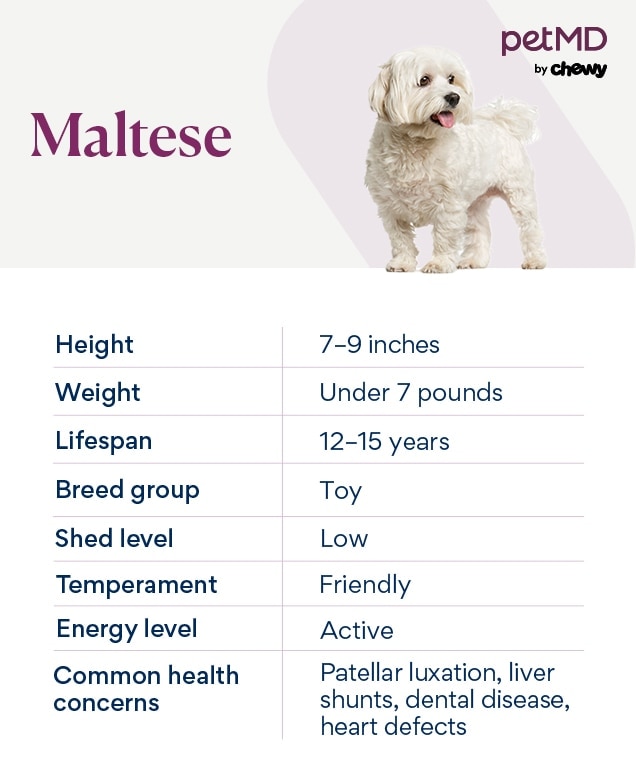
The Maltese dog breed has a lot of perks: The dogs are small, friendly, and generally healthy. Their white coat also gives them the label of “hypoallergenic” dog, though there is no such thing as a totally allergen-free pup. But that long and silky coat also requires near-daily upkeep to keep in top shape, so block off time on your calendar for grooming.
Along with grooming, socializing and training are also commitments pet parents must make when bringing home a Maltese puppy. These pint-sized pups have a big personality and need positive reinforcement, exercise, and mental stimulation every day.
Maltese Health Issues

The average Maltese lifespan is 12–15 years. They are a generally healthy breed with few health concerns, but there are a few inherited conditions pet parents need to be aware of for health management.
Luxating Patella
Maltese can develop luxating patellas, an inherited condition where one or both of the kneecaps pop in and out of place.
Although patellar luxation is not generally considered a painful condition, it may cause the dog to favor one leg and can predispose them to other knee injuries (such as a cranial cruciate ligament tear) and arthritis. Depending on the severity of the luxating patella, surgery may be recommended to prevent further injury and improve your Maltese’s quality of life.
Patent Ductus Arteriosus (PDA)
Responsible Maltese breeders will screen their puppies for heart abnormalities such as patent ductus arteriosus. PDA is an inherited condition where the ductus arteriosus (the normal opening between the two major blood vessels in the heart that closes shortly after birth) does not close.
This condition causes blood to flow improperly and forces the left side of the heart to work harder, eventually leading to heart failure.
Depending on the size of the opening, dogs may show minimal symptoms to severe signs of heart failure such as:
-
Exercise intolerance
-
Stunted growth
Surgery is typically the best option to close the defect. When done before the heart begins to fail, dogs generally have a good prognosis. Some dogs that have already developed heart failure at the time of surgery may require medications afterward.
Liver Shunts
Maltese puppies should also be screened for congenital liver issues, such as shunts.
Liver shunts are abnormal veins that bypass the liver. This bypasses the normal filtration of toxins, wastes, and medications from the blood. Dogs with liver shunts may have stunted growth and neurologic signs such as disorientation or seizures.
Liver shunts can be screened with a blood test and are often managed with a diet change and medication, though sometimes surgery is required.
Dental Disease
Like all other toy breeds, Maltese dogs are at a heightened risk of periodontal disease, or dental disease. This can lead to bad breath, red and inflamed gums, loose teeth, and other symptoms that can be painful for your Maltese. When left untreated, dental disease can even damage a dog’s organs.
The best way to keep your dog’s mouth healthy is with daily at-home tooth brushing and routine dental cleanings under anesthesia.
What To Feed a Maltese

Selecting the best diet for a Maltese is based on the needs of the individual dog.
While it’s always important to choose a diet with high-quality ingredients, it’s best to discuss diet with your veterinarian. A vet can make a recommendation based on your dog’s specific medical history.
The dog food you choose must meet the nutritional standards set by the Association of American Feed Control Officials (AAFCO). There are even some breed-specific dog foods designed for Maltese; ask your veterinarian if these are good options for your dog.
How To Feed a Maltese
Due to their tiny size, young Maltese puppies can be susceptible to hypoglycemia (low blood sugar) if they don’t eat enough food throughout the day. This can be avoided by feeding your puppy small meals three to four times a day until they are around 4 months old.
At this age, their bodies are better suited to regulate glucose levels, and they can transition to two (or three, if desired) meals a day. Adult Maltese typically do well with two meals a day, in the morning and evening.
Maltese dogs can be prone to obesity. Avoid overfeeding your pup so they can maintain a healthy weight and body condition score.
How Much Should You Feed a Maltese?
Just like when choosing the right food, how much you feed your dog varies by individual. Follow the instructions on your dog food packaging—this provides portion guidance based on your dog’s weight.
If you have any questions, ask your veterinarian. They can refine the dog food packaging’s recommendations based on your specific dog’s lifestyle and health.
Nutritional Tips for a Maltese
For Maltese dogs that have luxating patella, it may be beneficial to offer them a joint supplement with glucosamine and chondroitin. Additionally, omega-3 supplements (fish oil) can help protect joint health and keep their skin and coat lush and soft.
Always talk to your veterinarian before giving your dog a supplement.
Behavior and Training Tips for the Maltese
Maltese Personality and Temperament

While every pup is an individual, the typical Maltese dog’s temperament is affectionate and friendly.
They make good family dogs but interactions between them and young children must be supervised, as rambunctious children may accidentally hurt this tiny dog. A family with older children who understand how to interact with a dog may be better suited for a Maltese.
Maltese dogs form close bonds to their family and prefer to always be by your side. This breed can develop separation anxiety when left alone for too long.
Maltese Behavior
Like all dogs, Maltese do well with daily activity, but they don’t require vigorous exercise to maintain their physical or mental health. They’ll enjoy taking a walk around the neighborhood, playing in the backyard or living room, and learning new ticks.
A Maltese that’s allowed to grow bored or become lonely may turn to unwanted behaviors such as excessive barking.
Maltese Training
Maltese are smart dogs that can pick up training cues quickly when positive reinforcement is used. Keep training sessions short and fun, like a game, to keep your dog’s attention.
Be mindful of how many treats you’re feeding your Maltese during training sessions, as calories can quickly add up for these tiny dogs. You can use praise and toys as positive reinforcement as well.
Fun Activities for a Maltese
Maltese Grooming Guide

Maltese are known for their long and silky white coat that requires daily care to prevent mats and tangles. Their fur should be brushed or combed every day, and regular bathing will keep their skin and coat healthy and clean.
If you want a lighter grooming regimen, there are many shorter Maltese haircuts you can choose from.
Skin Care
Skin care for the Maltese can vary depending on the individual’s needs. However, this breed does not typically have sensitive skin. Regular brushing and bathing with a dog-friendly shampoo to maintain their coat is the best way to keep their skin healthy.
Contact your veterinarian if you notice any changes in your dog’s skin.
Coat Care
The Maltese’s long coat is prone to matting, which can cause skin infections if not cared for properly. Daily brushing is required to prevent their fur from matting or tangling.
When bathing a Maltese, it’s important to thoroughly rinse and then dry the hair to prevent skin irritation or infection from the shampoo and moisture.
Eye Care
Their white coat can predispose the Maltese to tear staining, but routine cleaning with a vet-recommended tear stain remover will help keep this to a minimum.
Excessive staining or other eye discharge could be a sign of other underlying conditions should be discussed with a veterinarian.
Ear Care
Routine ear cleaning with a veterinary-approved ear cleaner is important for maintaining healthy ear canals and preventing ear infections. Ear-cleaning should also be done any time a Maltese is in water, such as after swimming or bathing.
Dental Care
Pet parents need to pay special care to their dog's mouth because Maltese are prone to dental disease. Brushing their teeth every day using a dog-safe toothpaste and toothbrush is the best way to keep their teeth clean and healthy. It can also help to give your dog dental chews.
Considerations for Pet Parents
The silky white coat of a Maltese dog is often a major draw for new pet parents, but this breed will do best in a home that’s able to provide daily maintenance of that coat. They need to be brushed every day and have routine baths. If you keep your dog’s coat trimmed short, you need to have the budget for consistent groomer appointments.
But those who are ready to meet their grooming needs will find a friendly, playful, and loving companion in the Maltese. Though energetic, the breed doesn’t require a lot of exercise, which can make them well-suited for busier families.
Their tiny stature makes the rambunctious nature of young children somewhat intimidating for the Maltese, but they’ll fit right in with families that have older kids.
Maltese FAQs
Do Maltese shed?
All dogs shed, but Maltese tend to shed very minimally.
Are Maltese hypoallergenic?
All dogs produce allergens from their coat, dander, urine, and saliva. But because of their low-shedding coat, a Maltese can be a good fit for some people who experience dog allergies. Before bringing home a Maltese puppy, spend time with the breed first to see how your allergies react.
Is a Maltese a good family dog?
Yes, Maltese are very affectionate and loving toward their families. They do well with children who know how to interact properly with small animals, but they may be best suited for a family with older kids who are always gentle.
How long do Maltese live?
The typical Maltese lifespan is 12–15 years.
How much does a Maltese cost?
Depending on the breeder’s experience and the puppy’s pedigree, the typical Maltese dog price can range from $600–$2,000. You can also find more affordable dogs for adoption at Maltese rescue organizations.
How big do Maltese get?
Maltese dogs weigh under 7 pounds and stand 7–9 inches tall.
Should I buy a teacup Maltese?
No. Maltese dogs are already very small, and breeders who try to create smaller versions often don’t have the dogs’ health in mind. Avoid working with breeders who advertise teacup puppies.


