Dalmatian



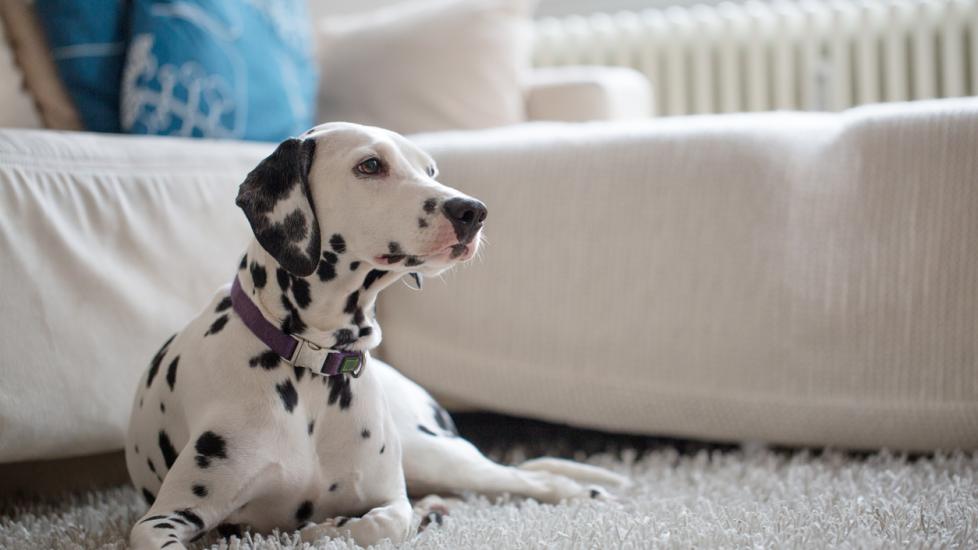
As the original fire dog, Dalmatians would run alongside fire carriages in the 1700s, according to the Dalmatian Club of America (DCA). The spotted dogs acted as sirens, barking to let people know they needed to get out of the way of the carriage. Dalmatians still work with firefighters today, though most often as a mascot comforting firefighters or teaching young people about fire safety.
Dalmatians’ loyalty, intelligence, and energetic nature means they require a highly active lifestyle. They are natural competitors and love competing in dog sports like agility. But Dalmatians are also independent canine companions who will take charge if given the opportunity, so it’s important to start training at a young age.
Caring for a Dalmatian
Adopting a Dalmatian means committing to an active lifestyle. Dalmatians are rambunctious, highly energetic, and need a lot of daily exercise. Without adequate activity, these dogs may develop undesirable behaviors to keep themselves entertained.
Dalmatians shouldn’t be left alone for long periods of time—not only because they crave activity, but also because they can experience separation anxiety. They need a family of homebodies or people who are willing to take their dog with them wherever they go.
Dalmatian Health Issues
This breed is prone to many hereditary conditions, so pet insurance is a good investment for those looking to bring home a Dalmatian puppy. Keeping up with regular vet appointments is also an essential part of Dalmatian care. A dog DNA test may be able to screen for many health conditions your dog is predisposed to.
Bladder Stones
Dalmatians are prone to urinary stones and more likely to develop them than many other breeds, according to the DCA. Veterinarians can test for this disease with a DNA test, X-rays, ultrasounds, or a urine analysis. If your Dalmatian develops a urate bladder stone, she will typically need surgery and need to be on a special lifelong diet to help prevent them from reoccurring.
Deafness
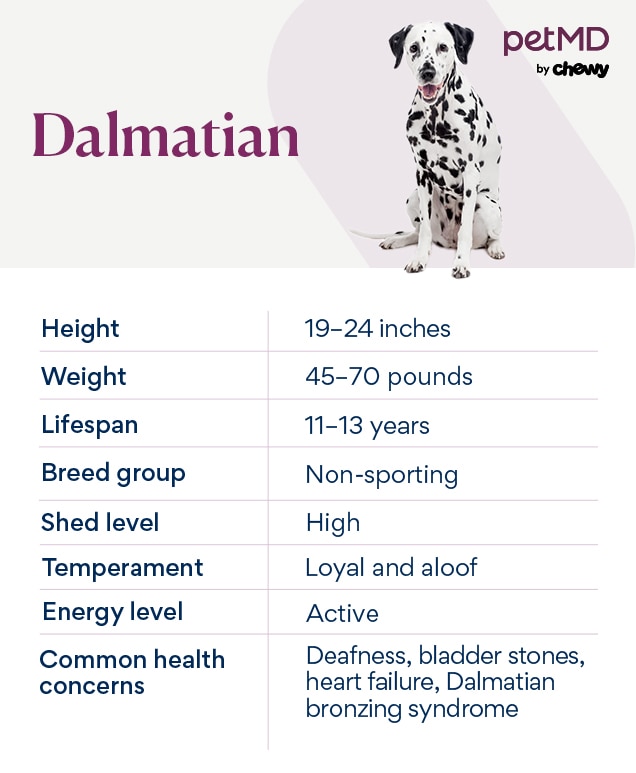
It’s not uncommon for Dalmatians to be deaf. According to the Universities Federation for Animal Welfare, 5% of Dalmatians are totally deaf, and another 15%-30% are deaf in one ear. Deaf dogs will need special training and living considerations, such as using hand signals in place of voice commands.
Dilated Cardiomyopathy
Dilated cardiomyopathy (DCM) is a life-threatening condition where the heart becomes enlarged, thin, and weak. Dalmatians with dilated cardiomyopathy will become weak, tired, have trouble breathing, or cough. DCM is a common cause of congestive heart failure in dogs, which can be life-threatening. Veterinarians can detect abnormal heart issues with a physical examination, a chest X-ray, an echocardiogram, and/or an electrical heart screening (EKG).
Dalmatian Bronzing Syndrome
Dalmatian bronzing syndrome (also known as “Dal crud”) is a skin condition where Dalmatians develop pink or bronze coloration in their coat. Dalmatians with this condition will also experience hair loss, crusty skin patches, and inflammation of the hair follicles. Your dog may need antibiotics, special shampoo, medication, and/or dietary changes to manage this condition.
What To Feed a Dalmatian
Dalmatians are medium to large dogs that stand 19-24 inches tall and weigh 45-70 pounds. They need to eat a dog food approved by the Association of American Feed Control Officials (AAFCO) for their age group, to help them stay at an appropriate weight.
How To Feed a Dalmatian
If you’re considering Dalmatian adoption, know that they may have to be on a low-purine diet because they can develop bladder stones. This diet restricts the amount of liver, beef, and kidney that a dog eats, as these meats include purine, a compound that can lead to the formation of crystals and stones in the bladder. Speak with your veterinarian before putting your Dalmatian on a low-purine diet.
How Much Should You Feed a Dalmatian?
The exact amount of food you give your Dalmatian depends on her weight. Follow the instructions on your dog food’s label to figure out how much you should feed your Dalmatian each day. If you notice your canine companion scarfing down her food too quickly, give her a slow feeder bowl.
Because Dalmatians have a high level of uric acid, they should not be fed table scraps. Commercial dog foods are typically fine for them.
Nutritional Tips for Dalmatians
Dalmatians will get all their nutrients from a well-balanced dog food. Do not give your pup supplements unless recommended by your veterinarian.
Behavior and Training Tips for Dalmatians
Dalmatian Personality and Temperament
Dalmatians are intelligent and energetic. They are the perfect pup for anyone with an active lifestyle because they require a lot of exercise and mental stimulation. Because of this, Dalmatians are at their best when they have a job to do. And while that job doesn’t need to be putting out a fire, they will benefit from learning tricks or competing in dog sports.
These playful pups can be good with kids and other pets, but small children must be taught how to treat dogs nicely. And, as with any dog breed, interactions with kids should always be supervised.
Dalmatian Behavior
While Dalmatians are friendly and loving toward people they know, they can be aloof and uninterested when meeting new people, especially in adulthood. This is why socializing Dalmatian puppies early in life is so important.
“Once mature, Dalmatians as a breed are known to act distant, and ignore unfamiliar people and dogs,” says Karishma Warr, head of training and behavior at Calm Canine Academy. That said, Dalmatians will bark occasionally, mostly to get your attention.
Dalmatians are rambunctious, highly energetic, and need a lot of daily exercise.
Dalmatian Training
Dalmatians are independent and headstrong, so training them is a practice in patience. They respond best to positive reinforcement training, so give them lots of praise with healthy treats, toys, and head pats. But these pups are super smart, too, and can pick up on training cues quickly when properly motivated.
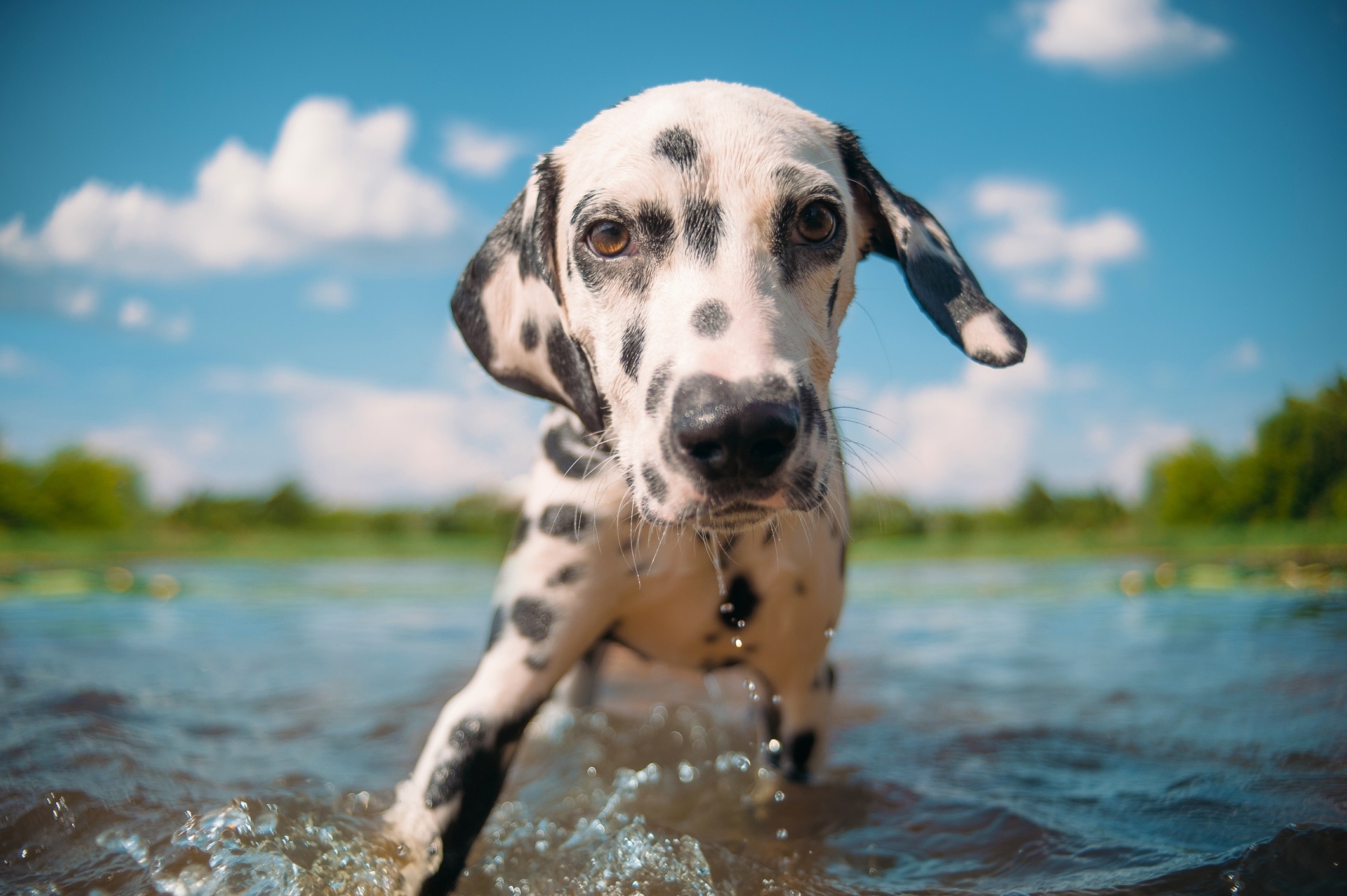
Once she learns the basics, your Dalmatian can benefit from next-level training. Teach her to run an agility course, swim around a lake, or enroll her in Dalmatian Road Trial, a performance event where an off-leash Dalmatian follows a handler on horseback or a horse-drawn carriage.
Fun Activities for Dalmatians
-
Fetch
-
Tug-of-war
-
Frisbee
Dalmatian Grooming Guide
A Dalmatian’s spotted coat doesn’t require a lot of upkeep, but she will need weekly brushing and occasional baths. But don’t be fooled by the Dalmatian’s short coat; they are heavy shedders.
As part of their regular care routine, Dalmatians need their nails trimmed monthly, and their teeth should be brushed at least weekly to deter dental disease.
Skin Care
Dalmatians are prone to skin allergies and other skin conditions such as dry skin and hair loss. Any shampoos or products used on a Dalmatian should be made for dogs with sensitive skin. Take your Dalmatian to the vet if you see her:
-
Excessively licking
-
Excessively scratching
-
Losing hair
-
Showing red, irritated, or flaky skin
Some Dalmatians dealing with skin allergies will need medication, medicated baths, or other treatments.
Coat Care
Dalmatian puppies are born with an all-white coat; their characteristic Dalmatian spots begin to develop when they’re 2 weeks old. This speckled coat sheds heavily year-round, and the breed needs to be brushed at least once a week with a rubber comb or mitt.
Eye Care
Dalmatians don’t need special eye care, but they may develop glaucoma as they age. Glaucoma leads to blindness if left untreated, so if your Dalmatian is squinting or scratching at her eyes, or if her eyes become red or watery, contact your veterinarian.
Ear Care
As with all floppy-eared dogs, a Dalmatian’s ears should be checked regularly for signs of infection, including:
-
Redness
-
Odor
-
Pain
-
Shaking the head
-
Excessive scratching
-
Head tilt
-
Discharge
It’s important to keep your Dalmatian’s ears clean and dry. Clean your dog’s ears regularly, including after every bath and swimming session. Contact your veterinarian if you notice ear infection symptoms.
Considerations for Pet Parents
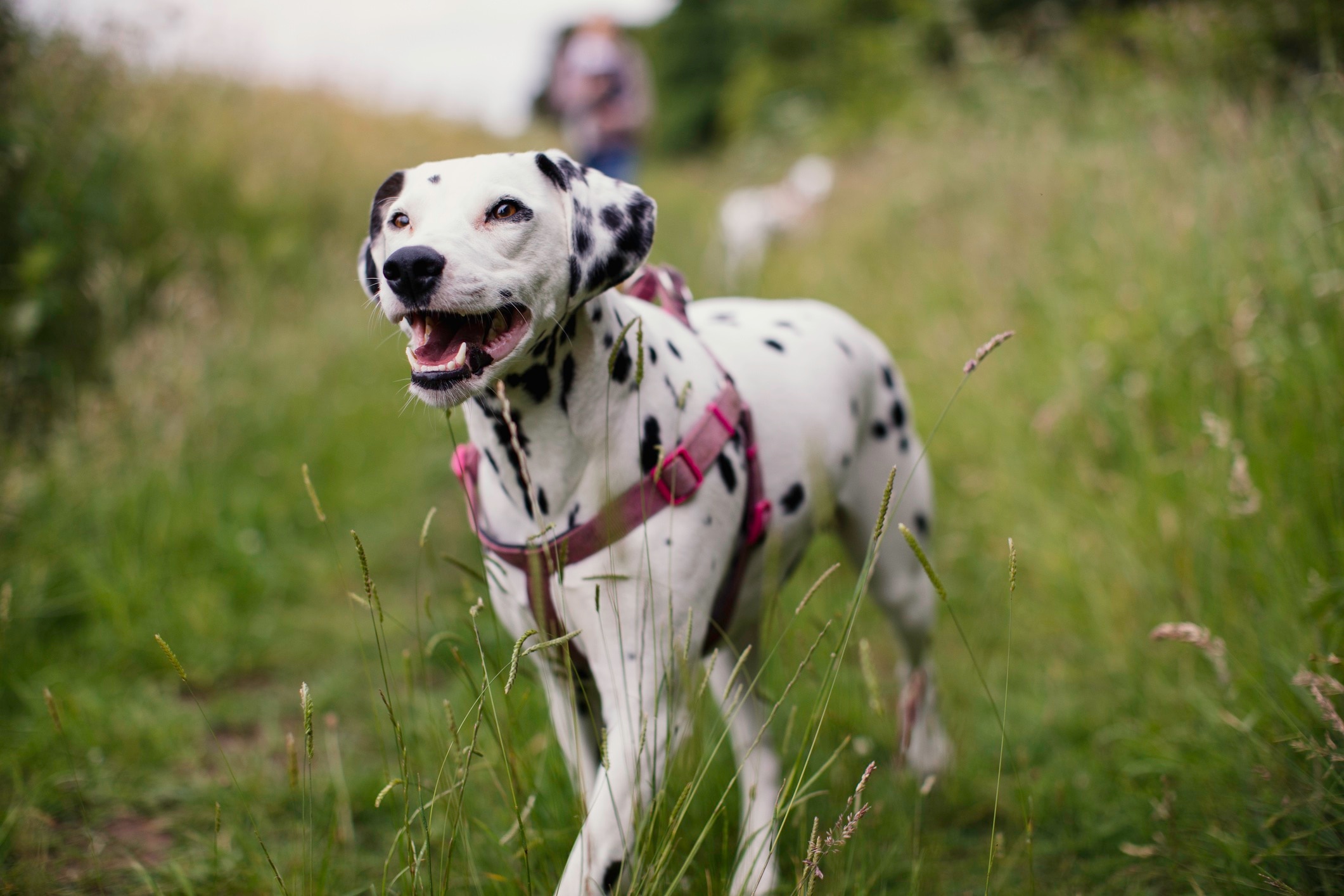
As a highly energetic breed, Dalmatians need a lot of exercise and mental stimulation to expend all that energy. “A standard leash walk will likely not meet their exercise needs,” Warr says. Dalmatian pet parents need to commit to lots of walks, runs, and other activities like agility or nose work. With an active and attentive family, Dalmatians can thrive in almost any living situation, though they prefer a fenced-in yard to explore and run around.
Dalmatian FAQs
How much do Dalmatians cost?
Purebred Dalmatian puppies can cost $500–$2,000, though the price can go as high as $5,000. The cost will depend on the pup’s bloodline, and the breeder’s reputation, location, and other factors.
Additionally, your Dalmatian will need regular veterinary visits dog food, training classes, food and water bowls, leashes, poop bags, and dog toys. You may even opt for pet insurance. The expense of dog ownership depends on your dog’s overall health, your budget and lifestyle, and their needs.
How long do Dalmatians live?
Dalmatian dogs generally live 11–13 years. Give your Dalmatian the best shot at a long life by providing a healthy diet, regular exercise, and regular trips to the veterinarian.
Do Dalmatians bark a lot?
Every dog is an individual. Dalmatians are not the noisiest breed, but they may bark in response to stimuli such as doorbells and sirens.
Why is the Dalmatian a fire dog?
Though Dalmatians are an ancient breed—according to the DCA, their history dates back centuries, though the exact origins are unknown—they have earned the nickname “Firehouse Dog” because of their close association with firefighters. In the 1700s, the dogs would run alongside horse-drawn fire engines, barking to clear the road. Today, Dalmatians serve as more of a mascot for many firehouses.
Are Dalmatians rare dogs?
While less common than other breeds, Dalmatians are not rare. However, long-haired Dalmatians (pups with the same polka-dot pattern on fur that’s 2–4 inches long) are much rarer, as the longer locks are caused by recessive genes.
And while most of these dogs are black and white, there are also lemon Dalmatians that have yellow-ish or orange-ish spots. Like long-haired Dalmatians, this rare lemon color is caused by recessive genes.
Featured Image: iStock/alvarez