Stomach and Intestinal Ulcers in Cats



What are Stomach and Intestinal Ulcers in Cats?
A stomach or intestinal ulcer develops when the normal protective lining in the stomach or duodenum—the upper part of the small intestine—is damaged. This causes underlying cells to be exposed to the stomach's acidic digestive fluids.
Stomach and intestinal ulcers can sometimes be referred to as gastroduodenal ulcers or gastric ulcers, classified by the location where the ulcers occur. The longer an ulcer goes untreated the deeper it can become, leading to bleeding, stomach/abdominal pain, and even a hole formed in the stomach or intestines, called a perforation. Fortunately, stomach ulcers are rare in cats.
Symptoms of Stomach and Intestinal Ulcers in Cats
Vomiting, with or without blood, is the most common clinical symptom of stomach and intestinal ulcers. When blood is present it may be bright red, dark brown, or black in color. Additional symptoms may include:
-
Loss of appetite
-
Abnormally dark stool (melena)
-
Excessive salivation
-
Lethargy
-
Pale gum color
-
Weight loss
-
Stomach pain
Causes of Stomach and Intestinal Ulcers in Cats
Stomach and intestinal ulcers in cats generally occur as part of another disease process, which either leads to the buildup of excessive stomach acid or breaks down the normal protective structures present in the stomach or intestines. The most common causes for stomach and intestinal ulcers in cats include:
-
Parasites
-
Cancer (for example, lymphoma, gastrinoma, carcinoma, mast cell tumor)
-
Chronic or acute kidney failure
-
Severe stress
-
Sepsis (severe body-wide infection)
-
Foreign material in the stomach or intestines
-
Non-steroidal anti-inflammatories (rare)
How Veterinarians Diagnose Stomach and Intestinal Ulcers in Cats
Diagnosis of a stomach or intestinal ulcer starts with your veterinarian obtaining a history of your cat's symptoms and performing a thorough physical examination. Other tests may include:
- Blood chemistry/complete blood count: A low red blood cell count is generally found in all cats with stomach ulcers regardless of cause. This test also measures electrolyte levels and internal organ function, which can help to determine if any systemic illnesses are present. White blood cell levels can help your veterinarian determine if a secondary infection has occurred.
- Radiographs/x-rays: These can be helpful to look for an underlying cause like foreign material in the stomach or intestines or large masses. However, they cannot capture small details like the health of the stomach wall.
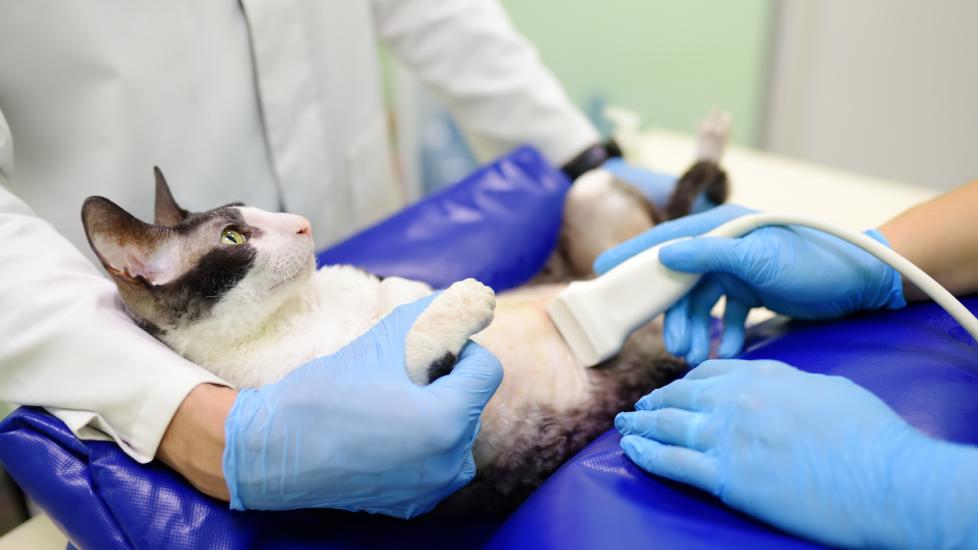
- Ultrasound: An ultrasound of the abdomen/stomach can give more information on the wall and lining of the stomach.
- Endoscopy: A camera-tipped tube is inserted from the throat. It is used to inspect the surface of the esophagus, stomach, and upper small intestine, to uncover the possible presence and extent of stomach or intestinal ulcers. If a cancerous cause is suspected, this procedure would allow for any visible mass to be sampled and sent to a laboratory for testing. This test requires anesthesia.
Treatment of Stomach and Intestinal Ulcers in Cats
Treatment for your cat depends on the cause, symptoms, and severity of a stomach ulcer.
Medical management of mild ulcers may include medications to decrease stomach acid production. There are two groups of this type of medication:
- H2 blockers, which decrease the amount of stomach acid present (ranitidine, cimetidine, famotidine)
- Proton pump inhibitors (PPIs), which shut down the acid pumps to prevent stomach acid from getting pumped into the stomach (omeprazole).
In addition, medication to coat the lining of the stomach (sucralfate) may be prescribed.
Bacteria in the digestive system is normal and usually beneficial unless the protective layer of the stomach is damaged. However, bacteria can affect the exposed inner layers, so your veterinarian may prescribe an antibiotic to prevent or treat an infection.
In addition to the medications listed above, moderate to severe ulcers may require surgical intervention and even blood transfusions to treat anemia.
Recovery and Management of Stomach and Intestinal Ulcers in Cats
Depending on the severity of their ulcer and symptoms, cats may be treated at home with oral medications and should recover within a few days. Moderate to severe ulcers may require time in the hospital, especially if surgery is needed.
These patients are generally hospitalized for several days, and medications are generally recommended for at least two weeks. It is important to feed your cat an easily digestible diet. Prescription foods will likely be recommended for at least the recovery period, but a lifelong change in diet may be needed.
The prognosis for cats diagnosed with stomach ulcers depends on the cause, severity, and time to treatment. Pets with mild ulcers tend to do well. Severe ulcers can be life-threatening.
For cats at a high risk for the development of stomach ulcers, your veterinarian may recommend they stay on stomach acid-reducing medications or prescription diets long-term.
Stomach and Intestinal Ulcers in Cats FAQs
Do ulcers in cats go away on their own?
Once ulcers start causing symptoms in your cat, medical treatment in some form will be needed. Medication to decrease stomach acid and easily digestible bland diets will be needed at minimum to treat your cat’s stomach ulcer.
What can I feed my cat with an ulcer?
Cats with stomach ulcers should be fed an easily digestible bland diet that is low in fat. Several prescription diets, including Purina EN, Hill’s i/d, and Royal Canin Gastrointestinal, can fulfill these requirements.
References
Liptak JM, Hunt GB, Barrs VR, et al. Gastroduodenal ulceration in cats: eight cases and a review of the literature. Journal of Feline Medicine and Surgery. 2002;4(1):27-42.
Featured Image: iStock.com/SbytovaMN