Acupuncture for Dogs


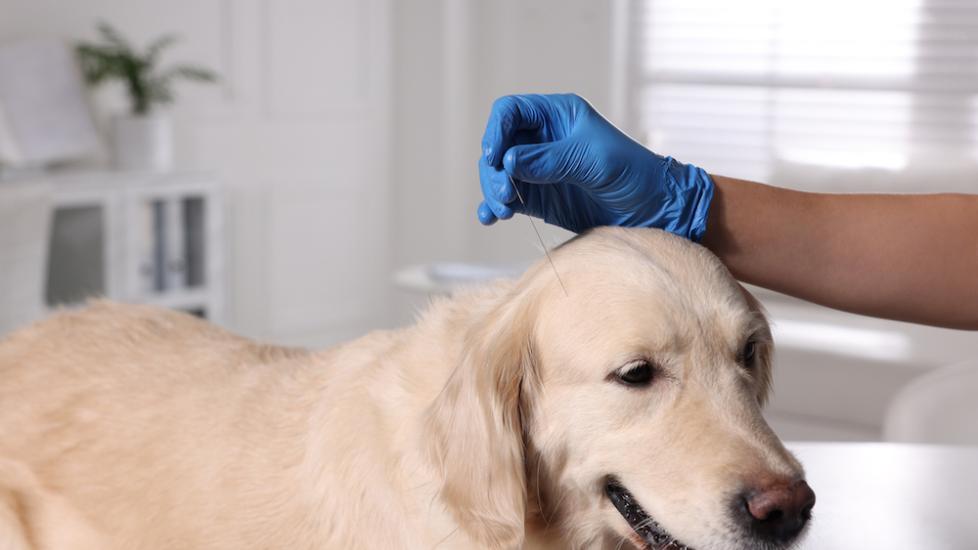
Acupuncture is the insertion of small, thin, stainless-steel needles into specific points or areas on the body to bring positive effects on the nervous and physiologic systems. It is a method of sending signals through the tissues and the nerves to the spinal cord and brain. These signals cause chemicals to be released in the brain and bloodstream. In turn, the body responds with improved healing.
Acupuncture points are located at nerve bundles, near major blood vessels, and throughout muscle tissue. Local effects in the tissues where acupuncture needles are placed include improved circulation, increased immune response, tissue repair activation, and reduced inflammation. Acupuncture allows the body to release natural opioids (for pain management) and increases serotonin levels (for regulating different body systems).
What Is Acupuncture for Dogs?
In dogs, acupuncture is used to decrease pain and inflammation, aid healing, and restore the body’s natural balance. Acupuncture can be used to help many dogs improve their quality of life. If you believe your dog may be a candidate for acupuncture, discuss options with your veterinarian.
What Conditions Does Acupuncture Treat in Dogs?
Acupuncture can provide benefits to dogs for many health conditions. Most commonly, acupuncture is used for musculoskeletal and nervous system problems including:
-
Nerve injury/paralysis/weakness
-
Shortened gait/decreased range of motion
-
Lameness
-
Tendon injuries
Occasionally, acupuncture is also used with some success in other symptoms and disorders in dogs:
-
Dental and tooth pain
-
Delayed wound healing
-
Cystitis
-
Nausea
-
Chronic upper respiratory and sinus infections
-
Nasal congestion
-
Irregular reproductive cycles
-
Pain control for cancer patients and amputation patients with phantom limb pain
How Acupuncture for Dogs Works
Not all veterinarians are certified in acupuncture. A veterinarian that is certified in acupuncture has taken additional, detailed education in this area to provide a unique, safe, and effective treatment for your dog.
Additionally, there are several organizations that veterinarians can train with to receive their certification; some are based on veterinary medical acupuncture, others are based on traditional Chinese veterinary medicine. If your regular veterinarian is not certified in acupuncture, ask to be referred to one. Some veterinary medical associations may provide resources to find a qualified veterinarian certified in acupuncture including: The International Veterinary Acupuncture Society, American Academy of Veterinary Acupuncture, Curacore Vet, and the Chi Institute of Traditional Chinese Veterinary Medicine.
What to Expect Your First Visit for Dog Acupuncture
Plan for at least an hour with the veterinary team for the first acupuncture visit. This first visit typically starts with a comprehensive examination, review of the previous medical history, a review of the previous diagnostics and any previous treatments. If the veterinary acupuncturist feels further diagnostics or treatments are needed—in addition to the acupuncture, it will discussed at this time.
Follow-up treatment sessions are approximately 20 minutes. Depending on your dog’s health and treatment plan, the schedule for acupuncture will vary. A follow-up session may be scheduled as soon as 24 hours—or up to one week later. Some dogs receive maintenance acupuncture treatments monthly or quarterly.
In an acupuncture treatment session, anywhere from 2 to 40 needles may be used, depending on your pet’s individual needs.
You can expect the following when your dog undergoes acupuncture:
-
Needles are commonly placed along the body and limbs; sometimes on the head.
-
Needles may be left in place, “spun”/rotated, or attached to electric current.
-
Needles are small, thin, typically sterile, and virtually painless.
-
Most pets become very relaxed and enjoy their treatment.
-
Some pets may experience a sensation of warmth around the needle.
-
Pets do need to sit relatively still for acupuncture treatment (which is where you come in!)
-
Some dogs will stay busy with treats given by their pet parent during a treatment, or simply enjoy having their parent brush or pet them during the procedure.
-
In rare cases, there may be mild swelling, or a minimal amount of bleeding at the needle insertion site.
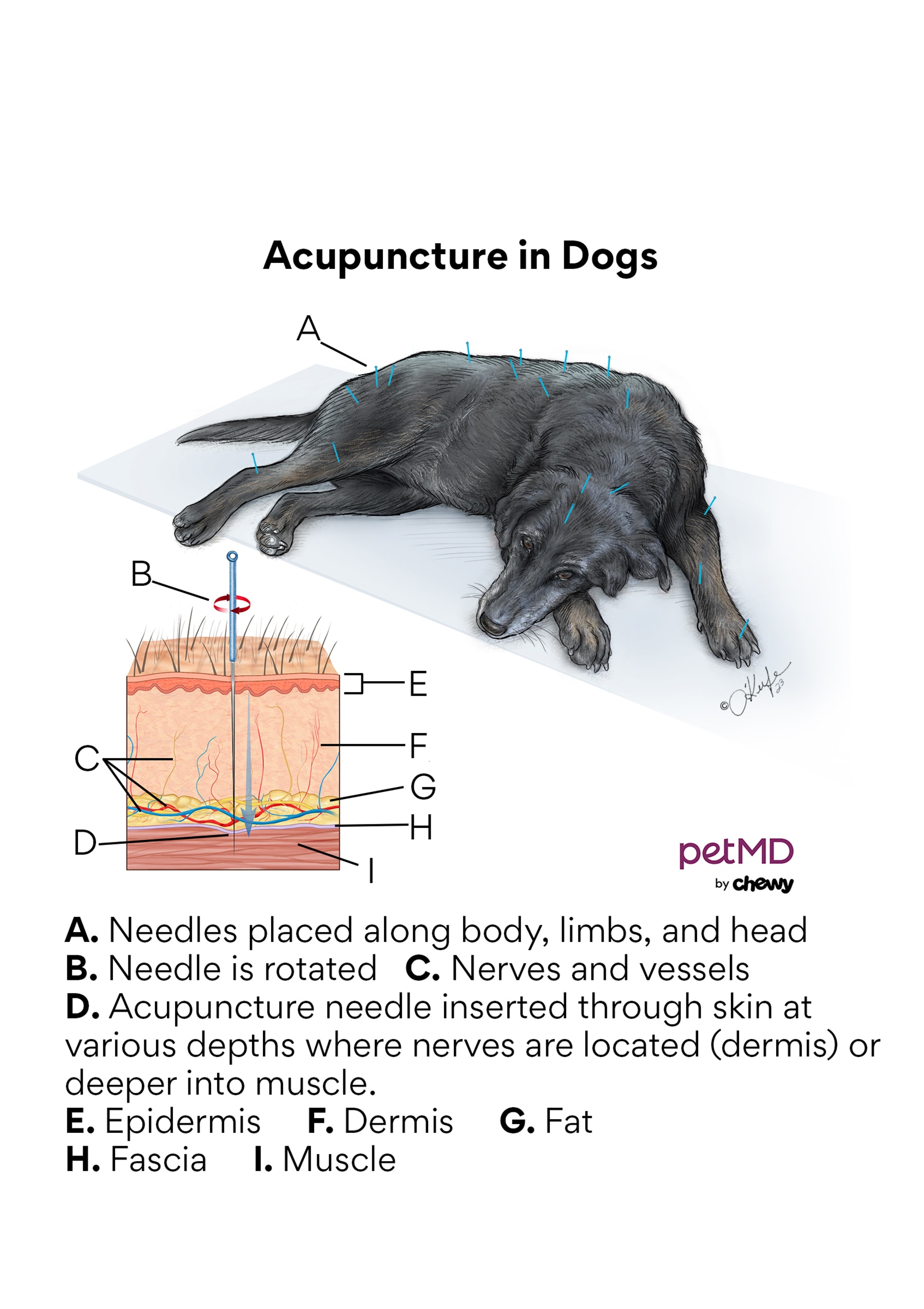
Click here to download this medical illustration.
How Much Does Dog Acupuncture Cost?
The cost of acupuncture for dogs can vary greatly. Considerations include your pup’s condition, the city in which you live, the veterinarian performing the treatment, and whether you take your pet to the hospital for treatment, or choose a mobile veterinarian certified in acupuncture to visit your home.
The initial visit likely will cost more than follow-up sessions, as it will include time for both the initial examination and the formation of a treatment plan. Some veterinarians that perform acupuncture for dogs will offer a package discount that includes multiple sessions at a reduced rate. Be sure to inquire about pricing when you schedule an appointment; this specialized service may range between $25 and $250 per treatment.
Is Acupuncture Treatment Right for My Dog?
If you are considering acupuncture for your dog, be sure to discuss this treatment with your regular veterinarian—including reviewing the goals of acupuncture therapy. You may want to review whether you will be using medications and supplements at the same time as acupuncture treatments. Always discuss potential benefits as well as risks associated with acupuncture therapy specific to your dog’s situation. (For example, dogs with certain bleeding disorders or some kinds of cancer may not be good candidates for acupuncture therapy.)
Acupuncture is a wonderful tool to help dogs decrease pain and inflammation, improve healing, and restore the body’s natural balance.
References
Veterinary Information Network. Atlantic Coast Veterinary Conference. Acupuncture for Arthritis, Intervertebral Disc Disease, and Seizures. 2017.
Featured Image: iStock.com/Liudmila Chernetska