Pyoderma in Dogs



Health Tools
Not sure whether to see a vet?
What Is Pyoderma in Dogs?
Pyoderma is the medical term for a bacterial skin infection and it is one of the most common diseases in dogs. Dogs are at increased risk for pyoderma due to many features of their skin. For example, a dog’s skin has a thinner outer barrier and possesses a higher pH than many other species, making it easier for normal bacteria living on the skin to overgrow and for other bacteria to invade.
Damage to the normal skin barrier also predisposes dogs to pyoderma. This is often seen with pets who scratch and lick their skin. Any area of the skin can be infected depending on the type of pyoderma affecting your dog.
Types of Pyoderma in Dogs
Surface pyoderma affects the outer skin layer (epidermis). You may see pink, irritated skin, and hair loss. Surface pyoderma includes:
-
Pyotraumatic dermatitis (“hot spots”): This develops rapidly and is very itchy.
-
Intertrigo: Infection of skin folds, a common condition in short-muzzled breeds, such as English Bulldogs.
-
Bacterial overgrowth syndrome (BOGS): The dog’s skin is greasy, itchy, and smells. It is most seen on the underside of the body.
Superficial pyoderma affects the epidermis and part of the hair follicles. You may see redness, circular crusts, bumps, and hair loss. Superficial pyoderma includes:
-
Impetigo (“puppy pyoderma”): This is an infection that is usually due to a puppy’s developing immune system and affects areas with little hair, like the belly.
-
Affected puppies are usually healthy overall and in mild cases may only need a topical treatment. Adult dogs that are immunocompromised can also develop impetigo.
-
Superficial bacterial folliculitis (SBF) and superficial spreading pyoderma: A dog’s coat may have a “moth-eaten” appearance due to widespread hair loss. This happens in all breeds, but Shetland Sheepdogs, Border Collies, Australian Shepherds, and Collies may experience especially severe redness and irritation.
-
Mucocutaneous pyoderma: This type of pyoderma leads to the overproduction of mucus in the skin. The lips, nose, skin around the eyes, vulva, prepuce, and the area around the anus are most commonly affected. German Shepherds, Bichon Frisés, and poodles may be predisposed.
Deep pyoderma affects lower skin layers (dermis, subcutis): This can occur if superficial pyoderma goes untreated or skin follicles rupture. You may see swelling, purple-looking areas, or draining tracts of infection in addition to redness, crusting, and hair loss. Deep pyoderma includes:
-
Furunculosis: This condition is commonly seen between a dog’s toes, but it can occur elsewhere. In rare cases, a condition called post-grooming furunculosis can occur 24 to 48 hours after bathing or intense brushing, causing pain and fever.
-
Acne: This is more common among young dogs, and involves inflammation of hair follicles (usually around the chin and mouth) that may become infected with bacteria.
-
German Shepherd deep pyoderma: The outer thighs, groin, and trunk are likely to be affected.
-
Lick granuloma: Your dog may develop a skin lesion from licking the top surface of its lower legs. This may stem from a bacterial infection or another issue.
-
Callus pyoderma: This condition presents itself as dark, thickened skin over pressure points that are infected.
Symptoms of Pyoderma in Dogs
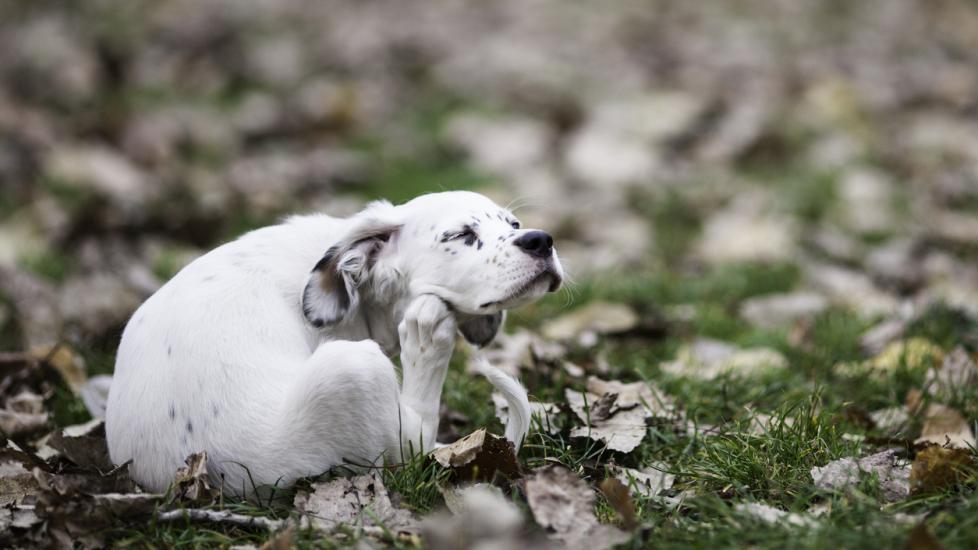
Dogs with pyoderma may have red and itchy skin. You may also see circular crusts, flakiness, areas of hair loss, and pimple-like lesions. If your dog has been scratching or biting its skin, your pet may have visible sores and pus.
If your dog has suffered from itchy skin for several weeks or more, you may see the skin get darker and thicker. Dogs with deep pyoderma may have swelling and draining tracts of infection, and experience low energy, loss of appetite, trembling, or other signs of pain.
Causes of Pyoderma in Dogs
Pyoderma usually occurs secondary to another illness or disease process. It may occur as a complication of:
-
Allergies to fleas, environmental allergens, or a food ingredient
-
A parasitic skin infection, like Sarcoptes or Demodex mites
-
An endocrine disease, such as hypothyroidism or Cushing’s disease
-
Immune disorders or immunosuppression
A bacterial infection may need to be cleared before additional testing for the underlying cause can be completed. The most common bacterial infection that causes pyoderma is Staphylococcus pseudintermedius, which is responsible for more than 90 percent of cases. This type of bacteria normally inhabits the skin, but it can increase in number and cause problems when the skin barrier is damaged or unhealthy.
Other causes include Staphylococcus schleiferi, Staphylococcus aureus (which in rare cases can spread to humans), as well as invaders like E. coli, Pseudomonas, Actinomyces, Nocardia, and others.
How Veterinarians Diagnose Pyoderma in Dogs
In order to diagnose your dog with pyoderma, your veterinarian will need to start with a physical exam. Based on the presence of certain lesions—such as pustules (bumps that look like pimples)— the veterinarian may be comfortable diagnosing your pet based on what he or she determines from the physical exam. Diagnostic testing is usually necessary, and may include:
- Skin cytology: A veterinarian will take an impression smear or tape sample of the affected areas of skin and look at it under a microscope. This is a non-invasive test that allows the veterinary staff to look for bacteria and yeast.
- Skin scraping: This can be used to look for mites, such as Sarcoptes scabiei or the Demodex species under the microscope.
-
Culture and sensitivity: A swab of the affected skin area may be sent to a diagnostic laboratory for fungal and/or bacterial culture and sensitivity testing. Results typically take several days and enable vets to pinpoint the exact types of bacteria and/or fungus that are the root causes of the infection.
-
Your vet will also prescribe the medication that will work best to treat that specific infection. Ringworm culture may be performed in-house at your veterinary clinic. Bacterial culture and susceptibility are recommended if your pet has recurrent skin infections, or the infection is deep and severe.
-
- Skin biopsy: A section of the affected skin may be removed and sent to a pathology laboratory for examination if your pet has a recurrent infection, or the skin has an unusual appearance.
- Bloodwork: This may be needed to determine the underlying cause of your pet’s skin infection. It may include testing for thyroid disease or Cushing’s disease.
- Allergy testing: If allergies are a suspected underlying cause, your veterinarian may recommend an elimination diet trial to test for food allergies and/or intradermal allergy testing with a veterinary dermatologist.
Treatment of Pyoderma in Dogs
Use of an Elizabethan collar (or e-cone) is recommended if your pet is licking or biting its skin. This will prevent reinfection and allow the skin to heal.
Medications your veterinarian may recommend include:
- Antibiotics: Commonly used oral antibiotics include cephalexin, Simplicef®, Clavamox®, and clindamycin.
- Cefovecin (brand name, Convenia®)is an injectable antibiotic that is administered by a veterinarian and lasts for two weeks. Other antibiotics may be required if your pet has a resistant infection, or a deep infection with rod-shaped bacteria.
- Cefovecin (brand name, Convenia®)is an injectable antibiotic that is administered by a veterinarian and lasts for two weeks. Other antibiotics may be required if your pet has a resistant infection, or a deep infection with rod-shaped bacteria.
- Anti-itch medication: Options include Apoquel®, Cytopoint®, and an anti-inflammatory dose of steroids. Your veterinarian will determine whether these medications are safe options for your pet.
If you do not notice an improvement (lesions drying up, reduced itchiness, etc.) after a few days of treatment, please call your veterinarian. Culture and sensitivity may be needed to determine which antibiotic will be effective.
Treatment of Pyoderma in Dogs
Topicals your veterinarian may recommend include:
- Medicated shampoo: This shampoo may contain antibacterial and antifungal ingredients, such as chlorhexidine, ketoconazole, and/or miconazole. Benzoyl peroxide is an antibacterial ingredient often used in cases of acne. If your pet has recurrent infections, your veterinarian may recommend long-term use of a medicated shampoo.
- Medicated spray, mousse, or ointment: You may be instructed to spray or rub an antimicrobial product on your pet when they are dry. If your pet has recurrent infections, your veterinarian may recommend long-term use of one of these products.
- “Clip and clean”: For dogs with “hot spots” and other localized skin issues, the veterinary staff will clip the hair surrounding the affected area to prevent bacteria in the hair from causing a reinfection, and to allow air exposure. Then they will use a gentle antiseptic wash, such as 2 percent or 4 percent chlorhexidine solution to clean the area.
- Epsom salt foot soaks: Soaking affected paws in Epsom salt solution (two tablespoons per liter of warm water) may be recommended if your pet has inflammation and infection of its paws.
Recovery and Management of Pyoderma in Dogs
Re-check appointments with your veterinarian will ensure that your dog’s infection has completely cleared before its antibiotic treatment has ended. Treatment may need to be continued for 7 to 14 days past when their skin appears normal, so please do not stop the antibiotics before a full course of treatment has been completed. Ending antibiotic treatment too early can contribute to the development of antibiotic resistance.
Infection often needs to be cleared before your veterinarian can begin investigating the underlying cause of the pyoderma. It is important to determine the underlying cause, whether it be allergies, Cushing’s disease, hypothyroidism, or another illness, so your dog doesn’t experience frequent relapses of pyoderma.
Length of Treatment for Pyoderma in Dogs
The length of treatment will vary depending on the type and severity of your pet’s pyoderma. Many cases of superficial pyoderma require treatments lasting three to four weeks. Deep pyoderma may require treatment that lasts for months. Do not stop treatment without the direct recommendation of your pet’s veterinarian.
Pyoderma in Dogs FAQs
Is pyoderma in dogs contagious to humans?
It is rare for humans to catch pyoderma from their dogs, though it is possible (e.g., Staphylococcus aureus). Staphylococcus pseudintermedius, the most common cause of canine pyoderma, does not lead to disease in humans.
Is pyoderma in dogs considered a serious condition?
Pyoderma is typically easily treated on an outpatient basis with good outcomes. However, deep pyoderma can be more serious and in rare and extreme cases, require hospitalization.
Featured Image: iStock.com/momcilog
References
Gortel K. Recognizing Pyoderma. Veterinary Clinics of North America: Small Animal Practice. 2013;43(1):1-18. doi:10.1016/j.cvsm.2012.09.004
Poli G. MiniVET Guide: Companion Animal Medicine. Gerardo Poli; 2016.