Ringworm in Dogs



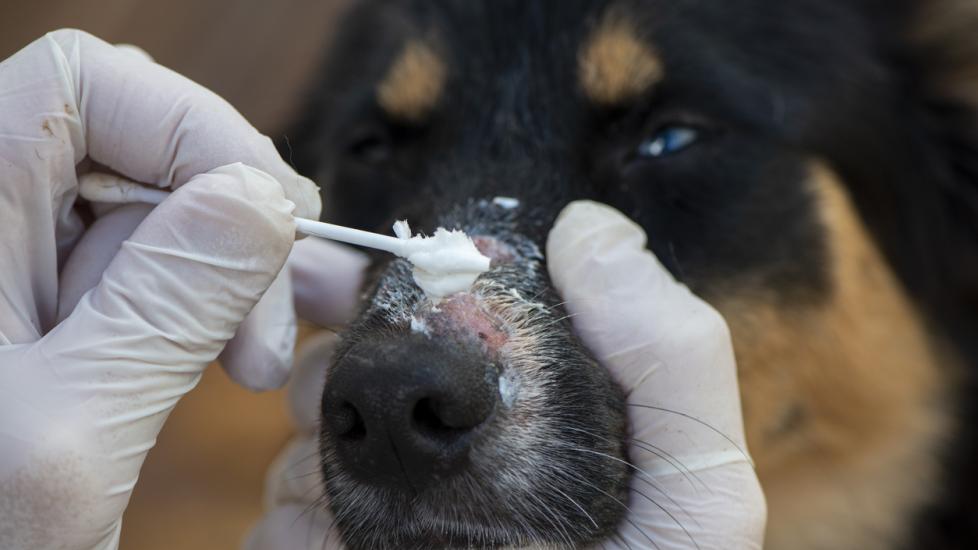
What is Ringworm in Dogs?
While the term “ringworm” may conjure up the image of a long, wriggly intestinal parasite, this is inaccurate, as ringworm is not actually a worm at all. Ringworm is a name that has long been used because of the circular itchy rash that typically appears on the skin of an infected animal. Ringworm is a fungal infection that can affect the skin, hair, or nails. The medical term for this type of infection is called dermatophytosis. The most common fungal organisms that can cause ringworm are Microsporum and Trichophyton. The fungus feeds on dead hair or skin cells.
While ringworm is most commonly found in cats, it can also be contracted by dogs and humans. It is highly contagious and zoonotic, meaning it can spread from pets to people and vice versa.
Symptoms of Ringworm in Dogs
In dogs, the areas usually affected by ringworm are the face, ears, tail, and feet. Symptoms generally include one or more of the following:
-
Circular areas of hair loss, often with a red and crusty edge
-
Broken hair and a poor hair coat
-
Dry, scaly skin or areas of excessive dandruff
-
Inflamed areas of skin
-
Darkened patches of skin
-
Itchiness, scratching, or excessive grooming
-
Inflamed nail beds or darkened or dry nails
-
Dry, brittle, or misshapen nails
Causes of Ringworm in Dogs
Most dogs with ringworm contract it from direct contact with an infected animal (likely a dog or cat) or human. It is possible for dogs to have the ringworm fungus on their body but show no external signs of the disease; however, they can still pass the disease on to humans or other animals.
Ringworm can also be passed on through contaminated objects such as brushes, dog beds, and toys, as well as surfaces that are difficult to clean, like rugs, wool, and wood.
Some types of ringworm fungi live in the soil, and a dog could contract ringworm by digging around in the dirt. This is especially true in warm and humid environments. The spores of the fungi that cause ringworm are quite hardy and can live in the environment for at least 18 months.
The types of dogs that become infected with ringworm tend to be those with weaker immune systems, such as very young or old dogs, as well as dogs with diseases that weaken their immune systems, or dogs that have recently come from long term stays at kennels or shelters. Boston Terriers, Yorkshire Terriers, and Russell Terriers are genetically more prone to ringworm infections than other breeds.
Dogs that have skin conditions are also predisposed to ringworm. The skin usually functions as a health protective barrier, but if a pet has an open wound, fresh scratches, fleas, or a chronic skin condition they are more susceptible to an infection.
Infection with ringworm occurs when spores attach to damaged skin. Lesions (abnormal areas) on the skin will typically appear about 1-3 weeks after exposure.
How Veterinarians Diagnose Ringworm in Dogs
There are a few procedures that your vet may use when diagnosing ringworm, the most common of which are a Wood’s lamp examination, a fungal culture, and a PCR test.
A Wood’s lamp emits long-wave ultraviolet light (a type of “black light”) to help detect bacteria. The fungus Microsporum canis (the most common cause of ringworm infections in pets) causes a chemical reaction when it attaches to hair follicles, causing them to glow when a Wood’s lamp shines. No fluorescence will be seen on a pet that is an asymptomatic carrier.
This “bedside” examination is effective in about 72% of M. canis cases with active skin lesions. Fluorescence usually becomes visible about 5-18 days after an infection takes hold. It is a great place to start when a vet is suspicious a dog may have ringworm.
A fungal culture (sometimes called a DTM—dermatophyte test medium) is where a few hairs, scales, or scabs are collected and placed on a culture medium (a substance for growing microorganisms) and the contaminant is allowed to grow.
Your vet will then look at the growth under a microscope to determine if one of the fungal species that cause ringworm is present. Positive signs can show after 3-5 days, but final results can take 10-21 days. One benefit of this test is that it does not require an active skin lesion; any hair sample can be tested.
PCR (Polymerase Chain Reaction) testing is the newest way to diagnose ringworm. This test is also done on hairs and is specifically looking for fungal DNA (material with the fungus’s genetic information). The PCR test is much faster than a culture, and results are usually available in 3-5 days.
PCR is a great test for an initial diagnosis of ringworm; however, it is not suitable for follow-up testing to ensure that the ringworm has been fully cleared. This is because PCR testing looks for DNA but cannot distinguish whether the DNA is from living fungus. Fungal culture testing is usually the recommended follow-up test to make sure the infection is completely gone.
Treatment for Ringworm in Dogs
Ringworm is treatable and curable—if all treatment, quarantine, and cleaning procedures are followed. Ringworm can be very stubborn, so it is important to be fully committed to the following procedures:
Quarantine
Ringworm is highly contagious, so the first thing to do when a ringworm infection is suspected is quarantine your dog. Try to keep your dog away from other pets and limit their contact with humans.
Ideally, have your dog in a room that can be easily cleaned like a large bathroom. A room with rugs or wood floors should not be used, as these are very difficult to clean.
Topical Treatments (applied to the body)
Bathing is a critical part of treatment as it will remove and kill the fungal spores that are on your dog’s fur. This is helpful in preventing further environmental contamination and cross-contamination with other animals in the home since hairs that have been treated will not be infectious when shed.
There are two main types of topical treatments: Lime Sulfur dips and antifungal shampoos. Of these, Lime Sulfur dips are more effective. Lime Sulfur dips can be done at home or at your vet hospital. They are quite messy and odorous, so many pet owners elect to have this done at their vet's office.
Antifungal shampoos are often paired with a disinfectant like chlorhexidine, as they work well together to combat ringworm. These typically need to be used twice weekly.
Ointments or other topically applied medications have not been shown to be effective against ringworm infections.
Shaving dogs with very long coats is not recommended, because shaving can cause microtrauma (small injuries) to the skin, which can make the dog more susceptible to the infection.
Oral Treatments (Medications taken by mouth)
Oral medications clear the ringworm infection by making the fungus unable to reproduce and spread. In most cases it is recommended to use oral and topical measures together.
There are numerous different types of oral antifungals, with different costs and potential side effects (the most common are gastrointestinal/tummy related).
Your vet will work with you to find the right product and medication for your pet based on their health and diagnosis.
Decontamination Procedures
Infected pets are constantly shedding fungal spores into the environment. It is extremely important to isolate your dog and to disinfect all other areas of the house until a culture test is negative or your vet recommends stopping treatment. Otherwise, your dog could become reinfected with ringworm from the environment.
Thoroughly clean all areas that your dog has come into contact with, using an effective disinfectant such as a dilute (1:10) bleach solution, accelerated hydrogen peroxide, or a similar product. Bleach will not properly disinfect a dirty surface, so it is important to clean first, with an agent like liquid dish soap, and to disinfect second.
You will also want to vacuum and/or steam clean your floors—and don’t forget to disinfect your vacuum afterwards. Items like dog beds that can be laundered should be run through a washing machine, twice, in hot water, preferably with bleach.
The area of your home in which your pet is confined should be cleaned twice weekly during treatment. When you are treating a pet at home, do your best to wear disposable gloves and be sure to wash your hands and clothing after handling an infected pet.
Recovery and Prevention of Ringworm in Dogs
It is important to note that pets can be silent carriers of ringworm. A carrier is a pet that is infected but not showing any signs. Because of this, once a pet has been diagnosed with ringworm, all other pets in the home should be tested.
Treatment generally continues for weeks to months and should not be stopped until follow-up testing shows that the fungal organisms are clear, and your vet directs instructions to stop. Ideally, to monitor the progression of the treatment, a fungal culture should be done every 2-3 weeks after starting treatment.
A person who is infected with ringworm can also give it to their pets. If you notice a red, ringed skin lesion on your skin, it is best to have your doctor, or a medical professional examine the area.
When taking in stray dogs or cats, it is important to keep them isolated from your pets until they have had a complete medical evaluation by a veterinarian.
Since ringworm can be present in soil, don’t let your dog dig outside, especially if there is abundant wildlife living nearby, as they can be a source of infection.
Taking your dog to the vet for twice yearly exams is also helpful. Pets that have healthy skin are much less susceptible to ringworm.
Ringworm in Dogs FAQs
How contagious is ringworm from a dog to a human?
Unfortunately, ringworm can be highly contagious to humans. Those at highest risk are people with weaker immune systems such as young children, the elderly, pregnant women, and those on chemotherapy or other immunosuppressant medications.
Will ringworm in a dog go away on its own?
The technical answer is that it would most likely go away on its own after about 9-12 months, depending on the species of ringworm fungus and the strength of the dog’s immune system. However, during this time the dog is infecting the environment, and potentially all the humans and other pets in the household could become infected. Most of your dog’s hair would fall out, since ringworm feeds on the hairs and dead skin, leaving your dog's skin more susceptible to wounds and potential secondary infections.
How can I tell if my dog has ringworm?
Any type of skin disease can look like ringworm. If you notice your dog has a crusty lesion or circular area of hair loss with a ring of red skin, or any persistent skin damage that is not resolving, they should be examined by a veterinarian to evaluate them for treatment.
Are there home remedies to help dogs with ringworm?
There are many old wives’ tales about using household products to treat ringworm, but these are not effective and can be toxic to pets. There are some over-the-counter antifungal shampoos which can be helpful, but nonprescription medications are not always effective.
Featured Image: iStock.com/RuslanDashinsky