Pericardial Effusion in Dogs




What Is Pericardial Effusion in Dogs?
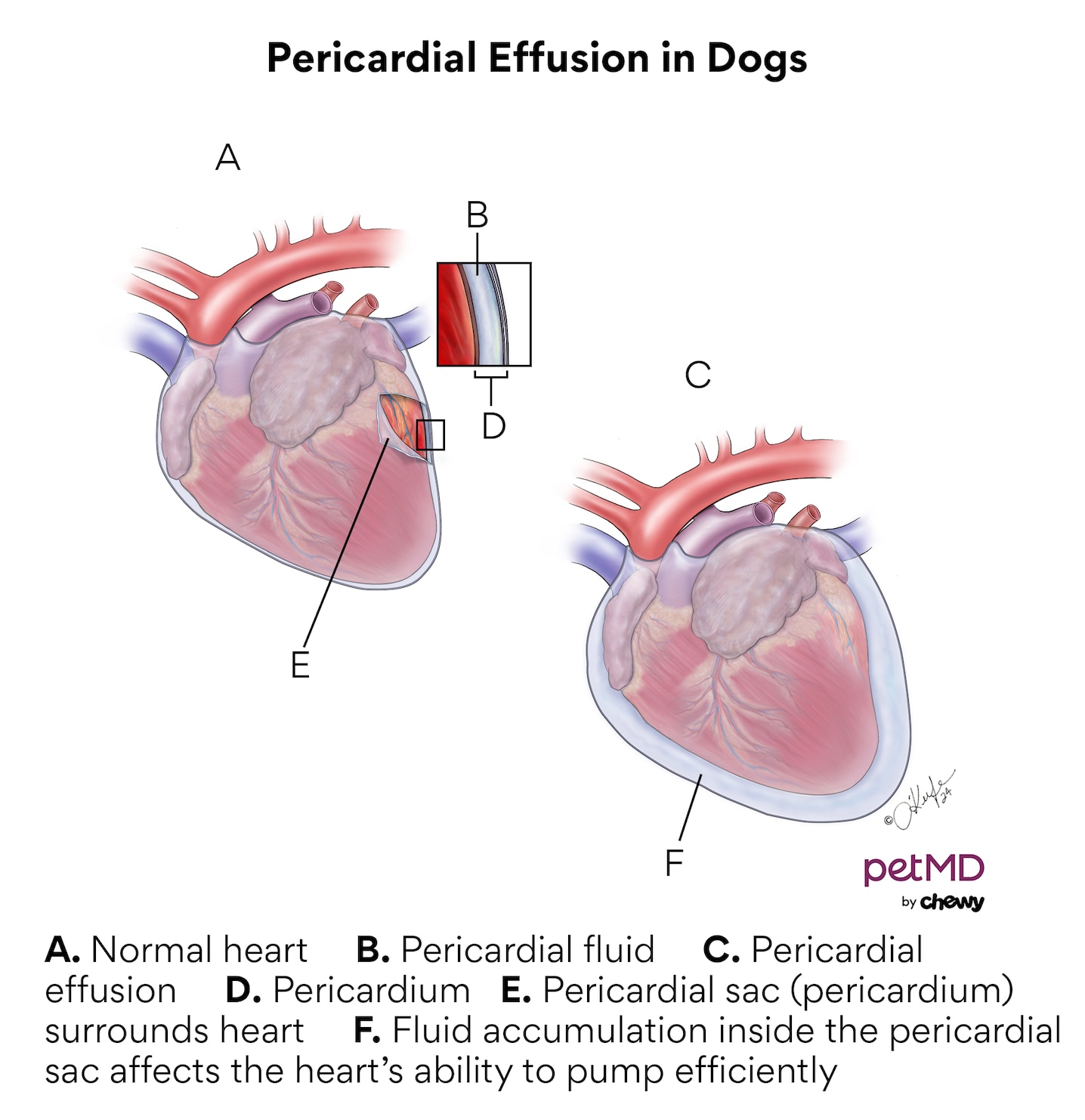
A dog’s heart is surrounded by a thin membrane (layer of tissue) called the pericardium, which forms a sac-like structure around the heart. Normally, there is no fluid between the pericardium and the heart, so the heart can beat freely within the sac. When fluid builds up in the space between the pericardium and the heart, it’s called pericardial effusion.
Having fluid in the space between the heart and the pericardium puts more pressure on the heart, making it more difficult for the heart’s chambers to fill with blood. When they do not, the heart cannot in turn pump enough blood to the rest of the body. When this occurs, it’s called cardiac tamponade.
Pericardial effusion doesn’t happen to most dogs, but when it does it is considered a medical emergency.
Symptoms of Pericardial Effusion in Dogs
Although dogs with pericardial effusion are usually very sick, it’s difficult for pet parents to recognize pericardial effusion as the cause. Symptoms include:
-
Collapse or weakness
-
Lethargy or exercise intolerance
-
Lack of interest in food
-
Rapid or labored breathing
-
Gagging or vomiting
-
Pale gums
-
Fluid-filled abdomen
These signs are not specific and could be signs of other diseases, many of which are also emergencies. If you have a collapsing, weak, pale, or mentally changed dog, this is an emergency. Contact your veterinarian immediately.
Causes of Pericardial Effusion in Dogs
Several things can cause pericardial effusion in dogs:
-
Tumors, such as hemangiosarcoma or heart base tumors
-
Idiopathic pericarditis (inflammation of the pericardium without a known cause)
-
Toxins like rodenticides (rat poison)
-
Low blood protein levels
-
Infections
Tumors of the heart and idiopathic pericarditis are the most common causes of pericardial effusion.
Infectious causes of pericardial effusion are uncommon but can come from things like penetrating foreign objects, which are usually sharp objects that penetrate the body and potentially poke into the pericardium. Two bacteria that have been linked to bacterial pericardial effusion are Actinomyces and Nocardia. The soil fungus Coccidioides immitis has also caused pericardial effusion.
Dog breeds that may be predisposed to one or more causes of pericardial effusion include:
How Veterinarians Diagnose Pericardial Effusion in Dogs
When your veterinarian does their physical examination, they may notice that your dog’s heart sounds muffled when they’re listening with their stethoscope. This is because the fluid in the pericardial sac is dulling the sounds made by the beating heart.
The veterinarian may also hear that the heart rate is too fast (tachycardia). As the body tries to make up for less blood being pumped out, the heart pumps faster. The veterinarian may also note changes in how the pulse feels when they palpate (examine by touch) the dog’s femoral artery or jugular vein.
An echocardiogram (ultrasound of the heart) will confirm fluid in the pericardial sac. While doing the echocardiogram, the veterinarian will also look for changes to the heart itself, such as enlarged heart chambers or a tumor on the heart.
By placing a needle into the pericardial space and removing some of the fluid (pericardiocentesis), the veterinarian can find out if the fluid is blood, plasma, pus, or chyle (lymphatic fluid and fats). The fluid type helps narrow down the possible causes of pericardial effusion. Dogs must be sedated for this procedure to keep them from moving.
Other testing to confirm the underlying cause of the pericardial effusion includes chest X-rays, abdominal ultrasonography, and routine blood and urine testing. The veterinarian may also place an ECG on the pet to check their heart rhythm. Coagulation (clotting) profiles may be run if the vet thinks there may be a clotting disorder or toxin exposure.
Treatment of Pericardial Effusion in Dogs
If your dog has collapsed, the emergency room will usually first give oxygen to your pet and help circulation by giving intravenous (IV) fluids.
In the short term, a dog with pericardial effusion causing cardiac tamponade should generally undergo pericardiocentesis (draining fluid from the pericardium). The exceptions to this include dogs with coagulation disorders, dogs that have a ruptured (torn) heart chamber, or dogs with active hemorrhage (bleeding from a broken blood vessel). Removing fluid from the pericardium will relieve the pressure on the heart, allowing it to beat correctly.
Long-term management is focused on the underlying cause of the pericardial effusion. In some cases, pericardiocentesis may need to be repeated as needed.
When there is a heart base tumor, a small window is cut into the pericardium (pericardial window) to allow the fluid to flow into the chest, where it will be reabsorbed. With recurrent idiopathic pericarditis, the pericardium is surgically removed (subtotal pericardiectomy). These are specialty procedures that are usually performed at a referral hospital.
Some cancers that cause pericardial effusion, such as hemangiosarcoma, are likely to spread to other areas of the body (metastasize). To improve quality and length of life, you may be referred to a veterinary oncologist for chemotherapy.
If there is an infection, the veterinarian may try to get a culture sample so they can pick the right antibiotic. First-choice antibiotic classes include sulfonamides, aminoglycosides, penicillin derivatives, and some cephalosporins. The combination medication amoxicillin-clavulanate may also be selected.
Dogs with heart disease causing congestive heart failure are helped with medications such as furosemide. In dogs with anticoagulant rodenticide toxicity (from eating rat poison or rodents), vitamin K1 is given to the dog to prevent bleeding. With severe bleeding, a blood transfusion may be needed.
Recovery and Management of Pericardial Effusion in Dogs
The overall prognosis for most dogs with pericardial effusion is uncertain. Generally, if the fluid recovered from the pericardial sac is blood, the situation is more severe than if the fluid recovered is clear or blood-tinged.
A highly aggressive cancer known as hemangiosarcoma is one of the most common causes of pericardial effusion, and survival is typically weeks to months even with aggressive treatment. Pet parents should understand that this cancer is hard to notice until it’s causing problems.
Pericardial effusion can recur in some cases, such as idiopathic pericarditis or heart failure. Keep up on your pet’s veterinary checkups and become familiar with the signs to notice a recurrence early.
Pericardial Effusion in Dogs FAQs
What is the most common cause of pericardial effusion in dogs?
Cancer is the most common cause of pericardial effusion in dogs, with one study showing that 71% of patients with pericardial effusion had cancer. The most common cancer that causes pericardial effusion in dogs is hemangiosarcoma.
Is pericardial effusion in dogs a serious medical condition?
Pericardial effusion in dogs is a serious medical condition and is almost always an emergency. If your dog is showing signs of pericardial effusion, seek veterinary care right away.
Featured Image: iStock.com/Capuski