Insulinoma in Dogs



What Is Insulinoma in Dogs?
Insulinoma is a tumor of the pancreas that is most likely malignant and has already metastasized at time of diagnosis.
The tumor is made up of cells that produce excessive insulin, which causes low blood sugar.
When eating, the body releases insulin to break down sugar (glucose) in food. When the blood sugar decreases, the brain releases hormones that tell the pancreas to stop producing insulin. However, the neoplastic cells (abnormal cells that make up the tumor) do not respond to the hormones and continue the production of insulin. The end result is very low blood sugar.
Symptoms of Insulinoma in Dogs
The only consistent symptom of insulinoma in dogs is hypoglycemia. Hypoglycemia is when your dog’s blood sugar is too low, usually below 40. Normal blood sugar is between 80 and 120.
Clinical signs of low blood sugar:
-
Very lethargic or low energy
-
Wobbly
-
Collapse
-
Seizures
-
Pale gums
-
Nausea
Causes of Insulinoma in Dogs
No underlying cause has been identified for insulinomas. It is found most often in large-breed middle-aged and older dogs. Young dogs are still able to develop insulinomas, but it is rare.
How Veterinarians Diagnose Insulinoma
Your veterinarian will perform a full physical exam that will determine the clinical signs, but that’s not enough information for a definitive diagnosis.
A blood diagnostic panel is then performed to evaluate the causes of the clinical signs; low blood sugar is the first key to a diagnosis. If the blood glucose is less than 60, the veterinarian will submit blood for insulin measurement. High insulin concentration with low blood sugar will confirm the diagnosis for insulinoma. Insulin to glucose ratio is another blood test that may be performed to confirm insulinoma.
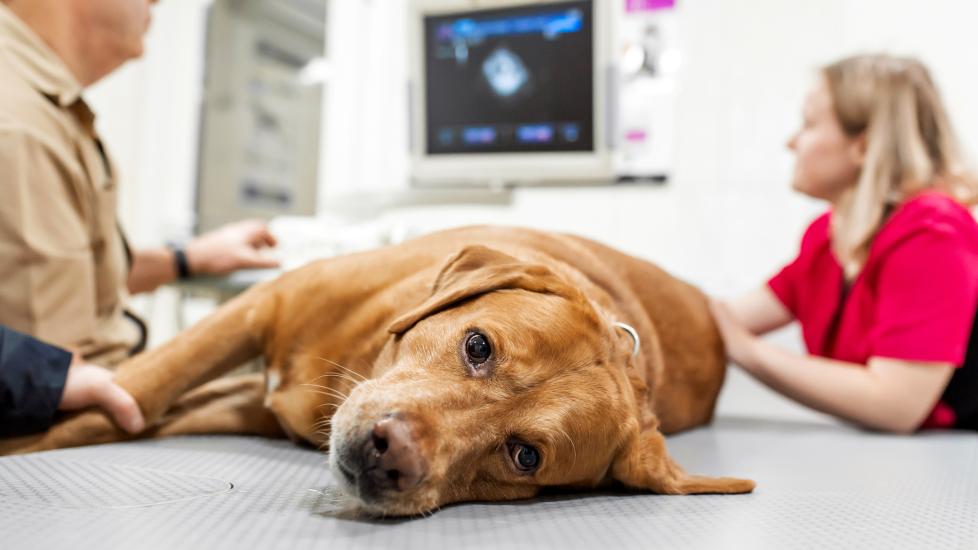
Other diagnostics may include an ultrasound, which is an imaging test that uses sound waves to create a picture of organs, tissues, and other body structures. A CT may also be ordered, a diagnostic imaging test that uses a series of x-ray images taken at different angles of the body. Both are used to find the tumor. Even though a CT is more effective than ultrasound, both are helpful in analyzing the surrounding lymph nodes and liver for metastasis, when the tumor spreads to other parts of the body.
Additionally, histopathology is an analysis of cells in tissues, and the only definitive way to diagnose. Cell samples from the lymph nodes, liver, and spleen are taken to assess for metastasis of the cancer. Radiographs of the chest and abdomen are also used to look for metastasis. An example would be finding lesions in the lungs.
Stages of Insulinoma in Dogs
Malignancy is when cancer cells have already migrated to other areas of the body. It is common with insulinoma in dogs. More than half of dog patients have malignancy by the time of their diagnosis.
-
Stage I: Stage I insulinoma is confined to the pancreas. Cancer has not been detected in other organs or lymph nodes.
-
Stage II: Stage II insulinoma has some infiltration of cancer cells in the surrounding tissues. This is usually found in a lymph node of that region.
-
Stage III: Stage III insulinoma has spread to surrounding organs and lymph nodes.
Treatment of Insulinoma in Dogs
Surgical removal of the tumor is the treatment of choice, as it removes the cells causing the clinical symptoms and provides a better survival outcome. Surgery is recommended even for dogs with Stage III to provide a better quality of life.
Prognosis of Insulinoma in Dogs
The survival rate is highly affected by the degree or stage of metastasis that has occurred at the time of diagnosis and what treatment is being provided. Surgical treatment with supplemental medical treatment provides the longest survival time. This can be up to 1.5 years in Stage I and Stage II. Survival time of about 6 months is usually seen in Stage III.
Recovery and Management of Insulinoma in Dogs
Medical management is not a cure, but it is used to make the dog comfortable and happy. The goal of medical management is to maintain normal blood glucose and slow the growth of the tumor. It entails medication, supplements, and diet.
Medications that help increase blood glucose or decrease insulin are used to help maintain a healthy blood glucose level. Prednisone is commonly used to reduce the release of insulin while stimulating glucose production in the liver. Diazoxide and octreotide medications are also available to help maintain a good blood glucose level.
Supplements may be used when hypoglycemia is suspected.
Diet is critical in medical treatment. Feeding multiple small meals during the day decreases the spike in glucose intake, which is what stimulates insulin production. Decreasing the severity of spikes in glucose will decrease the release of insulin.
Foods that are prescribed for dogs with diabetes have complex carbohydrates less likely to cause a large spike in glucose after eating. Recommendations for prescription diet foods include:
Insulinoma in Dogs FAQs
Can insulinoma be cured in dogs?
Sadly, insulinomas are highly malignant and are not completely curable. Removal of the tumor with medical management will provide the most qualitative and quantitative results. Medical management needs to be continued for life after surgical removal of the tumor.
What if I cannot afford surgical treatment?
If surgery is not an option, the next goal is to provide the best quality of life for your pet. Diet changes with medications can help maintain a good blood glucose level, decreasing clinical symptoms. Life expectancy may be shortened but you can still provide a good quality of life.
Are there other causes for hypoglycemia?
Yes, hypoglycemia can be due to several other diseases. These diseases include but not limited to hypoadrenocorticism, other cancers of the pancreas, some liver diseases, and severe infection. Hypoglycemia can also be result of lack of nutrition especially in small breeds.
Featured Image: Adobe/Katy