Histiocytomas in Dogs: Symptoms, Treatment, and More


Ridofranz/iStock/Getty Images Plus via Getty Images
Summary
Cutaneous histiocytomas (CCH) in dogs are fairly common benign (non-cancerous) skin masses that are not usually a cause for concern.
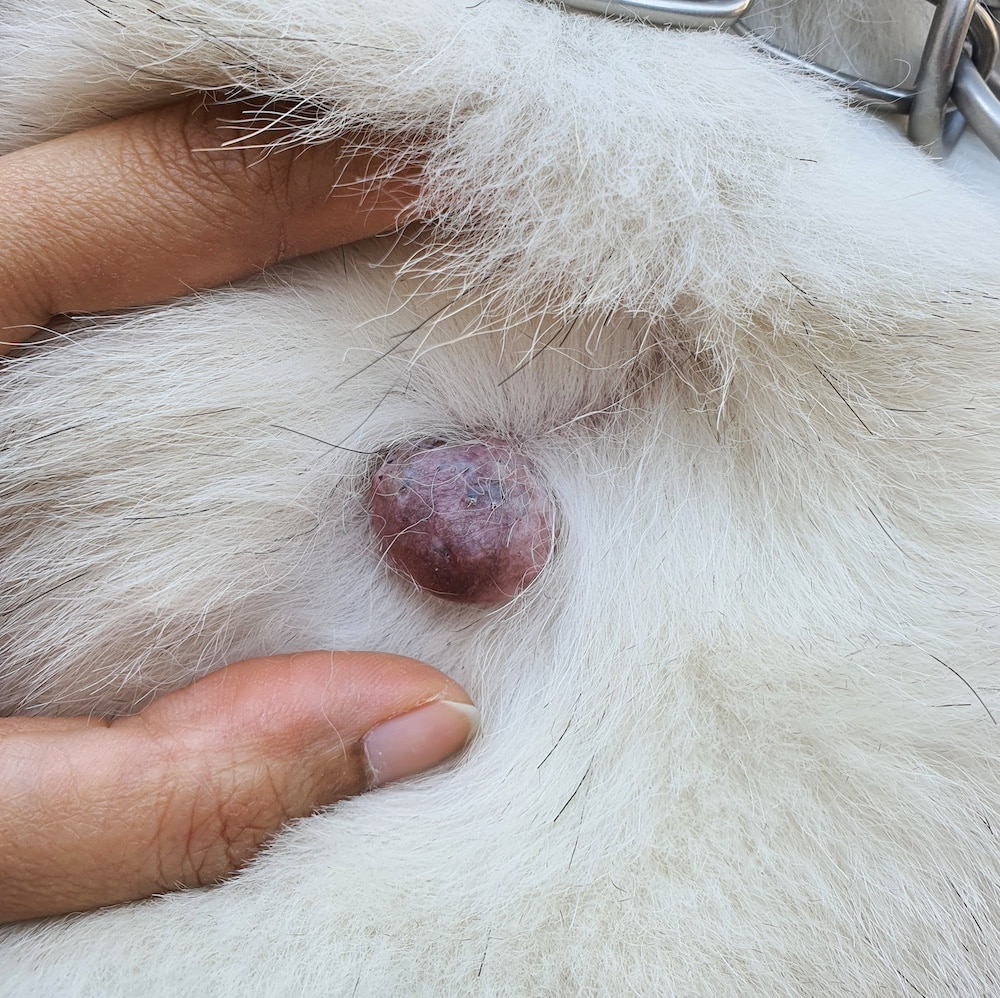
Sometimes referred to as button tumors in dogs, histiocytomas appear as single red bumps that are generally less than an inch wide. They most commonly grow on a dog’s head, face, ears, or legs. These pink growths usually have smooth surfaces but can become open wounds if a dog licks the area repeatedly.
While these bumps can grow quickly early on, they start to regress and disappear within a few months. Proper diagnosis by a veterinarian is important to differentiate histiocytomas from other more serious skin tumors that are similar in appearance.
Histiocytomas are common in dogs of all ages, but particularly in those 3 years of age or younger. Boxers, Boston Terriers, and Labrador Retrievers are a few breeds that are most commonly affected.
If you notice any lumps or bumps on your dog’s skin, schedule an appointment with your veterinarian to get a proper diagnosis and to discuss suitable treatment options.
Picture of Histiocytoma in Dogs
Symptoms
Histiocytomas in dogs generally do not cause alarming symptoms. Often, pet parents first notice a skin bump when petting or grooming their dogs.
Dogs with histiocytomas may experience the following:
- Hairless, raised, red skin bump
- Bleeding
- Itching
- Open sore with pus (if infected)
- Swelling around lump (if infected)
Causes
So what causes histiocytomas in dogs? Unfortunately, the exact underlying cause isn’t fully understood.
Because histiocytomas are made up of a special type of immune cell, it’s likely that a dysregulation within the immune system plays an important role.
There may also be a genetic component because several breeds are at an increased risk of having histiocytomas.
Diagnosis
A veterinarian will first perform a thorough physical exam, paying close attention to the dog’s skin.
If a bump is found that the veterinarians suspects may be a histiocytoma, testing can be done to confirm a diagnosis.
Tests used include the following:
-
Fine needle aspirate (FNA): A veterinarian gently inserts a needle into the skin mass to collect a sample of cells. This sample is placed onto a glass slide, stained, and then viewed under a microscope to identify the type of cells present.
-
Biopsy: A small portion of the mass (or the entire mass) is removed and sent to a laboratory for special testing. This is generally done after an FNA for a more definitive diagnosis and requires local anesthesia or sedation.
Treatment
In most cases, histiocytomas in dogs generally don’t require treatment. They usually regress on their own within three months as the immune system controls their growth.
If the histiocytoma is in an area with frequent contact or the dog repeatedly licks or scratches it, it may bleed and ultimately become infected. This is quite common for histiocytomas on a dog’s paw. In these cases, topical or oral antibiotics such as Animax® ointment or cephalexin may be indicated. These typically cost $10–$15.
If the histiocytoma doesn’t regress or causes discomfort, surgical removal may be recommended by a veterinarian for a permanent solution.
If surgery is needed, costs generally range from $300–$500, but this is highly variable based on where you live. If a biopsy is sent to the laboratory, additional costs may be around $200–$400.
Recovery and Management
Generally, histiocytomas do not cause discomfort, but if they are on your dog’s legs, they may rub against the ground and cause irritation.
An orthopedic dog bed can help cushion these areas and prevent this from occurring. Some dogs may also need a recovery cone to prevent them from licking or itching the area.
If you notice any signs of bleeding or oozing from the histiocytoma, bring your dog to the veterinarian to rule out an infection.
Prevention
Because it’s not fully understood what causes histiocytomas, it’s difficult to determine the best prevention strategies.
However, because histiocytomas are generally not harmful to a dog’s health, pet parents can focus on preventing irritation and infection while waiting for them to regress. This can be done through close monitoring and promptly bringing up any concerns to your veterinarian.
Histiocytoma in Dogs FAQs
Is there a home treatment for histiocytomas in dogs?
There are no home remedies to treat histiocytomas in dogs. They almost always spontaneously regress on their own. However, closely monitoring your dog for signs of irritation or infection while they regress is important.
How quickly do histiocytomas grow?
Histiocytomas in dogs grow quickly within the first month. During this stage, they may grow to around 1 inch in width.
How can you tell the difference between a mast cell tumor and a histiocytoma in dogs?
It is difficult to identify the type of skin mass simply by appearance, because mast cell tumors and histiocytomas may look similar.
The only way to diagnose a skin mass in dogs is for a veterinarian to perform an FNA or a biopsy.


