Staffordshire Bull Terrier


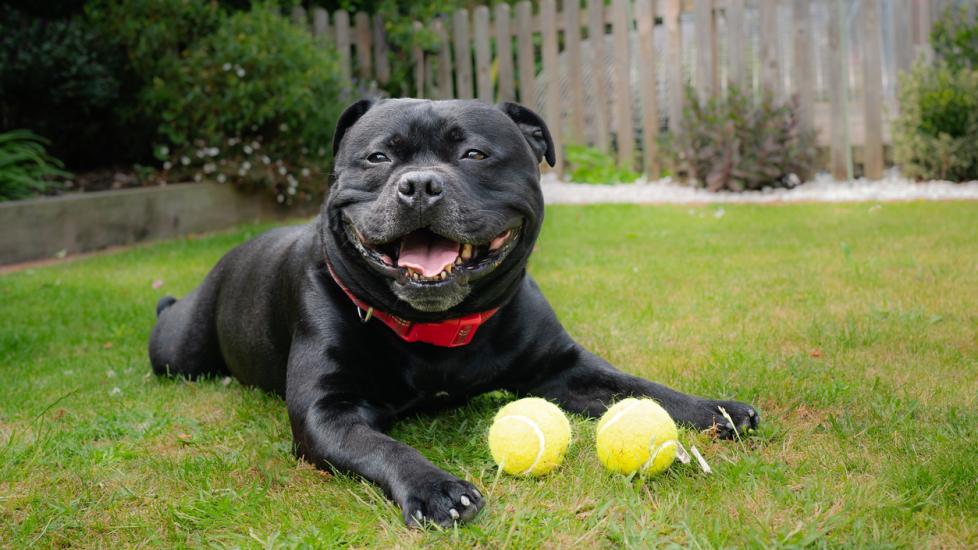
The Staffordshire Bull Terrier’s affinity for their human companions is legendary—even the small ones, hence the breed’s nickname, “the nanny dog.” The breed, known for its loyalty, is named after its U.K. origins and is often considered a descendant of 19th-century Bull Terriers (a cross between Old Bulldogs and British Terriers), according to the Staffordshire Bull Terrier Club of America (SBTCA).
This medium-size breed—called Staffies for short—can reach up to 16 inches tall and weigh 24–38 pounds. They’re often stocky and muscular (some might say buff!) and are described as playful and protective.
Caring for a Staffordshire Bull Terrier
Staffordshire Bull Terriers love their people and their comforts at home, but they’re also active, agile, and curious. Tug-of-war is a go-to game, and you can’t go wrong with a long, leash-led walk. Staffies have a short, glossy coat that loses dirt easily and dries quickly, so minimal grooming is required.
Like any breed, each Staffy dog has their own personality. The SBTCA describes them as a physically and mentally tenacious breed, but adds that many Staffies live peacefully with other animals. It comes down to proper socialization, training, and supervision.
Overall, they are an intelligent and loving breed—some are even lap dogs—and will dedicate themselves to you and your home.
Staffordshire Bull Terrier Health Issues
The average Staffordshire Bull Terrier lifespan is 12–14 years, and the breed is statistically a healthy dog. But it’s important for pet parents to know that Staffies are very averse to heat. Limit outdoor exercise in warm weather, and make sure they have plenty of shade and water.
And, like any breed, Staffordshire Bull Terriers can be susceptible to health conditions, including:
Elbow and Hip Dysplasia
Elbow dysplasia refers to abnormalities in a dog’s elbow where the joint doesn’t develop properly. Hip dysplasia is a similar condition, where the hip joint doesn’t fit together properly and becomes loose. If left untreated, both can lead to arthritis. Ask your vet for a screening if you notice symptoms like lameness or limping, an abnormal gait, or a swollen joint. Treatment can include joint supplements, weight management, and surgery in severe cases.
Luxating Patella
Patellar luxation refers to the knee joint moving out of its proper position. This often manifests as a limp and bunny-hopping gait. Like with hip and elbow dysplasia, treatment usually involves supplements and weight management, but surgery can be required in severe cases.
Juvenile Hereditary Cataracts (JHC)
JHC causes clouding in a Staffy’s eye lens. And while many dogs develop cataracts as they age, JHC causes cataracts in young dogs. Dogs with JHC can develop cataracts during their first year of life and become blind by the time they’re 2–3 years old.
Corrective surgery is a treatment option, and the SBTCA recommends breeders genetically test for this ailment.
L-2-Hydroxyglutaric Aciduria
L-2-hydroxyglutaric aciduria (or L-2-HGA) is a genetic condition that affects a dog’s metabolism. It can lead to neurologic issues such as brain damage. Symptoms, according to the SBTCA, include:
-
Epileptic seizures
-
Wobbly gait
-
Behavioral changes
-
Tremors
-
Muscle stiffness as a result of exercise or excitement
There is currently no cure, but responsible Staffy breeders will screen their dogs for this condition.
Degenerative Myelopathy (DM)
DM is the slow-onset destruction of the spinal cord. According to Cornell University, DM in dogs acts similarly to Lou Gehrig’s disease, or ALS, in humans. A dog with degenerative myelopathy will start showing signs when they’re middle-aged and become weaker over time. Eventually, DM causes paralysis. Currently, there are no effective treatments for DM aside from palliative care, and diet and exercise.
What To Feed a Staffordshire Bull Terrier
One of the best ways to keep dogs healthy is to feed them the right amount of high-quality dog food. Pet parents should choose a food that’s approved by the Association of American Feed Control Officials (AAFCO) for your dog’s current life stage.
Consult your vet on the best feeding schedule, especially for a Staffy puppy, and the best ways to balance meeting nutritional needs while avoiding overfeeding.
How To Feed a Staffordshire Bull Terrier
Staffy puppies should be fed three or four times a day on a consistent schedule. Adult Staffies can be fed twice a day. If you have concerns about feeding your Staffordshire Bull Terrier, contact your vet.
How Much Should You Feed a Staffordshire Bull Terrier?
The amount of food your Staffy needs varies by dog. Factors influencing their portions include your dog’s lifestyle, age, weight, and activity level. Dog food bags will often have a feeding guide that typically recommends a total amount of food that should be given to your dog over a 24-hour period, but always talk to your veterinarian for the best guidance.
Nutritional Tips for Staffordshire Bull Terriers
When it comes to training, Staffies respond well to positive reinforcement (which often means treats!). That said, some dogs can be prone to gaining weight, so avoid giving your Staffy too many goodies. Consider using healthy treats, such as carrots, apples, or blueberries to keep your pup fit and healthy. You should be able to feel (but not see) your Staffy’s ribs without having to press too hard.
Behavior and Training Tips for Staffordshire Bull Terriers
Staffordshire Bull Terrier Personality and Temperament
Staffies are playful and affectionate, so pet parents can expect a breed that craves their love and attention. They are known for their gentle nature toward children—so much, in fact, that they’ve earned the nickname “the nanny dog.” Puppy Staffies brought up with cats and other dogs generally do well with them, according to the SBTCA. If you already have a dog and are bringing an older Staffy into your home, introduce the dogs away from the house in a neutral area.
Staffordshire Bull Terrier Behavior
In general, Staffies are not persistent barkers, though the SBTCA notes they might bark or “talk” while playing or to alert you of a visitor. Bouts of exercise and long walks are important to meet their high energy levels, but they’re also very content napping on your couch.
Staffordshire Bull Terrier Training
Staffies are also known for their smarts, and they respond best to a positive, creative training approach. The SBTCA warns that the breed can be stubborn and exuberant, so persistence and patience when training is also important.
Fun Activities for Staffordshire Bull Terriers
-
Agility
-
Hiking/long walks
-
Tug-of-war
-
Scent work
-
Lure coursing
Staffordshire Bull Terrier Grooming Guide
Staffordshire Bull Terriers don’t need a ton of grooming. Their coats are smooth, short, and easy to clean if needed.
Skin Care
While no special skin care is required for Staffies, it doesn’t hurt to bathe them after a particularly messy playdate outside. But if your Staffy rolls around in the grass, a thorough brushing might be all that’s needed.
Coat Care
Though Staffies have a low-maintenance coat, they benefit from an occasional brushing and bath. But their coat does make Staffies susceptible to fleas and ticks, so ask your vet about flea and tick prevention, and give them a good brushing with a flea comb in the summer months.
Eye Care
Staffordshire Bull Terriers typically don’t require special eye care, but pet parents should watch for signs of cataracts, especially if their dog hasn’t been tested for JHC.
Ear Care
Staffordshire Bull Terriers don’t require special ear care. Your vet can help determine if—and how often—you should clean your dog’s ears.
Considerations for Pet Parents
If you plan to bring home a Staffy puppy, know that you’re getting a breed that looks tough on the outside but is an affectionate, loving cuddler on the inside. Their low-maintenance grooming and nutritional needs make them ideal for most pet owners, but they’ll do best in a home with pet parents who are active, attentive, and patient.
Staffordshire Bull Terrier
How long do Staffordshire Bull Terriers live?
The average Staffordshire Bull Terrier lifespan is 12-14 years.
What’s the difference between a Pit Bull and a Staffordshire Bull Terrier?
According to the SBTCA, there are a handful of dogs that come from the general classification of “bull breeds.” This includes the Staffordshire Bull Terrier, the American Staffordshire Terrier, and the American Bulldog. The Pit Bull isn’t actually a breed on its own; many “bull breeds” are lumped together and called Pit Bulls.
Are Staffordshire Bull Terriers a good pet?
Yes, Staffies can make wonderful additions to your home. They are eager to please and are most happy spending time with their pet parents, whether it’s a rainy day inside on the couch or a sunny day walking through the park. But they do take lots of patience and early socialization!
Featured Image: iStock/CBCK-Christine