Doberman Pinscher


The Doberman Pinscher is thought to have been first bred by Louis Dobermann, a German tax collector, in the late 1800s. According to the Doberman Pinscher Club of America (DPCA), he likely crossed Old German Shepherds (a now-extinct breed different than today’s German Shepherds), German Pinschers, Black and Tan Manchester Terriers, and Greyhounds.
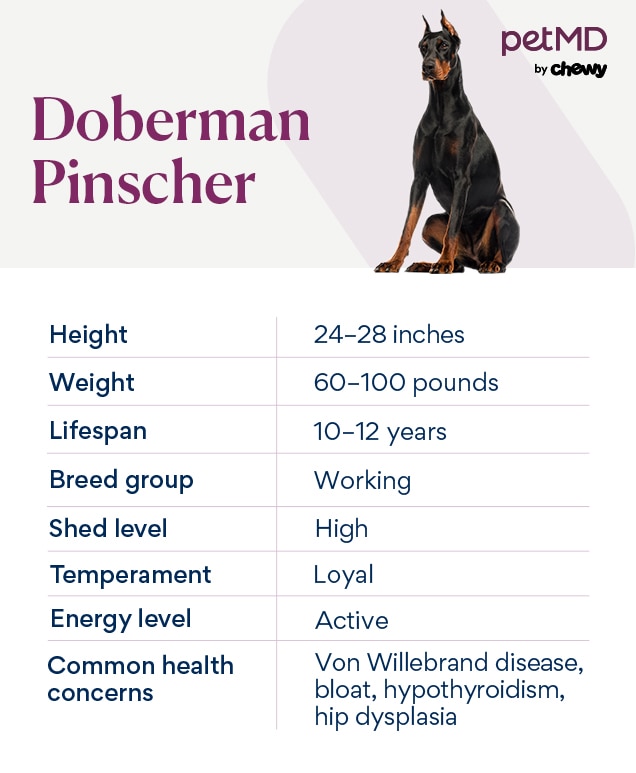
The Doberman Pinscher is a loyal dog known for being intelligent and alert. While often kept as a family dog, this breed is also commonly used for security, police work, and search and rescue.
As a large dog breed, the Doberman’s size typically reaches 24–28 inches tall, and the dogs weigh anywhere between 60–100 pounds.
Caring for a Doberman Pinscher
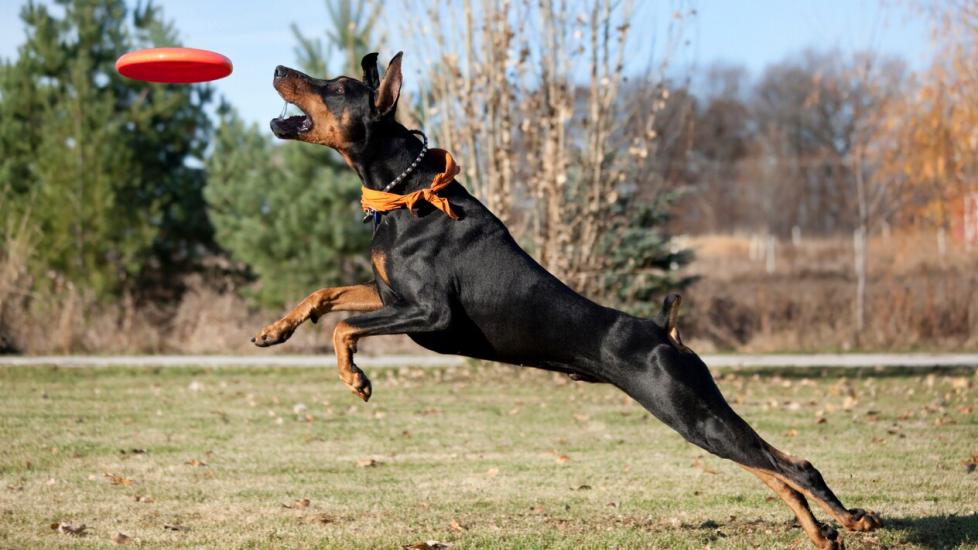
Doberman Pinschers are energetic dogs. They are also curious and intelligent, and so require an active lifestyle that keeps them both physically and mentally stimulated. Without consistent exercise, Dobermans will seek out their own entertainment, which can lead to destructive and unwanted behaviors. Due to their high energy level, they are not always an ideal pet for families with very young children.
Doberman Pinschers are also known for loyalty and love of family, and this can lead them to be wary around new people. Pet parents must train and socialize their Doberman puppy early and consistently.
Doberman dogs have a strong prey drive, so they may not be the ideal pet for families with other small animals in the home, such as guinea pigs, rabbits, or cats. And it’s important to keep your Doberman on a leash or inside a fence when they’re outside, as they may chase after neighborhood squirrels.
Doberman Pinscher Health Issues
The Doberman lifespan is 10–12 years, and they’re considered a healthy breed. But they can develop a few health issues pet parents should know to look out for.
Gastric Dilatation-Volvulus
Gastric dilatation-volvulus (GDV) is a severe form of bloat in dogs. It’s a condition that comes on suddenly and requires immediate life-saving intervention.
GDV occurs when the stomach fills up with food or gas that causes expansion and increased pressure. The stomach can then rotate, which in turn causes inadequate blood supply to the spleen and stomach. If the condition is not treated quickly, shock, tissue damage, and even death can occur.
Increased risk of GDV is seen in:
-
Large dogs with a deep chest, like Dobermans
-
Dogs that are fed from elevated bowls
-
Dogs that are fed one big meal per day
Symptoms of GDV include:
-
Distended abdomen
-
Nonproductive retching
-
Drooling
-
Stretching
-
Anxiety
-
Inability to settle or get comfortable
These signs can progress to weakness, collapse, elevated heart and breathing rates, and poor blood flow.
Immediate veterinary intervention is needed to stabilize and treat GDV. The longer a dog has this condition without intervention, the greater the risk of death.
A prophylactic gastropexy can also be performed before GDV even occurs to secure the stomach in the right position. This procedure is often done at the same time as a dog’s spay or neuter surgery and can help to prevent the stomach from twisting, although it can still bloat.
Hypothyroidism
Hypothyroidism is a condition that causes an underactive thyroid gland, which controls metabolism. In hypothyroidism, the body either attacks its own glands or the gland is replaced with fat.
Signs of hypothyroidism in a Doberman Pinscher include:
-
Weight gain
-
Brittle coat
-
Skin and/or ear infections
-
Increased cholesterol in the blood
Hypothyroidism is diagnosed through blood work. It is treatable with a thyroid hormone replacement medication called levothyroxine, which needs to be given for life.
Dilated Cardiomyopathy
Dilated cardiomyopathy (DCM) is degeneration of the heart muscle that causes the muscle of the left ventricle to become very thin and pump weakly.
Symptoms of the disease may occur suddenly or progress gradually as it worsens over time. Congestive heart failure can occur secondary to DCM. Signs of DCM include:
-
Exercise intolerance
-
Weakness
-
Coughing
-
Rapid breathing
-
Increased breathing effort
-
Restlessness
-
Collapse
-
Sudden death
Your vet may suspect DCM if these symptoms are observed or if your vet hears a heart murmur via the stethoscope. X-rays and/or an echocardiogram (ultrasound of the heart) are used to further characterize and diagnose this disease.
DCM is a very serious condition that requires intensive treatment, and not all dogs will return to normal. Medical treatment for DCM slows the progression and helps control the symptoms, including medications to:
-
Control arrhythmias (anti-arrhythmics)
-
Lower vascular pressure and increase muscle strength (pimobendan)
-
Remove excess fluid from the body (diuretics)
-
Lower blood pressure and resistance (ACE inhibitors)
-
Slow the heart rate (cardiac glycosides)
-
Dilate the blood vessels (vasodilators)
A correlation between DCM and grain-free diets has been found, but it is not fully understood. Talk to your veterinarian about the risks and benefits of grain-free diets for Doberman Pinschers.
Von Willebrand Disease
Von Willebrand Disease (vWD) is a genetic blood disorder that is seen in Doberman Pinschers more than some other breeds.
This disease causes a deficiency in a protein called the von Willebrand factor, which is necessary for platelets to stick together and form a clot. In dogs that are deficient in this protein, the blood may have difficulty clotting, which can lead to bleeding from the nose, vulva, bladder, or gums. Additionally, dogs with this condition may bleed for a long time after trauma or surgery.
Because some dogs with vWD do not have notably prolonged bleeding until later in adulthood, blood levels of the von Willebrand factor can be measured to help with diagnosis. Many vets recommend testing for vWD prior to any planned surgery, including spays, neuters, and dewclaw removals.
Hip Dysplasia
Hip dysplasia is a genetic disease that causes the hip joint to fit together abnormally. This is also influenced by growth rate, hormones, diet, and exercise.
Hip dysplasia happens when the hip joint is too loose, so the cartilage and bone begin to wear down. As the body attempts to stabilize the joint, degenerative joint disease and osteoarthritis may develop; arthritis, in turn, leads to pain, limping, and difficulty rising.
Maintaining a lean body condition is important for preventing arthritis in Doberman Pinschers. Many vets recommend low-intensity exercise and supplements of omega-3 fatty acids, glucosamine, and chondroitin for dogs diagnosed with hip dysplasia.
Hip dysplasia is diagnosed with X-rays of the hips. The hip joints may also feel loose on manipulation. When pain is present, non-steroidal anti-inflammatory drugs (NSAIDs) are frequently prescribed to reduce inflammation and pain. Other modalities to control the pain include acupuncture and laser therapy. If pain cannot be controlled, surgery may be recommended.
Find a CarePlus insurance plan to match your pet's needs
Learn about CarePlus, insurance plans with exclusive Chewy benefits

.png?w=384&q=75)
What To Feed a Doberman Pinscher
Feeding commercial kibble or wet food approved by the Association of American Feed Control Officials (AAFCO) is a good way to make sure your Doberman Pinscher receives a complete and balanced diet.
These dogs need easily digestible protein for healthy muscles, including the heart. Inclusion of omega-3 fatty acids (DHA/EPA) in the diet supports healthy skin, coat, kidneys, and heart.
How to Feed a Doberman Pinscher
To reduce the risk of GDV or bloat, feed your Doberman dog two meals per day instead of one larger meal. Doberman Pinscher puppies need to eat more frequently, at least three meals every day.
Avoid feeding your Doberman with an elevated food bowl, which can increase the risk of GDV or bloat. You should also not exercise your pup directly before or after eating.
How Much to Feed a Doberman Pinscher
The recommended caloric intake for Doberman Pinschers varies due to different physical sizes, metabolisms, and activity levels. The average size of a Doberman varies by about 40 pounds, so caloric needs also vary.
Talk to your veterinarian about how much to feed your Doberman.
Nutritional Tips for Doberman Pinschers
Talk with your veterinarian about adding omega-3 fatty acids (DHA/EPA) to your Doberman’s diet. These act as natural anti-inflammatories and help to support the skin, coat, kidneys, joints, and heart. Your Doberman may also benefit from joint supplements, especially Dobermans with hip dysplasia.
Always talk to your vet before giving your dog supplements.
Behavior and Training Tips for Doberman Pinschers
Doberman Pinscher Personality and Temperament
The Doberman Pinscher temperament is energetic, alert, and loyal. These dogs do well in an active home where they can use their intelligence. Exercise and space for free play are necessities. They can be destructive if left alone for long periods of time without a way to entertain themselves.
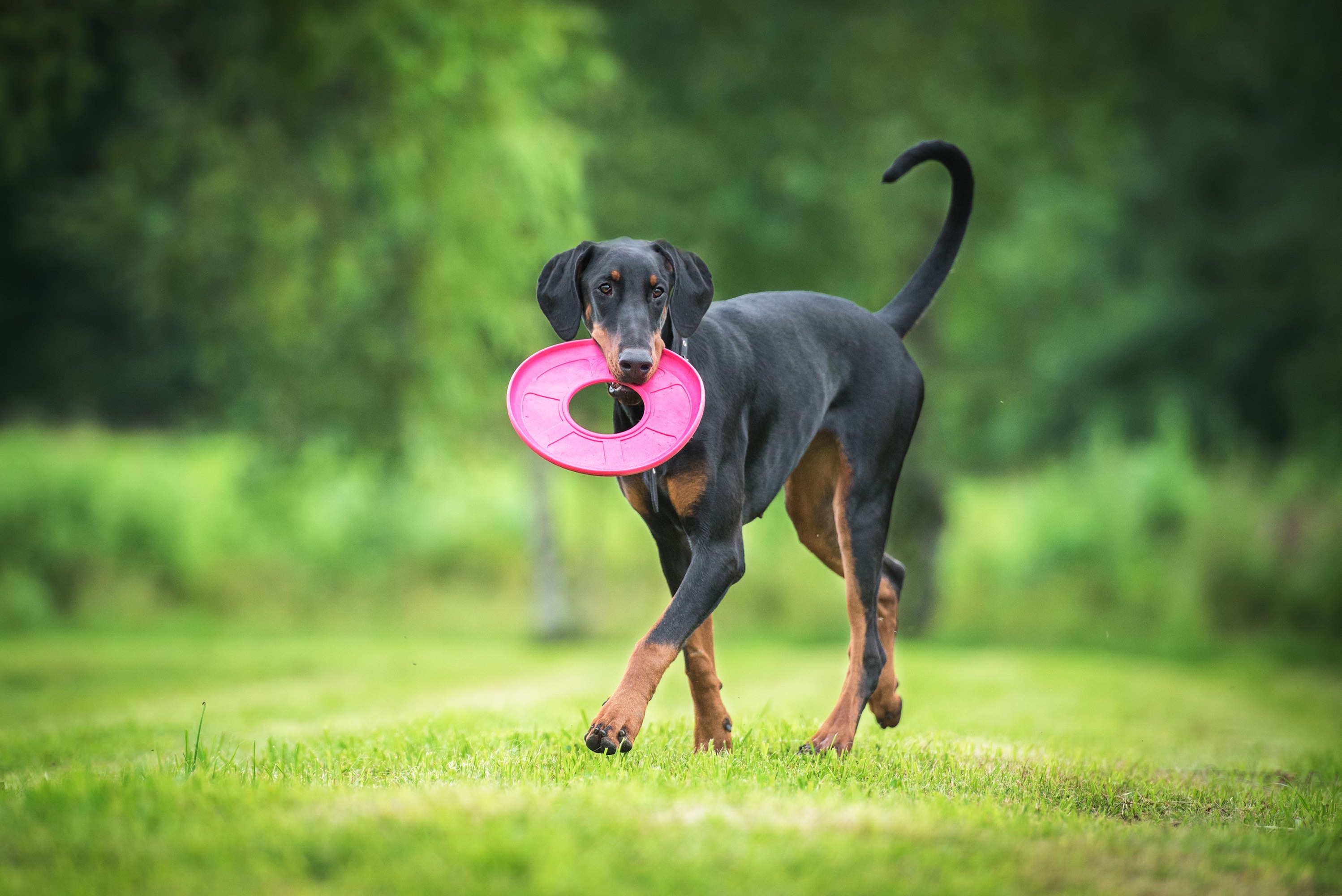
Doberman Pinscher Behavior
Despite their history as a guard dog breed, Dobermans can be fun and loving family dogs, especially with early socialization.
Dobermans are usually patient with young children, though their excitable nature means they might accidentally knock very small children over during play. All interactions between kids and dogs, no matter the breed, should be supervised.
Dobermans may also have a strong prey drive, which could lead to chasing small animals, including cats. But Dobermans and cats can live together well when introduced properly.
Doberman Pinscher Training
The Doberman Pinscher is extremely intelligent and thrives in obedience and basic dog training. Dobermans need to have an outlet for all their energy, so providing a consistent training and socialization routine early in life is a great way to encourage good behavior and redirect undesired behaviors.
Without positive reinforcement training, Dobermans can become pushy and unmanageable, as well as reactive to novel stimuli (such as strangers, new sounds, and new objects). If you are planning on bringing a Doberman Pinscher into your home, be prepared to put in the training and socialization work to help your dog grow into a well-adjusted canine citizen.
Fun Activities for Doberman Pinschers
-
Nose work
-
Tracking
-
Obedience training
Doberman Pinscher Grooming Guide
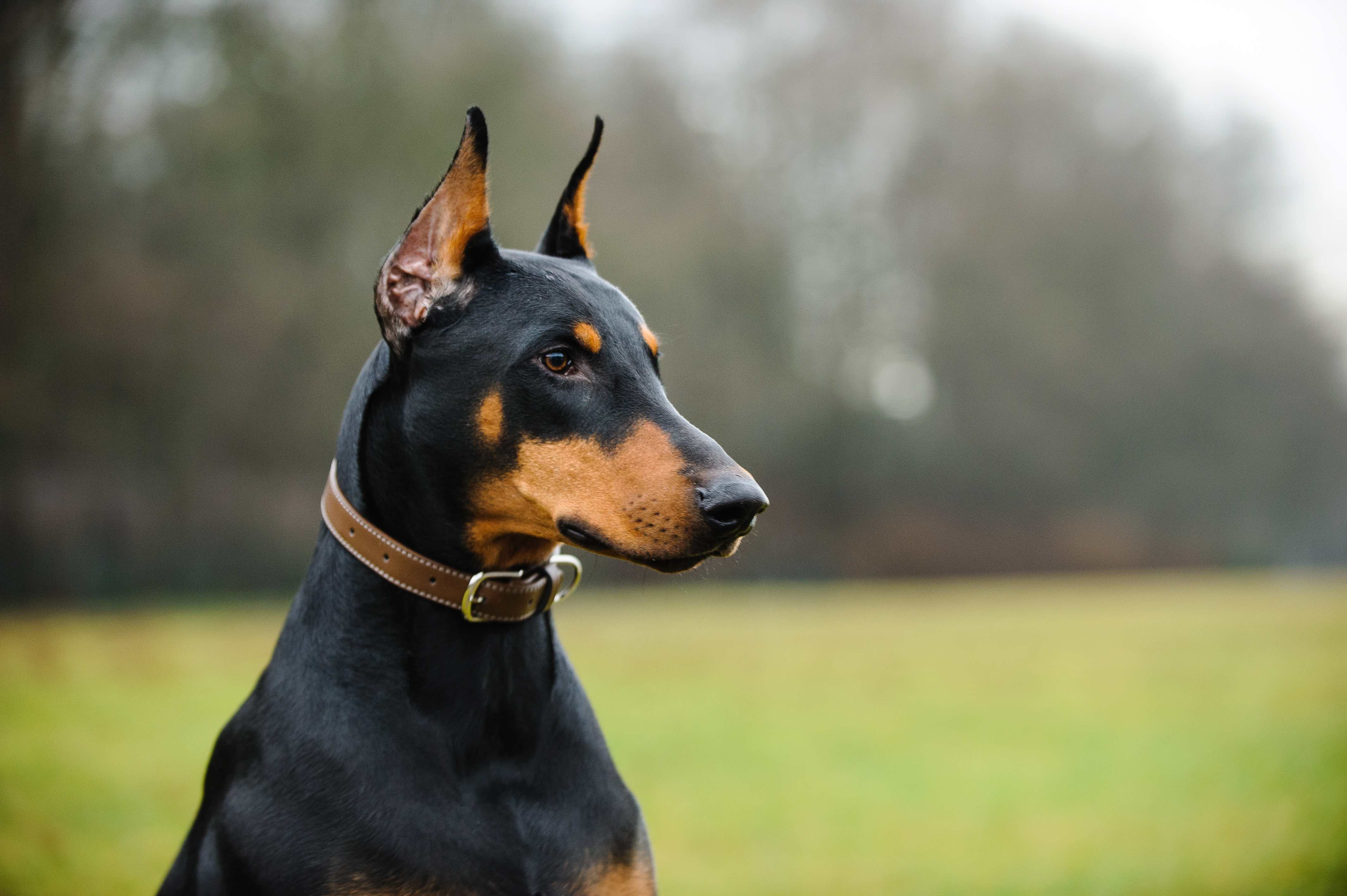
Though you might immediately picture a tan and black Doberman Pinscher, colors can vary—there are blue Dobermans, red Dobermans, and brown Dobermans. Rust-colored markings are present above the eyes, on the muzzle, on all legs, and below the tail. The breed can also be white in rare cases.
No matter the color, Dobermans have a short, smooth coat and are known to be moderate to heavy shedders.
Skin Care
Doberman Pinschers have generally healthy skin that requires minimal upkeep. Monthly or as-needed baths are enough to keep them clean.
Talk to your vet if you notice any changes in your Doberman’s skin.
Coat Care
While the Doberman Pinscher has a short coat, consistent brushing (daily or a couple of times a week) is a good idea to help manage shedding.
Eye Care
Dobermans have no special eye care considerations. Just be sure to give them a quick check when you are brushing or bathing to make sure there are no issues. If you notice any redness, discharge, or cloudiness, contact your vet.
Ear Care
It’s common for Doberman Pinschers to have their ears cropped. However, this practice is controversial and the American Veterinary Medical Association (AMVA) recommends against ear cropping. Uncropped Doberman ears will be folded-over and floppy.
Dobermans generally have very healthy ears, but regular ear cleanings are recommended. Use a veterinarian-recommended cleanser. If you notice a lot of debris or redness, notify your vet. This could be a sign of an ear infection.
Considerations for Pet Parents
The Doberman Pinscher is an active dog breed. They require routine physical and mental exercise, so they do best in a home with active pet parents. These are also dogs that thrive with a lot of training and socialization, and it is important for helping them grow into well-adjusted adult dogs.
Dobermans do have a strong prey drive, so homes with small animals are not ideal unless there has been extensive socialization and training.
A healthy Doberman should have a physical exam performed by a veterinarian at least once annually. The breed is predisposed to dilated cardiomyopathy, a type of heart disease, so special attention should be paid to symptoms like lethargy, exercise intolerance, coughing, or collapse.
Doberman Pinscher FAQs
Is a Doberman Pinscher a good family dog?
Dobermans are a patient and loyal breed, so a well-trained and socialized Doberman Pinscher can make a good family dog. Children should always be supervised when interacting with all dogs, including Doberman Pinschers.
Are Doberman Pinschers smart dogs?
The Doberman Pinscher is an immensely intelligent breed, making these dogs good candidates for intensive training.
Is there a difference between a Doberman and a Doberman Pinscher?
A Doberman is the same as a Doberman Pinscher; the terms are interchangeable and refer to the same breed.
How long do Dobermans live?
The average Doberman Pinscher lifespan is 10–12 years.
Are Doberman Pinschers good with kids?
Well-socialized Doberman Pinschers can be great companions for playful children. But because of their energetic nature, Dobermans might be best for families with older children, as they might accidentally knock down smaller kids during play.
What’s the difference between a German Pinscher and a Doberman?
German Pinschers and Doberman Pinschers are both German breeds and look very similar. Dobermans are, in fact, descended from German Pinschers. But the two related breeds do have their differences.
Most notably, Dobermans are larger than German Pinschers, which stand only 17–20 inches and weigh 20–40 pounds.
Are there miniature Doberman Pinschers?
While Miniature Pinschers look like mini Dobermans, the two breeds are completely unrelated. Instead, it’s believed that Min Pins were bred from Dachshunds and Italian Greyhounds.
Featured Image: iStock.com/JamesBrey
References
American Kennel Club. The New Complete Dog Book. CompanionHouse Books; 2017.
American College of Veterinary Surgeons. Gastric Dilatation-volvulus. https://www.acvs.org/small-animal/gastric-dilatation-volvulus
Cornell University College of Veterinary Medicine. Canine Dilated Cardiomyopathy (DCM). https://www.vet.cornell.edu/hospitals/companion-animal-hospital/cardiology/canine-dilated-cardiomyopathy-dcm
American College of Veterinary Surgeons. Canine Hip Dysplasia. https://www.acvs.org/small-animal/canine-hip-dysplasia
Cornell University College of Veterinary Medicine. Canine von Willebrand Disease. https://www.vet.cornell.edu/animal-health-diagnostic-center/laboratories/comparative-coagulation/clinical-topics/canine-von-willebrand-disease