Black Widow Spider Bite Poisoning in Cats



What Is Black Widow Spider Bite Poisoning in Cats?
Cats are very curious creatures, and sometimes that curiosity can get them into trouble—like disturbing a spider and eliciting a toxic bite that could have been avoided.
Black widow spiders are notorious arachnids that are known for the highly venomous toxin they release when they bite. Venom from a black widow spider contains a highly potent neurotoxin that causes a release of neurotransmitters (acetylcholine and norepinephrine) that affect muscles, nerves, and other parts of the body. According to the Pet Poison Helpline, a female black widow spider bite is 10-15 times more powerful than rattlesnake venom.
While dogs can have some resistance to this toxin, cats are smaller and thus highly susceptible, and they can experience severe symptoms very rapidly. Black widow spider bites are often fatal for cats.
While the bite itself is painful, it’s often hard to locate. Mild redness might be seen, but local tissue damage will not be present as it is with most other venomous bites, like brown recluse spider bites. If you know or suspect that your cat has encountered a black widow spider, take them to their veterinarian or a veterinary emergency room as soon as possible, as this is a medical emergency.
Symptoms of Black Widow Spider Bite Poisoning in Cats
Symptoms of black widow spider bite poisoning will present very quickly and will progress rapidly. Clinical signs usually begin within a few hours, peaking at 24 hours post-bite. These symptoms can last for weeks and include:
-
Muscle rigidity
-
Muscle tremors
-
Severe pain (often displayed as howling and vocalizing loudly)
-
Spastic or uncoordinated movements (ataxia)
-
Difficulty or not being able to stand or walk
-
Restlessness, agitation
-
Paralysis
-
Trouble breathing or not breathing/respiratory failure (due to abdominal muscle paralysis)
-
Blood pressure effects
-
Vomiting, diarrhea, anorexia
-
Death
Causes of Black Widow Spider Bite Poisoning in Cats
Black widow spiders are not aggressive and will only bite when provoked. Cats will often get bitten by a black widow spider if they disrupt their nest or disturb them. Our kitties can encounter these spiders both indoors and outdoors, as black widows will make a home and a nest just about anywhere.
While black widow spiders are the most venomous spiders in North America, they can control how much venom they release during a bite—and, occasionally, their bites will not release any venom at all. But there’s no way to know how much venom was released, so a bite is always a medical emergency. Black widow spider venom is also present throughout their body, including in their eggs. This means that, along with being bitten, cats can be poisoned by eating a black widow or their eggs.
All cats are susceptible to black widow poisoning, but young and old cats have an increased risk of serious complications because their immune systems are less efficient. Cats that have a medical history of high blood pressure are at an increased risk for fatality.
What Does a Black Widow Look Like?
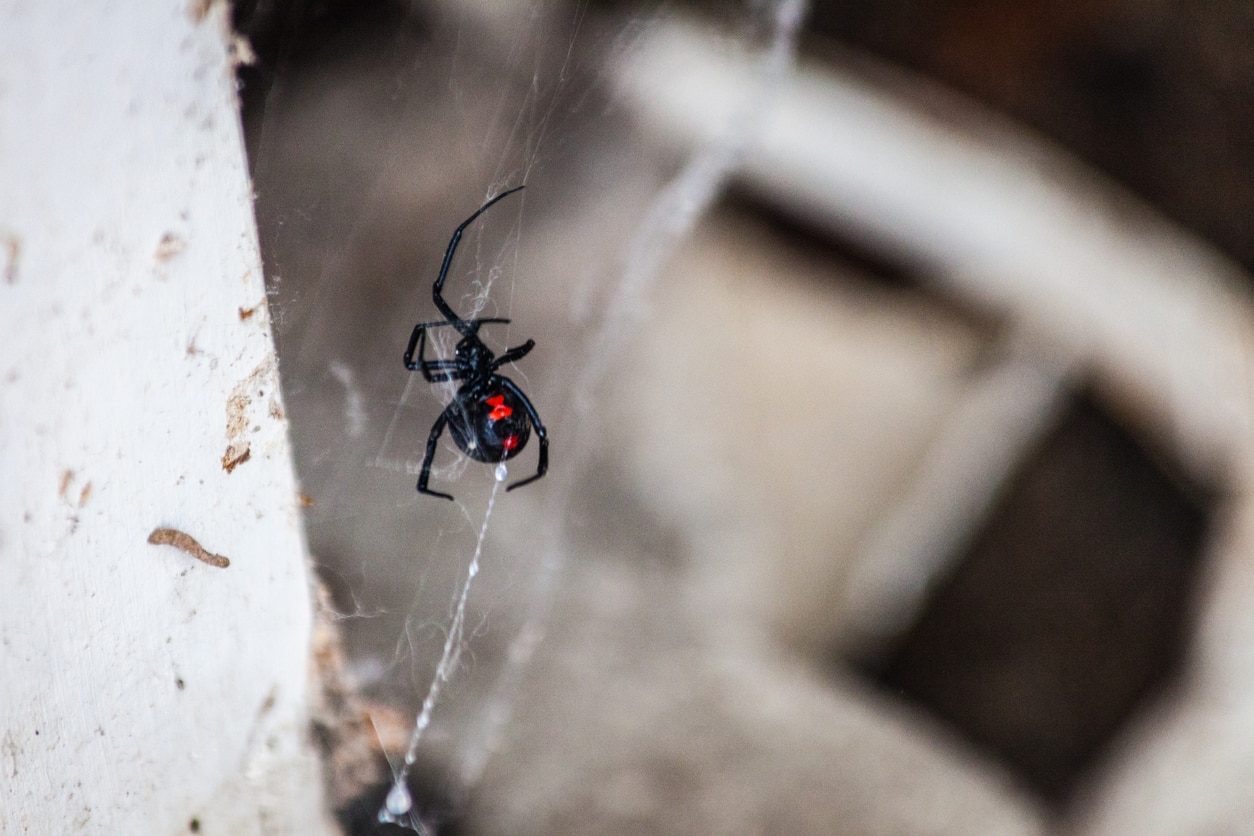
Female black widow spiders are significantly larger than males, often twice their size. Adult female black widows are black and shiny and have a red-orange hourglass marking on their underside. Immature females are brown and might not have the hourglass marking yet—though it gets darker with age, they are still just as poisonous. Male black widows do not have the hourglass marking and are generally considered nontoxic due to their small fangs/bite.
My Cat Was Bitten by a Black Widow. Now What?
If your cat was bitten (or you suspect they were bitten) by a black widow spider, they should be taken immediately to the closest veterinary clinic or veterinary emergency room. This is a life-threatening emergency, and you can’t delay getting your pet treatment. Do not spend anytime cleaning or disinfecting the skin where the bite took place, as this will not change the outcome.
How Veterinarians Diagnose Black Widow Spider Bite Poisoning in Cats
Spider bites in cats are primarily diagnosed based on displayed clinical signs. Your veterinarian will perform a physical and neurologic examination as well as blood and urine testing. Black widow spiders can, but do not always, cause some abnormalities on your cat’s bloodwork, thus it’s important to have a blood sample taken by your vet for analysis.
The only way to definitively diagnose a black widow spider bite would be if the spider is collected and identified, but this rarely is done. It’s never advised for anyone to handle a black widow spider, so do not try to catch it. If your cat vomits up a dead black widow spider, collect the spider (while wearing gloves!) and bring it to your veterinarian for identification.
Treating Black Widow Spider Bite Poisoning in Cats
If your cat has been bitten or has ingested a black widow spider, they should be hospitalized for aggressive treatment. Rapid treatment with antivenom should be initiated right away, preferably within 24 hours. Antivenom works to deactivate or neutralize the toxin in the body to help prevent any further harm from the black widow’s neurotoxin. Most cats will also need IV fluids, pain medications, oxygen therapy, muscle relaxers, anti-seizure medications, anti-nausea medications, and/or other symptomatic supportive care.
Recovery and Management of Black Widow Spider Bite Poisoning in Cats
Paralysis, muscle weakness, and pain can last weeks to months after treatment is started. Medications often need to be continued at home if the cat survives the bite and is discharged from the hospital.
Because they are highly susceptible to black widow spider venom, the prognosis is often poor for cats. However, they may recover if they receive immediate veterinary care after the bite. If black widow spiders are common in your area, ensure that dark places in your home are free from spider webs. Wearing gloves and using a stick to poke into holes is always recommended. A professional exterminator is also recommended to help prevent your cat from getting bitten by a black widow spider.
Featured Image: iStock/piranka
Health Tools