Dysecdysis in Reptiles


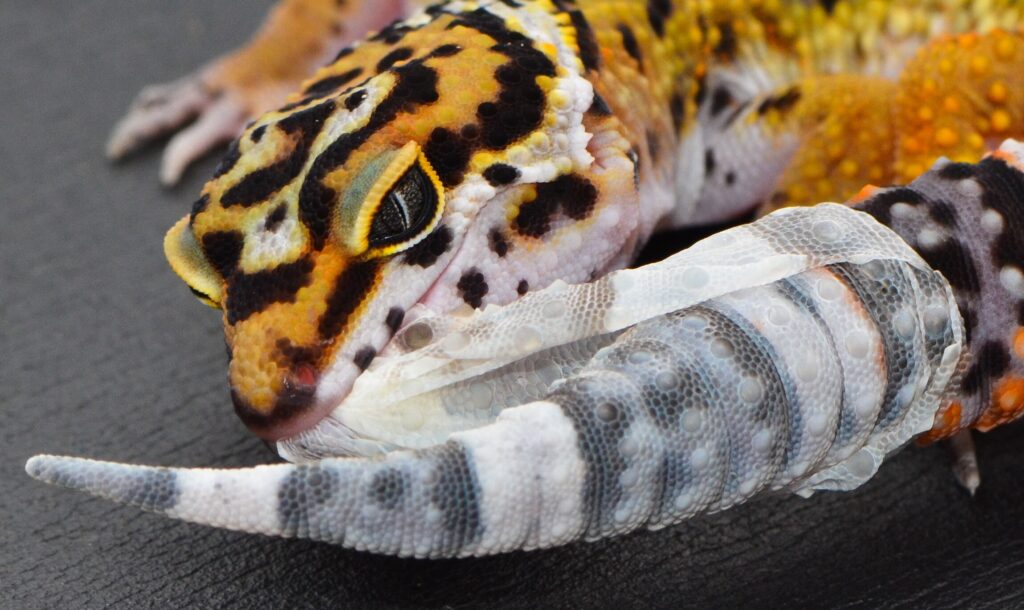
P A Collins/iStock / Getty Images Plus via Getty Images
What Is Dysecdysis in Reptiles?
Normally, with proper care, your scaly pal doesn’t need help ditching their old skin. Pet parents often find the skin draped over a branch or pushed into a corner. Some reptiles may even eat their skin, leaving no trace in their enclosure!
But at some point, almost all reptile parents will have to help their pet out of their old skin.
A reptile’s shedding cycle is called ecdysis. When something goes wrong with their shedding, it’s called dysecdysis. Dysecdysis in reptiles may also be called “stuck shed,” “retained shed,” or “retained skin.”
At some point, almost all reptile parents will have to help their pet out of their old skin.
Reptile scales are not as flexible or easily replaced like mammal skin cells. So to grow and replace their scales, reptiles must shed them continuously throughout their life. Mammals also shed cells, but typically at the microscopic level, and do not shed large sheets like reptiles.
If the dysecdysis remains a problem long enough, your reptile buddy may need the help of a veterinarian.
Symptoms of Dysecdysis (Stuck Shed) in Reptiles
A bad shedding cycle is usually obvious to an observant pet parent. A reptile with retained skin may show one or more of the following symptoms:
-
Pieces of old skin stuck to the body
-
Eyes look cloudy, like dirty glasses
-
Dull colors and patterns
-
Toes or tails that look pinched or have old skin build-up
-
Skin build-up in the crease of the legs
In snakes, retained skin is usually easy to spot. Their skin should come off in one piece, like a sock. It looks like a transparent version of the snake—complete with eye caps (called spectacles).
Lizards, turtles, and tortoises don’t shed in one piece. However, they should still shed completely. Their eye caps, spines, toes, and tails are often the last bits to shed. These areas of the body are also most likely to hold onto old skin.
Retained shed can pinch or damage small body parts, because the dead skin shrinks when it dries out.
What Causes Dysecdysis in Reptiles?
Retained skin on a reptile is almost always a symptom of a larger problem. While husbandry-related problems are common and relatively easy to fix, others are more complicated.
If your scaly pal’s retained skin goes on long enough, they can get secondary infections—or even lose their toes or tail—that a veterinarian must treat.
Husbandry-Related Dysecdysis
-
Humidity too low: Even desert-loving reptiles look for humidity when it’s time to shed. Creating a humid hide from a plastic container can help. Be sure to include moist
-
Enclosure too cool: Reptiles depend on heat and UV for nearly all of their bodily functions. If the temperature is too cool for too long, it affects everything including digestion, breathing, reproduction, immune function, and shedding.
-
Nothing to rub against: A reptile needs a little friction to get the shedding process started. Branches, rocks, and coarse substrate can help loosen old skin.
-
Poor diet: A balanced diet is vital, and too little food is as bad as too much or the wrong type of food. Study your
Health-Related Dysecdysis
-
Injury: If your
-
Infection: Dirty habitats are a breeding ground for infections and parasites. Keep your pal’s habitat free from waste
-
Internal and external parasites: Reptiles also struggle with parasites. A severe infestation can, in addition to dysecdysis, cause anemia, malnutrition, wounds, and abscesses.
-
Hypothyroidism or hyperthyroidism: The thyroid controls much of an animal’s metabolism and hormone balance. A malfunctioning thyroid
How Veterinarians Diagnose Dysecdysis in Reptiles
Your veterinarian will need detailed information about your pet’s enclosure. This, along with a physical exam, helps them determine if further testing is necessary.
When you take your scaly friend to see the doctor, bring the following information:
-
Habitat photos: You’d be amazed at how helpful this is for your vet.
-
Habitat stats:
-
Detailed diet information: When did they last eat, what
-
Supplements information:
-
Any other problems, questions, or concerns: Yes, even if they don’t seem relevant.
Depending on your pet’s symptoms, your veterinarian may recommend a few tests
-
Tape preparation, which can reveal mites. By placing a small piece of cellophane tape on a reptile’s skin and gently removing it, mites will be caught in the tape’s sticky surface and easily viewed under a microscope.
-
Skin cultures will be performed if the vet suspects an external bacterial or fungal infection.
-
Skin scrapings, examined under a microscope, can reveal parasites.
-
Fecal tests are done when internal parasites, bacterial, or fungal infections are suspected.
-
Blood draws if your vet suspects internal diseases, such as thyroid or calcium regulation issues.
Treatment of Dysecdysis in Reptiles
If a habitat problem caused your reptile’s stuck shed, fix it before you put your pal back into it. Living conditions and diet are the biggest reasons reptiles suffer from dysecdysis. It makes the condition
While you’re checking your reptile’s enclosure for problems, there are a few ways to help them out of their old skin.
Warm Water Soak
Warm water soaks with a gentle rubdown can help break the skin loose. Be extra gentle with your reptile’s tails, little toes, eyes, and spines. Never pull or pick at sheds, as you can cause more harm than good if it is not ready to come off. Be patient and only touch your pet like you would normally pet or stroke them—nothing vigorous and do not use any tools to help.
Note: Never let your scaly pal soak without supervision, because drowning is a risk for some species. Additionally, some desert tortoises
Medications and Ointments
Your veterinarian may recommend medication or ointments. What your vet recommends depends on what they find during the appointment.
-
Providone-iodine
-
Permethrin and ivermectin
-
Vetericyn® for wound care
-
-
Antibiotics may be prescribed for infections
Amputation
Amputation is only recommended when retained skin has cut off the circulation to toes and tails long enough to cause tissue death (necrosis).
But when it is necessary, amputating the affected body part relieves pain and keeps infections from spreading.
Recovery and Management of Dysecdysis in Reptiles
Even if your scaly pal’s dysecdysis isn’t husbandry-related, keeping their habitat and diet in
Here are a few tips:
-
Remove solid waste and urates as soon as you notice them.
-
Replace non-bioactive substrate regularly.
-
Use timers on lighting to set day and night cycles.
-
Digital thermometers and hygrometers are more accurate than analog.
-
Use UVB lighting, even if your scaly pal is nocturnal.
-
Place basking bulbs or ceramic heat elements over the humid hide.
-
Remove wood if it looks moldy.
-
Make sure your reptile has a humid hide.
If you need help finding a


