Ear Infections in Turtles and Tortoises

AURAL ABSCESSES
Tortoises and turtles, especially box turtles and aquatic species, are at risk for developing middle ear infections. Untreated infections commonly lead to the development of solid pus in the tympanic, or middle ear, cavity, forming a plug within the cavity.
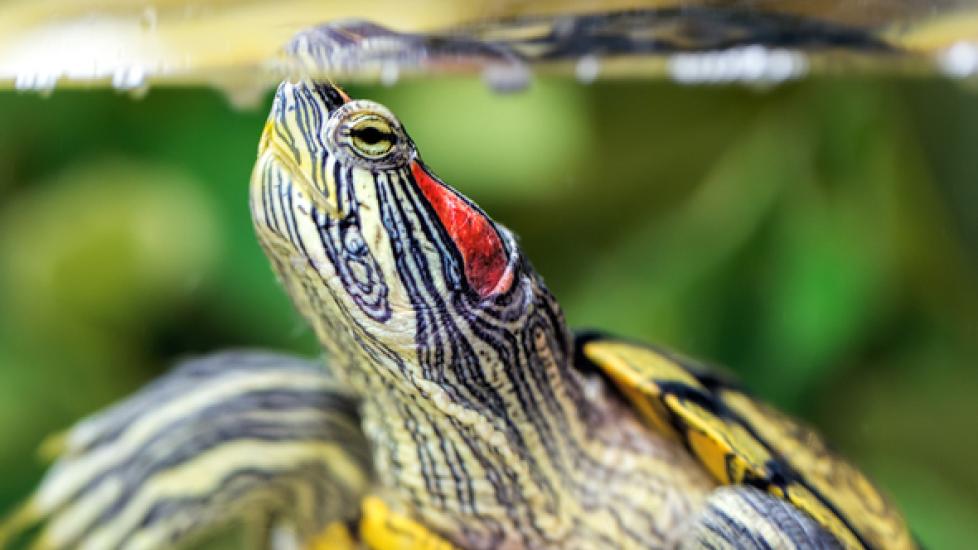
The tympanic cavity is located just behind the corner of the mouth. It is protected by a thin layer of skin membrane, which is normally flat against the turtle's head when the ear is healthy. When the tympanic cavity is infected and filled with pus, the plug presses against the membrane, causing it to bulge outward. It may be described as a lump on the side of the head. An infection that is trapped beneath the ear membrane is referred to medically as an aural abscess.
Left untreated, the infection can spread into the jaw and skull, and in extreme cases, the swelled membrane over the ear can even rupture.
Symptoms of Ear Infection
- Swelling or bulging of the ear membrane (located a little behind the corner of the mouth)
- Thick pus may be visible through the ear membrane
- Pain when the mouth is opened
- Difficulty swallowing
- Unwillingness to eat
- Rubbing the head against objects or clawing at the ear area
- Eye inflammation
Causes
The underlying causes of aural (or ear) abscesses are often related to a weakened immune system, which may be caused by a deficiency of Vitamin A in their diets, or poor sanitary conditions in their environments. Aquatic turtles that are forced to live in water that is contaminated with feces will swallow the bacteria tainted water, which can then lead to the bacteria travelling into the Eustachian tubes and into the middle ear. An infection can also occur as the result of injury to the membrane. The thin membrane is vulnerable to puncture, which can occur as the result of objects in the turtle's living environment, or as the result of a companion turtle's claw.
Diagnosis
The veterinarian will perform a thorough physical exam, examining the mouth and taking blood for lab work. The doctor will review the turtle's diet and its living space with the owner. The underlying cause of the infection must be discovered, otherwise the infection can reoccur.
Next Page: Treatment and Prevention
Treatment
Surgery is required to remove the pus and debris that has built up underneath the turtle’s ear membrane. The veterinarian will anesthetize the turtle and carefully make an opening in the membrane to reach the middle ear. The pus plug will be carefully lifted out of the ear cavity. The cavity will then be thoroughly cleaned and flushed out with sterile saline, and sometimes with an antimicrobial solution. The doctor will take care with this delicate operation to ensure that the infectious debris is not accidentally swallowed or inhaled as it is flushed through the Eustachian tube. The cavity will then be packed with an antibiotic ointment, and instructions will be given to the owner on how to clean the ear daily and repack the ointment. An injectable antibiotic will be given to the turtle, and in some cases, an oral antibiotic is also prescribed.
It can take several weeks for the skin membrane to heal. During this time, the turtle will need to be kept in a separate environment than its normal living space. It will need a safe space where it can rest and heal, with warmth and humidity — a humidifier can help to keep the air humidity stable. The area should be cleaned daily. The newspapers or towels used to line the area where the turtle is being kept should be changed out every day.
If the turtle lives some or all of the time in water (aquatic), your veterinarian will give you special instructions on how to treat the water to help the healing process.
Prevention
If the infection was related to Vitamin A deficiency, the veterinarian will go over a diet plan with the owner to ensure the turtle is getting adequate Vitamin A in its diet.
Sanitary conditions are an important component of prevention. The surfaces of the habitat should be kept very clean, with water and food bowls changed out and disinfected every few days. The owner and veterinarian can discuss safe ways to disinfect the habitat and bowls; chemicals should not be used. Environmental humidity and temperature should also be carefully monitored.


