Colic in Horses: Signs, Treatment, and Prevention


Istock/anjajuli
If you’re new to the horse world, chances are you will eventually hear the term “colic” mentioned at some point or another.
Colic in horses is one of the most common equine health emergencies, which is why it is important to understand what it is, the common signs, and what to do if you find yourself dealing with a case of horse colic.
Key Takeaways
- Colic in horses is considered any kind of abdominal pain.
- Signs of colic in horses include refusing to eat, not passing stool, and rolling in discomfort.
- Call your veterinarian right away if you suspect your horse is colicking.
- Colic in horses may be treated with NSAIDs, administration of fluids, or surgery in severe cases.
Summary
The word “colic” in horse terms simply means abdominal pain. The source of the pain could originate from any location within the horse’s abdomen, from the intestines to an organ such as the stomach or liver.
Most commonly, horse colic occurs when either the intestines become impacted or when parts of the intestines are displaced or twisted within the abdomen.
Symptoms
Early signs of colic in horses may include:
-
Looking at sides
-
Dullness or lethargy
-
Biting or kicking flank (belly)
-
Pawing the ground or air
-
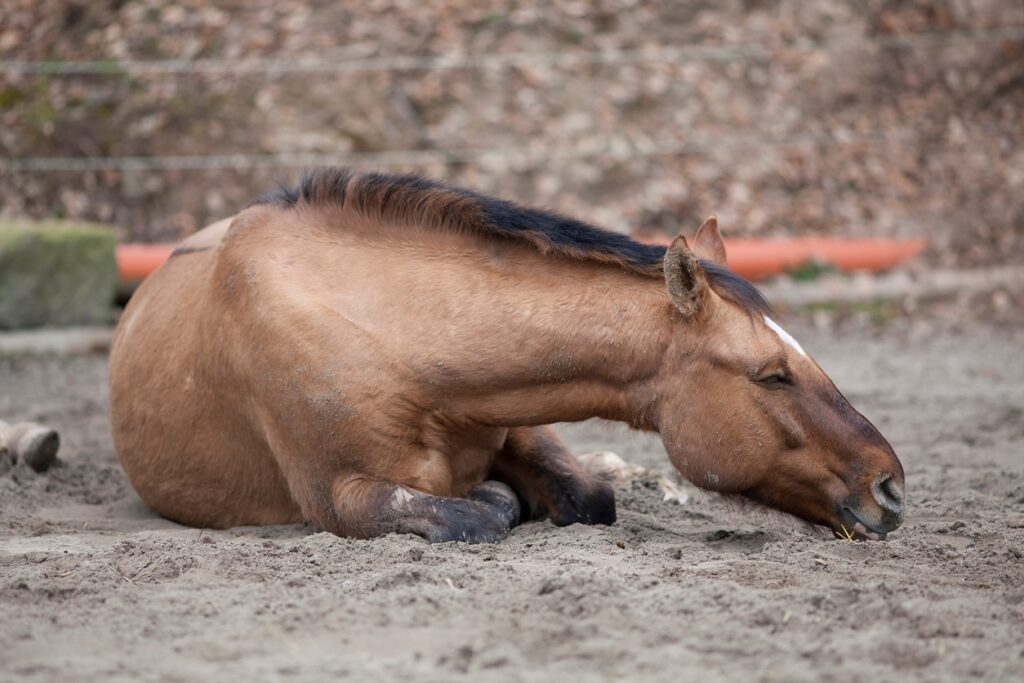
Laying down for extended periods, or getting up and down repeatedly
-
Small or dry fecal balls, diarrhea, or lack of manure production altogether
-
Poor appetite
-
Change in drinking behavior
-
Restlessness
More advanced signs of equine colic may include:
-
Increased heart rate
-
Heavy or fast breathing
-
Sweating
-
Tacky or dry gums
-
Rolling
-
Dark purple or pale gums
Causes
Horses have long gastrointestinal tracts that are mostly unattached inside the horse's abdomen, meaning the tract can easily move around. This can lead to colic due to displacement or entrapment from part of the intestinal tract moving to a location inside the abdomen that is abnormal.
Other types of colic include:
-
Impaction colic (fecal material gets stuck in the intestines and creates a blockage)
-
Gas colic (overproduction of gas during digestion or due to bacterial infection)
-
Spasmodic colic (overexcitement of intestinal contractions)
-
Enteritis/infection (inflammation and/or infection within the GI tract)
-
Strangulation (blood supply of the intestines is cut off by twisting of the intestines or tumor blockage)
Risk factors that could lead to colic in horses include:
-
Changes in diet (grain or hay)
-
Changes in routine or exercise
-
Weather changes
-
High parasite infestation
-
Sand ingestion
-
Increase in body weight
-
High grain diets/low forage
-
Long periods between forage/feeding
-
Decrease in water intake
-
Long-term use of non-steroidal anti-inflammatory medications
-
Stress
-
Recent foaling: broodmares that have given birth recently may be prone to large colon volvulus.
Diagnosis
If your horse is exhibiting signs of colic, remove any food from their stall, make sure they have access to water, and monitor their manure output.
You may consider walking your horse for short periods of time (five to ten minutes) if they are pawing or trying to lay down while you wait for your veterinarian to arrive or while getting the truck and trailer hooked up to head to the clinic.
Don’t walk your horse for extended periods or enforce more strenuous exercise, as this could lead to a more tired, dehydrated horse that’s still colicking.
Call your veterinarian right away if you suspect your horse is colicking.
Your veterinarian will be able to diagnose horse colic based on history, exam findings, and diagnostic tests.
The most common signs a veterinarian will look for to diagnose a colicky horse will be signs of abdominal pain along with an elevated heart rate (over 40 beats per minute).
The veterinarian will also want to pass a nasogastric tube through the horse's nose to the stomach to check for any reflux or backup of fluid that can signify intestinal blockage.
Another important diagnostic test is a rectal palpation. By feeling through the rectum, the veterinarian is able to assess several organs and check for any abnormalities, including an intestinal blockage or impaction. They may also be able to detect unusual distention or displacement of the intestines.
Further diagnostic tests may be recommended, including:
-
Abdominocentesis—obtains fluid from the abdomen in order to assess for intestinal damage
-
Ultrasound—looks at internal organs
-
Complete blood count and blood chemistry—evaluates organ function and inflammation
-
Lactate level—can evaluate cell health
Treatment
In order to appropriately treat horse colic, the underlying medical cause for the colic symptoms must be identified.
Medical treatment may be performed at the farm, or it may be recommended to take the horse to a hospital for further evaluation, IV fluids, 24-hour care, or possible surgery.
Medical treatment for colic may include non-steroidal anti-inflammatory medication such as Banamine® (flunixin meglumine) to alleviate pain and inflammation, and Buscopan® for spasmodic colic.
The administration of fluids, electrolytes, magnesium sulfate (Epsom salt) and/or mineral oil via the nasogastric tube placed in the horse's stomach may also help depending on the diagnosis.
If the horse does not improve with medications or treatments given on the farm, then hospital or surgical care may be required for treatment.
Colic Surgery
Colic surgery requires the horse to go under general anesthesia and have abdominal exploratory surgery to find and potentially fix the cause of the colic symptoms. Colic surgery may not be possible for all horses due to the inability to get a horse to a hospital in a short amount of time and cost.
Colic surgery can average between $5,000–$10,000 depending on the complications and severity of the colic. In severe colic cases, the recommendation may be euthanasia due to the horse having a poor prognosis of recovery.
Recovery and Management
Recovery after colic depends on the severity and medical reason for the colic episode.
If the colic episode was minor and able to be resolved with minor medical treatment on the farm, the horse may be back to their normal lifestyle within a few days. If the horse required hospitalization and surgery, it could take weeks or months to recover.
Typically, after a colic episode, the veterinarian will implement a slow re-feeding schedule to make sure your horse completely recovers. It’s important to make sure the horse is not showing any more colic symptoms before they are allowed to go back to their normal feeding and exercise program.
Prevention
You can help to reduce your horse’s risk of developing colic with the following recommendations:
-
Provide access to fresh water at all times
-
Offer your horse pasture turnout
-
Avoid feeding on the ground in sandy areas. If you feed hay flakes, consider a hay net to keep the hay off the ground and to promote slower, grazing consumption.
-
Feed grain and any type of pelleted feed only when necessary
-
Monitor for colic symptoms especially during feed, exercise, or routine changes
-
Provide routine dental care at least once a year by the veterinarian
-
Keep your horse on a regular deworming schedule
-
Monitor any horses that have colicked previously, broodmares for the first two months after foaling, as well as horses taking any non-steroidal anti-inflammatories such as bute or Banamine®
Colic in Horses FAQs
Are there remedies for treating horse colic at home?
Your veterinarian may prescribe medications like Banamine® to have on hand in case of emergency.
How long does horse colic last?
Depending on the type of colic and how soon treatment is started, an episode may last a few hours to several days.
Will a horse poop if they are colicking?
There is no absolute answer to this question. A colicking horse may pass small amounts of diarrhea, or have small, dry fecal balls, or may not pass any manure at all depending on their condition.
Can a horse survive colic?
Yes—a horse can survive and recover from mild cases of colic on their own or with minimal assistance. More severe cases of colic may require hospitalization and/or surgery.
If horses have a large amount of compromised intestine that isn’t salvageable, if they experience a rupture, or other complication, may not recover or may be humanely euthanized due to poor prognosis.


