Botulism in Horses


What is Botulism in Horses?
Botulism disease is caused when spores from the bacteria Clostridium botulinum are either ingested or infect a wound, releasing a neurotoxin called botulinum toxin (one of the most potent toxins). While this toxin can affect all mammals, horses are one of the most susceptible species. Botulinum toxin is often linked to geographical locations (Kentucky and the mid-Atlantic States) and can affect both adult horses and foals.
Types of Botulism in Horses
While there are seven strains of C. botulinum that produce toxins, only three of these strains have been seen to affect horses. Types A, B, and C have been linked to equine illness:
-
Type A is uncommonly seen in horses
-
Type B the cause of Shaker foal syndrome and occurs when the Clostridium spores germinate and produce toxin in the foal’s intestinal tract—this is primarily a concern in foals between 2 weeks and 8 months of age
-
Type C is caused by forage which has been contaminated by an infected animal carcass
Symptoms of Botulism in Horses
Clinical signs of botulism usually occur within 24 hours of exposure to the toxin and may include the following symptoms:
-
Weakness
-
Exercise intolerance
-
Muscle tremors
-
Drooling
-
Reduced tongue strength
-
Laying down/unable to get up
-
Progressive flaccid paralysis/progressive weakness
-
Labored breathing
-
Difficulty chewing or unable to swallow
-
Decreased tail, tongue, and eyelid tone
-
Death
If you see any of the above symptoms or have concerns your horse may have eaten contaminated feed, call your veterinarian immediately.
Causes of Botulism in Horses
Horses can acquire botulism via the following three routes:
-
Ingested (forage poisoning)
-
Infection of a wound (wound botulism)
-
Growth within the intestinal tract of foals
Ingestion of spoiled feed or contamination from an animal carcass where the toxin has already been released from the bacteria is the most common route horses get botulism. They can also become infected with botulism by ingesting the bacteria which then releases the toxin once inside the horses digestive tract (this is more commonly seen in foals and is due to Type B toxin) The neurotoxin is absorbed from the intestines and spreads throughout the body via the circulatory system. The toxin blocks the communication between nerves and muscles in the horse's body. This results in the physical symptoms of botulism. Although this disease is highly linked to specific geographic areas, it is still considered rare but highly fatal unless treated quickly with antitoxin.
Clostridium botulinum spores are found widely dispersed in the soil and water throughout the world. Type B is the most observed cause of botulism in horses and typically occurs because of consuming moldy hay, improperly fermented haylage/silage or contaminated grain. Type C has been linked to decomposing animal carcasses, commonly found in hay.
How Veterinarians Diagnose Botulism in Horses
Diagnosing botulism can be very difficult as there are no easily accessible and reliable tests available. Most often, your veterinarian will diagnose your horse with botulism from history, clinical signs, and the exclusion of other diseases. While a blood test for botulism is available, these tests are often inconclusive due to circulating levels of the botulinum toxin being too low to detect.
The most accurate diagnosis for botulism is to identify the bacteria in the horse's feed or environment where they were infected. This is more likely to be successful in the occurrence of large outbreaks rather than if only one or two horses are infected. Sometimes C. botulinum spores can be identified from intestinal contents. The most definitive diagnosis is through identification of the specific neurotoxin through PCR (polymerase chain reaction, which checks for botulism DNA) testing of feces, stomach or intestinal contents or any open wound.
Treatment of Botulism in Horses
Without quick, aggressive treatment and intensive supportive care, botulism is often fatal in horses. While botulism is highly fatal in horses, there are some available treatments that may provide a horse with the chance of survival dependent on how early the horse was diagnosed, and how soon aggressive treatment began. An intravenous antitoxin is available with the goal to neutralize the circulating toxin. Unfortunately, antitoxin therapy will not reverse existing clinical signs, may not stop disease progression, can be hard to acquire, and is costly.
Supportive care at a veterinary hospital is often required and may include the following:
-
Frequent turning of horses that are lying down (to avoid pressure sores)
-
Feeding through a nasogastric tube
-
Daily eye lubrication
-
Sedation to reduce muscle activity
-
Stall rest
-
Antimicrobial therapy (for secondary complications such as aspiration pneumonia)
Recovery and Management of Botulism in Horses
Recovery from botulism is dependent on the following factors:
-
Dose of toxin (how much toxin is in the horse's body)
-
Severity of clinical signs
-
Time of diagnosis
-
Quick and aggressive treatment
Horses that are only mildly affected with botulism may recover but associated muscle wasting may take weeks to months to resolve. Horses that become recumbent (unable to stand) due to the botulinum toxin often have a grave prognosis.
Botulism can lead to subsequent conditions such as:
A study from the New Bolton Center, University of Pennsylvania School of Veterinary Medicine reviewed the treatment and survival rate of 92 horses who became infected with botulism; of the 92 infected horses, 44 survived. Researchers concluded that an important predictor of survival was maintaining the ability to stand.
Preventing Botulism in Horses
Botulism can be prevented through good care practices and vaccination. Proper storage and inspection of all grain and hay before feeding is extremely important.
Consider the following preventive measures:
-
Any hay or grain that is moldy, has an abnormal smell, or is contaminated with a dead animal carcass should be discarded.
-
Avoid feeding horses silage or fermented forages.
-
When feeding round bales of hay, do not feed any that has gotten wet or any that the plastic wrapping has torn.
-
Keep surrounding areas free of any decaying vegetation and animal carcasses.
-
Control rodents, birds, and other animals that could be carriers of the botulinum toxin.
-
Prompt and proper care of wounds to avoid infections.
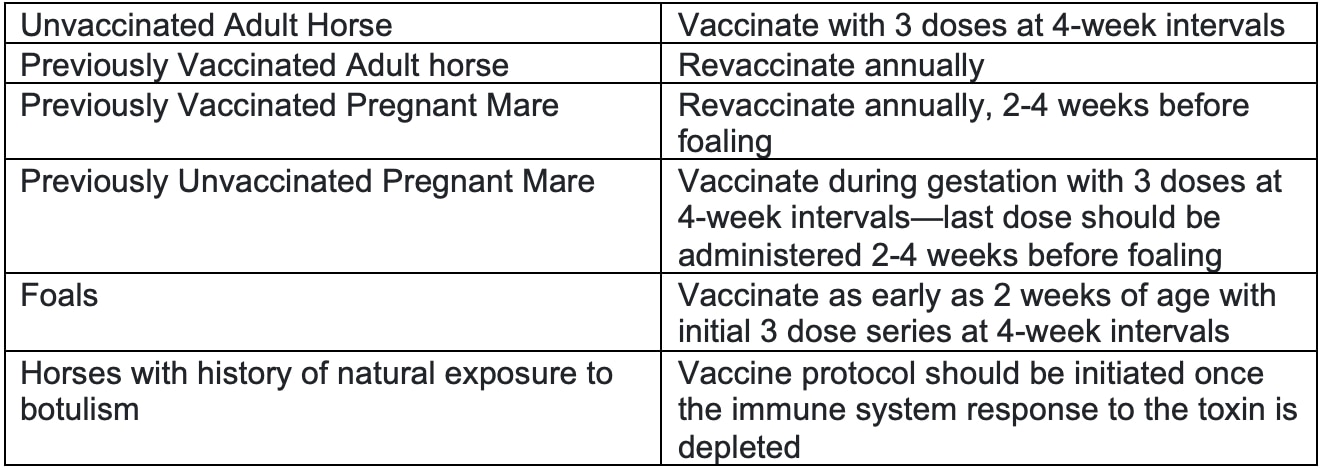
A vaccine is available for Clostridum botulinum Type B and is recommended annually in certain areas of the United States, including Kentucky and the Mid-Atlantic states. Within the endemic regions, susceptible groups include adult horses being fed high-risk forages and foals born to unvaccinated mares.
Vaccination Schedule Recommendations
Botulism in Horses FAQs
Can a horse recover from botulism?
Yes. It is possible for a horse to survive botulism, but the likelihood of survival is highly dependent on how quickly a horse is diagnosed and started on aggressive treatment.
How do horses get botulism from hay?
Horses get botulism from hay by ingesting contaminated and/or moldy hay or bacteria from a dead animal carcass that has released the Clostridium botulinum toxin.
Can infected horses spread botulism to me or other horses?
No. Botulism cannot be spread directly from horses to horse or from horse to people. Botulism can only be acquired through ingestion or infection of a wound.
References
1. Botulism | AAEP. aaep.org.
2. Botulism in Horses & Other Mammals. Large Animal Hospital College of Veterinary Medicine. University of Florida.
3. Johnson, A.L., S.C. McAdams-Gallagher, and H. Aceto. 2015. Outcome of adult horses with botulism treated at a veterinary hospital: 92 cases (1989-2013). Journal of Equine Veterinary Internal Medicine 29:311-319.
4. Young A. Botulism. School of Veterinary Medicine. 2021.
Featured Image: iStock.com/Tatiana Dyuvbanova