Hanoverian

Reviewed for accuracy October 5, 2022.
Developed in Germany in the 18th century, the Hanoverian is a world-renowned warmblood breed. Its easy control, great determination, speed, agility, endurance, and fine movements are the reason riders love using the Hanoverian in various sporting events, including show jumping, dressage, and other Olympic events.
Physical Characteristics
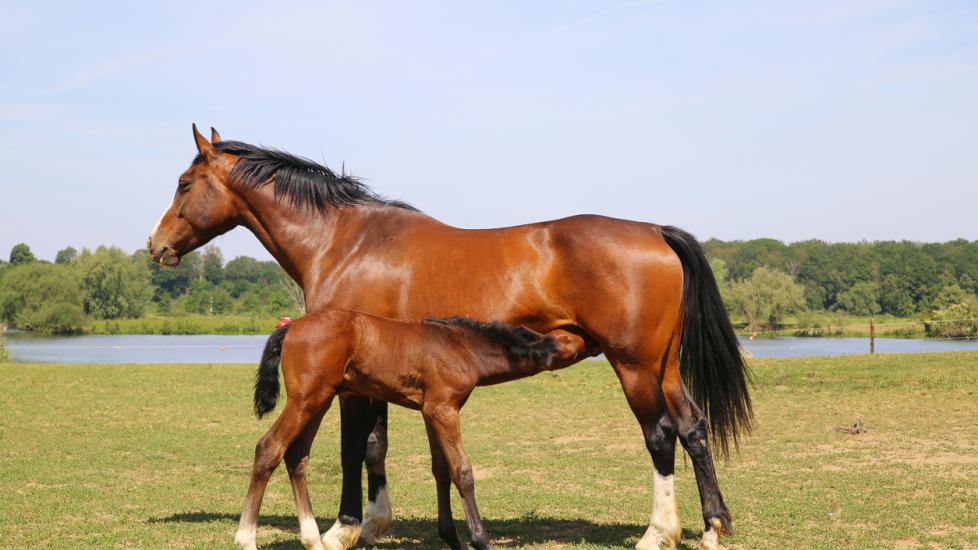
The Hanoverian is a large horse that stands an average of 15 to 18 hands tall (or 60 to 72 inches in height), weighing up to 1,400 pounds on average. They possess a straight, outlined head, clear eyes and small ears. Its neck is slender yet muscular. In addition, the Hanoverian has brawny shoulders, a deep, broad chest, and sturdy legs with flexible joints. The horse's coat, which is bay, brown, and black in color, is thick, as are its tail and mane.
Personality and Temperament
Aside from its extraordinary physique, the Hanoverian has a very outstanding attitude; it is determined, level-headed and, most importantly, disciplined.
History and Background
During the 1700s, many stallions and mares were imported to Germany from neighboring European and Asian countries for the purpose of breeding. The Hanoverian is said to have resulted from such efforts, possibly a crossbreeding of the local German mares and some purebreds, such as the Thoroughbred and the Trakehner. Bred mainly for the purpose of farm work and riding, the Hanoverian’s patience, speed, and strength was well-suited for such tasks. Today, the Hanoverian is a well-known, highly valued horse breed that is used in competitive sporting events.
Care and Health
Breed standards are very high by the German Hanoverian Breeders’ Society, which works closely with and influences the American Hanoverian Society. Potential breeding stallions and mares must undergo rigorous evaluation and testing before becoming approved for the registry. However, many Hanoverian fanciers are looking to further improve the breed by crossbreeding the Hanoverian with other purebred horses in order to create a more sophisticated, athletic but gentle horse—one that can compete in a variety of sporting events. This breed can experience osteochondrosis during early stages of growth, so proper nutrition is important to maintain strong bone health as they reach their mighty size.
Featured Image: iStock.com/Ralf Liebhold