Constipation in Hamsters

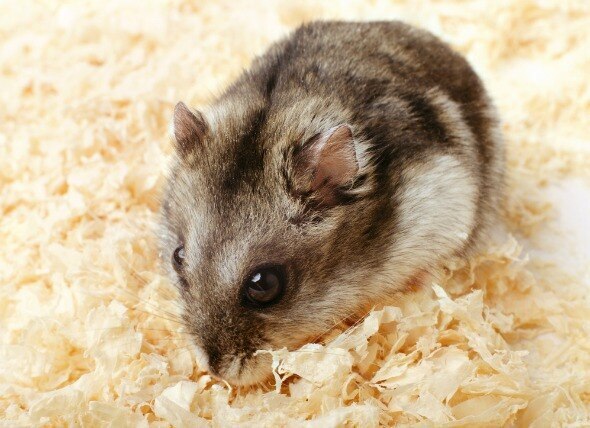
Constipation and diarrhea are the most commonly observed abnormalities in fecal consistency, composition, and frequency of passage. The feces of constipated hamsters also has a reduced concentration of water, making it appear hard and dry.
Hamsters may become constipated due to a variety of reasons: intestinal parasites such as tapeworms, intestinal blockage, or the folding of the intestines (intussusception). Identifying and treating the underlying cause quickly is essential for preventing further complications.
Symptoms
- Abdominal pain
- Straining to defecate
- Hard, dry feces, often small in volume
- Worms in feces (when suffering from heavy parasitic infections)
- Intussusception causing constipation may sometimes be seen as a tubular structure that protrudes from the anus.
Causes
- Intestinal blockage (e.g., accidental ingestion of bedding material)
- Worm infestation (roundworms, tapeworms)
- Intussusception, which can be caused by intestinal inflammation, pregnancy, pood diet, or insufficient water intake
- Liver diseases (e.g., hepatic fibrosis)
Diagnosis
A diagnosis of constipation is usually evident by observing the color and consistency of the feces along with the rate of defecation. However, to diagnose the underlying cause, additional laboratory examination like examination of feces, blood, and X-rays may be needed.
Treatment
The course of treatment will depend on the underlying cause. Intussuception, for example, may require surgery to remove a portion of the intestines or to create a bypass between the intestines. Though the prognosis for hamsters with intussusception is poor, prompt treatment may improve the chances of recovery.
Treatment of constipation requires identifying and treating the cause of the constipation. Intussusception may be fatal if not treated promptly. It may be necessary to surgically remove a portion of the intestines, or to create a bypass between two portions of the intestines that are not normally connected. The general outcome for intussusception is poor in hamsters.
Many other cases of constipation are treated with anthelminthic drugs, which kill internal parasites. Fluid therapy, meanwhile, is given to dehydrated pets, and laxatives to those that are extremely constipated.
Living and Management
Keep your pet hamster in a clean and calm environment to reduce the possibility of reinfection, and make sure it has access to clean drinking water.