Demodectic Mange in Dogs: Causes, Treatment, and How It’s Diagnosed


Istock/Todorean Gabriel
Demodectic mange (demodicosis) is a skin condition caused by an overgrowth of demodex mites that normally live on a dog’s skin.
It most often affects puppies and dogs with weakened immune systems, is not contagious to people or other pets, and is highly treatable with veterinary care.
Although these microscopic mites are a normal part of healthy skin, they can multiply when a dog’s immune system can’t keep them in check.
This overgrowth can lead to patchy hair loss, red or scaly skin, and, in more severe cases, widespread skin infections. Knowing the signs of demodicosis and when to see your veterinarian can help your dog get diagnosed and treated early.
Key Takeaways
- Demodicosis (demodectic mange) in dogs is a skin condition caused by an overgrowth of demodex mites that normally live on the skin.
- Puppies and dogs with weakened immune systems are most at risk for developing generalized demodicosis.
- Symptoms can include hair loss, redness, scaling, and skin infections, which may worsen without veterinary treatment.
- Treatment depends on severity and may include medicated topicals, oral medications, and managing underlying health issues.
What Is Demodectic Mange in Dogs?
Demodectic mange in dogs, also known as red mange, is a parasitic skin infection caused by mites such as Demodex canis (most common), Demodex injai, or Demodex cornei. Under the microscope, these mites appear cigar-shaped with eight short legs.
This type of mite is a normal inhabitant of the hair follicle, though it’s usually not harmful. If the immune system is healthy, these mites cause no harm to their host.
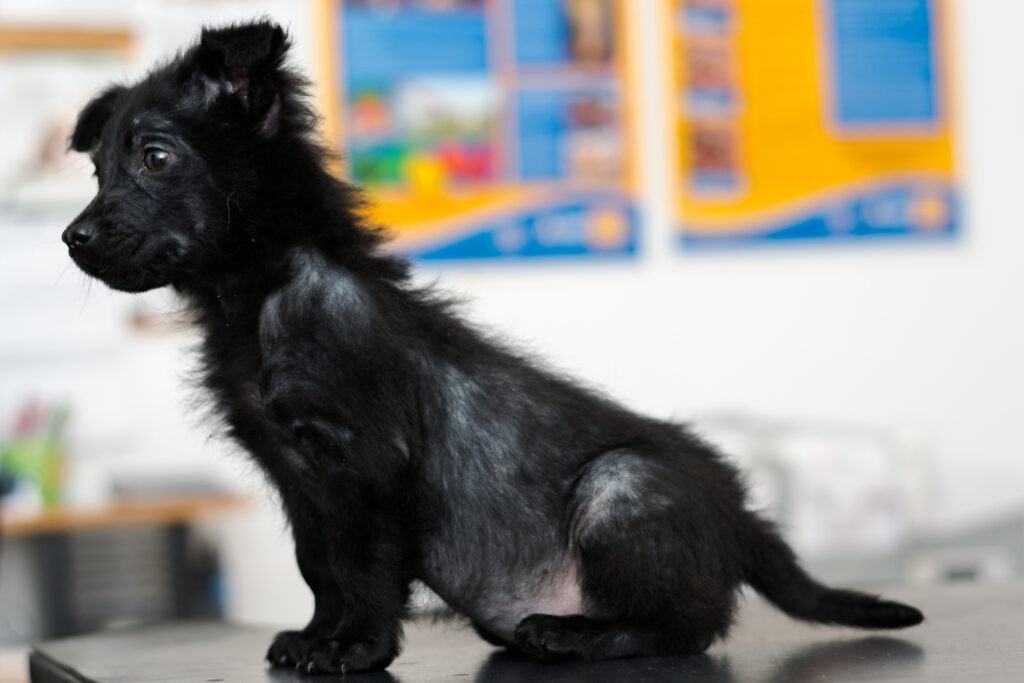
Dogs with immature or compromised immune systems that allow this mite to overgrow will develop clinical signs, such as hair loss and red, scaling skin lesions.
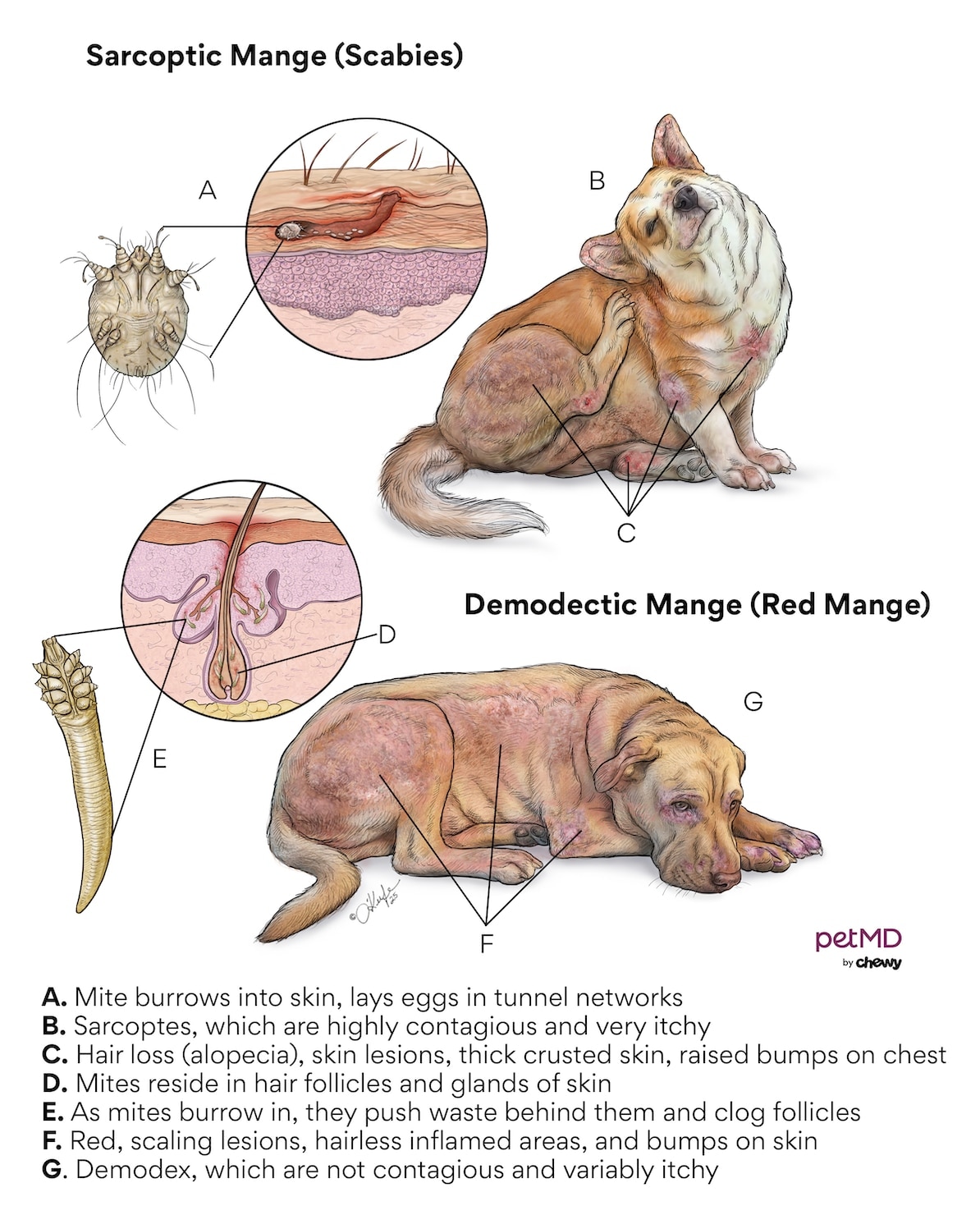
Click here to download this medical illustration.
Demodex mites are most often transmitted from mother to puppy while suckling milk because of the pup’s immature immune system.
Exposure of a normal, healthy dog to one with demodex mites is not dangerous. Demodectic mange is not contagious between other dogs as it requires a depressed immune system to develop.
Demodectic mange in dogs can’t spread from pets to humans.
Symptoms of Demodectic Mange in Dogs
Clinical signs of demodectic mange in dogs include:
-
Alopecia (hair loss)
-
Skin scaling
-
Bumps on the skin (papules)
-
Pigmentation of the skin
-
Thickening of the skin
-
Itchiness varies depending on secondary skin infections or if the lesions are localized to a certain area or are generalized over the body.
In puppies, lesions often begin around the face and head due to feeding from the mother’s teat, but lesions can be found anywhere on the body.
In more severe cases of generalized demodectic mange in dogs, pain, lethargy, fever, draining wounds, and skin swelling may be noted. Ear infections are also possible if the mite invades the ear canals.
Causes of Demodectic Mange in Dogs
Demodectic mites typically live on the skin and benefit from their host while causing no actual harm to their host.
Mange occurs when the mite overgrows at the hair follicle, often in those with weaker immune systems such as puppies, whose immune systems are still forming, and older dogs with underlying illnesses leading to depressed immune systems. When the immune system is depressed, mites overgrow causing itching and mange.
How Veterinarians Diagnose Demodectic Mange in Dogs
Demodectic mange in dogs is most commonly diagnosed through skin scraping or hair plucking, and cytology.
This is a noninvasive test that involves using a scalpel blade and scraping the skin deep enough for mild irritation or bleeding to be noted (this is necessary since demodex mites live deep in the hair follicle) or simply removing hair at the root for assessment.
The sample is assessed under the microscope. The presence of any mites is considered a positive result.
Some mites can be found through fecal flotation or fecal testing because the dog ingests them while licking/chewing the skin.
Finally, skin biopsy may be necessary in cases where the dog is not responding to therapy or if a diagnosis is undetermined with other less invasive diagnostic tests. Biopsy is sometimes considered in more severe, generalized cases of demodicosis.
Treatment of Demodectic Mange in Dogs
Not all cases of demodectic mange in dogs require treatment.
Most cases of demodectic mange that are localized to a small region of the body will spontaneously resolve in one to two months with no treatment.
Other cases of localized infections can be treated with topical medication such as moxidectin and imidacloprid.
If demodectic mange in dogs becomes generalized, medication is recommended for resolution of symptoms.
Miticidal treatment (oral or topical) is the most common type of therapy, including:
-
Ivermectin (Dogs with MDR1 mutations should never receive ivermectin. This mutation can be determined through genetic testing)
Miticidal therapy is continued until two consecutive negative skin scraping or hair plucking tests occur.
Special shampoos, such as DermaBenSs Shampoo, containing benzoyl peroxide are often recommended as these open and flush the hair follicles to allow dip and topical treatments to penetrate more efficiently.
You should discuss the risks and benefits of these products with your veterinarian before beginning to use them.
Secondary skin infections due to inflammation can occur and require antibiotic therapy, such as cephalexin.
It may be necessary to treat the skin infection before clearing the demodectic mange.
It’s also recommended to stop breeding dogs with generalized demodex infections, as the disease is thought to have an underlying genetic and/or immune system cause that contributes to the overgrowth of mites.
Recovery and Management of Demodectic Mange in Dogs
Most dogs with demodectic mange recover well with appropriate therapy in a timely manner.
Secondary infections and underlying systemic illness are often the culprits in dogs that require chronic treatment.
Mange can be fatal in dogs who receive inappropriate therapy or whose underlying medical conditions are not well managed.
Demodectic mange does not require environmental cleaning, as it does not typically transmit between dogs, though a monthly or tri-monthly miticidal preventive is still recommended.
Dogs should remain on regular miticidal preventives to avoid infection from other types of mites, fleas, and ticks unless otherwise directed by your veterinarian.
Prevention of Demodectic Mange in Dogs
To reduce the risk of demodectic mange, pet parents can do the following:
-
Ensure regular veterinary well care to identify any health issues early so they can be effectively managed.
-
Feed a high-quality, nutritious diet, such as Purina Pro Plan Shredded Chicken, to support a healthy immune system.
-
Keep dogs up to date on vaccinations to maintain a strong immune system.
-
Maintain a clean, hygienic home environment to support overall health and well-being.
Demodectic Mange in Dogs FAQs
How do you treat demodectic mange in dogs?
Demodectic mange is treated with topical or oral antiparasitic medications, such as ivermectin or moxidectin. However, many mild infections resolve on their own without treatment.
Does demodectic mange go away?
Demodectic mange can resolve on its own without treatment if it is mild and localized. With generalized demodectic mange, treatment is required and it can take several months for it to fully resolve.
Can demodex mites spread from dogs to humans?
No, demodectic mange cannot be transmitted from dogs to humans. It develops in dogs due to a weakened immune system, so it is also not contagious among dogs.
How do I know if my dog has demodectic mange?
Affected dogs generally have hair loss, red and inflamed skin, and itching. The only way to know if your dog has demodectic mange is to see a veterinarian for diagnostic testing, such as a skin scrape.


