Accumulation of Air Between Chest and Lungs in Dogs

Pneumothorax in Dogs
Pneumothorax is the medical term for an accumulation of air in the pleural space, the area between the chest wall and the lungs. It may be categorized as traumatic or spontaneous, and closed or open.
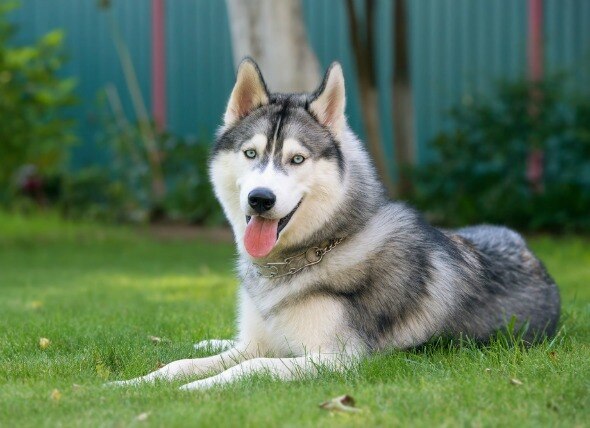
Both dogs and cats are susceptible to pneumothorax. Large, deep-chested dogs, such as the Siberian Husky, are believed to be more susceptible to spontaneous pneumothorax.
If you would like to learn how this disease affects cats, please visit this page in the PetMD health library.
Symptoms and Types
There are four main categories of pneumothorax: traumatic, spontaneous, closed, and open. Symptoms vary depending on the type of pneumothorax, though some common signs include rapid breathing (tachypnea), difficulty breathing (dyspnea), shallow rapid breathing from the abdomen, and rapid heart rate (tachycardia).
Traumatic pneumothorax, which occurs when air accumulates in the pleural space and is due to some sort of trauma, such as a car accident, may be evident by the signs of shock.
Dogs with spontaneous pneumothorax, on the other hand, may show sings of lung disease. Spontaneous pneumothorax is due to a non-traumatic cause, and may be primary (meaning it occurs in the absence of some underlying lung disease) or secondary (meaning it is associated with some type of underlying lung disease).
Open pneumothorax occurs when there is a defect located in the respiratory system, such as a puncture in the chest wall, resulting in contact between the pleural space and the outside atmosphere; closed pneumothorax, meanwhile, is identified as pneumothorax without any respiratory defects.
Traumatic pneumothorax is generally open, while spontaneous pneumothorax is always closed.
Another type of pneumothorax is tension pneumothorax, in which air is transferred into the pleural space during regular inhalation, becoming trapped, and creating a one-way transfer of air into the pleural space.
Causes
Causes vary depending on the type of pneumothorax. Traumatic pneumothorax may be due to a traumatic incident, such as a car accident, leading to penetrating injuries of the neck or chest. A surgical incision to the chest, or perforation of the esophagus during surgery may also lead to traumatic pneumothorax.
Spontaneous pneumothorax, meanwhile, may be caused by a foreign body in the lung, lung cancer or abscess, lung disease caused by parasites, or the development of blister-like structures in the dog's lungs, known as pulmonary bullae.
Diagnosis
Two primary diagnostic procedures may be done in cases of suspected pneumothorax: thoracocentesis and bronchoscopy. Thoracocentesis, in which an intravenous (IV) catheter attached to an extension is inserted into the pleural cavity, can confirm diagnosis, and can also be used to remove air from the pleural space. Bronchoscopy involves the use of a thin tube with a tiny camera attached to it, inserted into the airways by way of the mouth. This is best done if there is evidence of tracheal or large airway trauma.
Additional diagnostic techniques may include X-ray imaging of the chest, and urine analysis.
Treatment
Dogs with pneumothorax should be treated in hospital until the accumulation of air in the pleural cavity has stopped or stabilized. As much air as possible should be removed from the pleural space, and oxygen therapy provided until your pet has stabilized. Air removal can be performed via thoracocentesis, in which an intravenous (IV) catheter attached to an extension is inserted into the pleural cavity.
In cases of traumatic open pneumothorax, the open wounds in the dog's chest should be cleaned and covered with an airtight bandage as soon as possible, and later surgically repaired. The administration of intravenous (IV) fluids is also often necessary in cases of trauma.
Living and Management
After initial treatment, the dog's activity should be severely restricted for at least one week to minimize the odds of recurrence. Vital signs, including respiratory rate and pulse, should be monitored for symptoms of recurrence.
Further care depends on the type of pneumothorax affecting your dog, and the severity of its health. Your veterinarian will advise you on how to provide aftercare to your dog until the follow-up exam.
Prevention
One key way to prevent traumatic pneumothorax is to keep dogs confined and away from dangerous areas such as roads, where they are most likely to be injured.


