Torn Knee Ligament in Dogs

FatCamera/E+ via Getty Images
Summary
A dog’s knee, also referred to as a stifle, is a complex structure consisting of:
- Multiple bones
- Femur (thigh bone)
- Patella (kneecap)
- Tibia (shinbone)
- Ligaments
- Meniscus
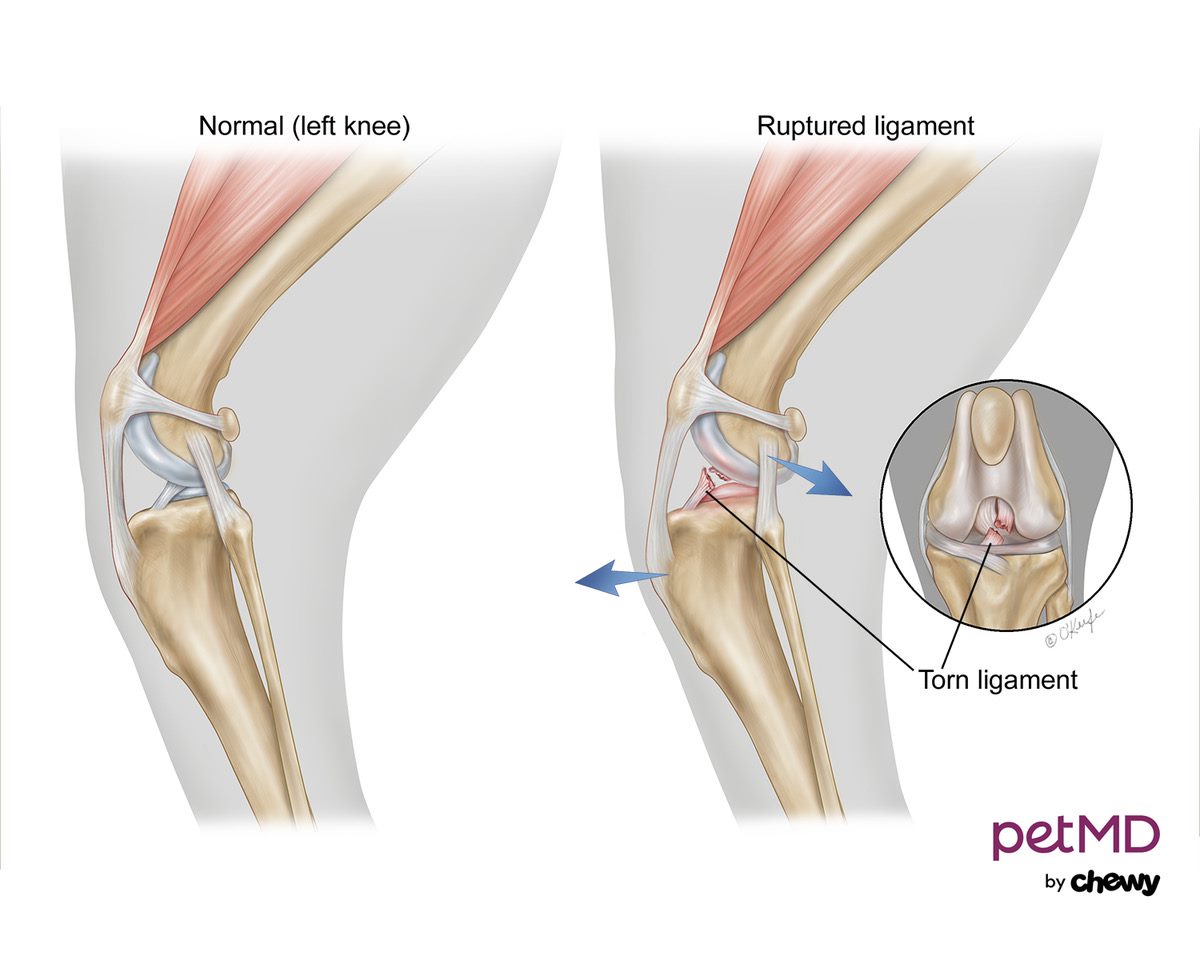
While there are multiple ligaments within the knee, typically a torn knee ligament refers to the tearing of the cranial cruciate ligament. The cranial cruciate ligament (CrCL) is the equivalent of the human anterior cruciate ligament (ACL). This ligament helps stabilize the knee in dogs by keeping the tibia from sliding too far in front of the femur. A CrCL rupture is a snapping of this ligament which decreases the stability of the knee.
The degree of lameness noted can vary with the type of damage to the ligament (partial or full tear) and can compound or worsen over time as the disease of the ligament and other internal knee structures progresses. Around 50% of animals that develop a torn ligament and rupture in one knee will develop it in the other knee at some time in the future.
Symptoms
Hind-leg lameness is the most obvious symptom of a torn knee ligament. Severity may vary from intermittent lameness after activity to an inability to bear weight on the affected leg. When sudden incidents of full or partial tears occur, you may also notice swelling or pain when touching or manipulating your dog’s knee.
Causes
Click here to download this medical illustration.
There are two potential causes of a torn knee ligament in dogs.
Over time, the CrCL develops damage due to wear and tear from physical activity and stress on the knee. This wear and tear is referred to as cranial cruciate ligament disease. Typically, cranial cruciate ligament disease (CrCLD) occurs over a period of months to years.
Cranial Cruciate Ligament Disease occurs due to many pre-existing conditions or compounding medical issues throughout the animal’s life, including:
- Breed
- Aging/degeneration of the ligament
- Obesity
- Genetics
- Poor structural conformation of the knee
As this damage/wear and tear accumulates, eventually the cranial cruciate ligament will rupture during use. Typically, this accumulation of damage to the cranial cruciate ligament is what leads to the tearing of the ligament. The second potential cause is a sudden traumatic rupture of the CrCL. This occurs due to a trauma (being struck by a vehicle) or an athletic situation (playing rough at a dog park) in young, healthy dogs whose ligaments have not incurred any prior damage. Sudden traumatic rupture is not typically common.
Diagnosis
Veterinarians diagnose a fully torn CrCL by noting cranial drawer. Cranial drawer is instability in the knee that occurs when the knee is manipulated by the veterinarian and is present only when the CrCL is completely torn.
To detect cranial drawer the veterinarian will grasp the thigh bone and shin bone and try to pull the shin bone in front of the thigh bone. An intact CrCL will prevent the shin bone from going past the thigh bone. The cranial drawer test helps to determine if there are any “clicks” between the muscle and joint. Proper radiographs and evaluation for cranial drawer may require sedation due to the strength of the muscles around the knee and compliance of the pet to restraint.
Absence of cranial drawer indicates that there is not a full tear to the CrCL. The veterinarian will also do the following:
- Observe the dog’s gait while walking
- Feel the knee for joint effusion (accumulation of extra fluid in the joint capsule)
- Look for signs of pain on manipulation of the knee
Typically, radiographs (X-rays) are required to evaluate the internal structures of the knee to assess for the presence and severity of joint effusion or arthritis, and for surgical planning, if needed.
Treatment
There are currently three options for surgical correction of a torn knee ligament in dogs:
- Extra-capsular suture stabilization: This procedure is the least invasive of the surgical options because it does not alter the bones surrounding the knee. It is designed to fill the function of the torn CrCL (which is inside the knee joint capsule) with a nylon monofilament suture material similar to fishing line. The suture material is placed outside the joint capsule and secured around the tibia and femur. This procedure is typically used for smaller dogs (under 40 pounds) and dogs that are more inactive.
- Tibial plato leveling osteotomy (TPLO) and Tibial Tuberosity Advancement (TTA): Both procedures involve cutting into the tibia in different ways and placing screws and bone plates to alter the alignment and mechanics of the knee. This allows for the knee to be stabilized without a functional CrCL. One of these procedures is typically recommended for active, young or large breeds of dogs over 40 pounds in weight.
- Medications: Your vet may recommend medications to help with pain and inflammation as your dog recovers post-surgery. These may include:
- Anti-inflammatories (Galliprant, Rimadyl, Carprofen or Meloxicam)
- Sedatives (Trazadone or Gabapentin)
- Adequan injections (promotes healthy joints)
- Joint supplements (Glucosamine and Chondroitin)
Physical therapy and Necessary Follow-up Treatment
Discussion with your veterinarian/surgeon will help determine which procedure is best for your pet. Multiple variables, such as size, activity level, knee stability, age, and finances are used to decide which procedure is the most beneficial.
Recovery and Management
Lameness is usually present for up to a month after surgery but improves over time. A three- to four-month period of strict cage rest is typically required for proper healing after the surgery. Strict cage rest refers to the pet being always confined to a small room/kennel - except for short leash walks for the bathroom, laying with family members or eating. All unconfined activity should only be allowed under strict observation by a family member to prevent the pet from overusing the affected knee. Increased or excessive activity prior to healing can result in surgical complications and failure of the procedure performed.
It also is important to avoid slippery surfaces and sudden large changes in elevation (such as stairs and getting on and off furniture). After the initial rest period, a slow progressive workload of the limb is recommended, with expected full recovery and limb use after six months.
Torn Knee Ligament in Dogs FAQs
How much does cruciate ligament rupture surgery in dogs’ cost?
Typical costs of surgical correction for a CrCL rupture varies greatly depending on the size of the animal, location in the country and type of procedure performed. The average cost for one of these surgical procedures can range from $2,000 to $5,000.
Can a dog recover from a torn ligament without surgery?
A dog can live with a torn ligament, but arthritis and lameness in the knee and hind leg will progress without surgical correction.
Can a dog’s partially torn ligament heal on its own?
A partially torn CrCL will not heal on its own due to a poor blood supply to the ligament.


