Oral Masses in Dogs



The following may contain Chewy links. PetMD is operated by Chewy.
Health Tools
Not sure whether to see a vet?
What Are Oral Masses in Dogs?
Oral masses are visible swellings within your dog’s mouth. It’s important to note that not all cases of oral masses are cancerous; in fact, the majority are benign.
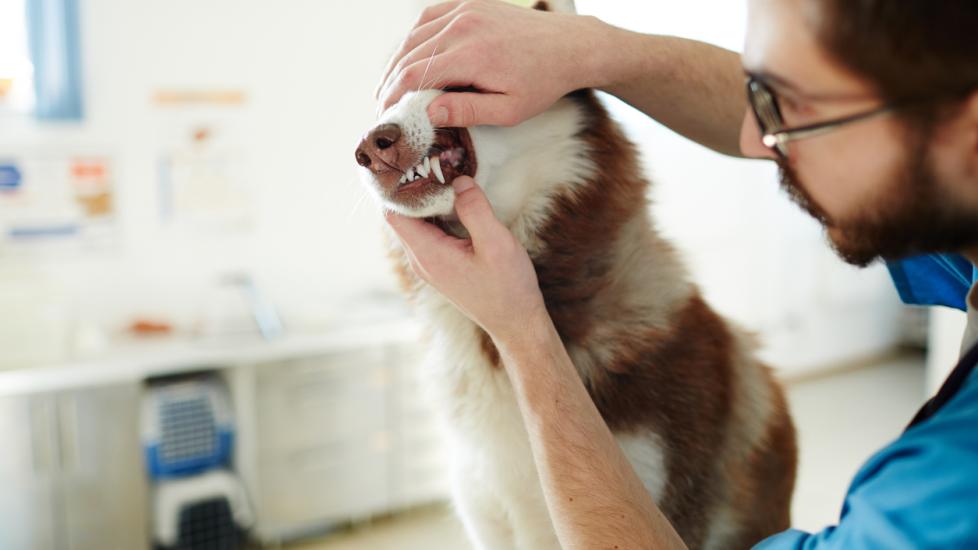
As a pet parent, it is important to regularly inspect your dog’s mouth, as early treatment can give your dog a happier, longer, and fuller life. Semi-annual checkups are key to early diagnosis and treatment.
Types of Oral Masses in Dogs
Benign tumors in dogs include the following:
-
Peripheral odontogenic fibromas (POFs) are the most common oral masses in dogs. These tumors usually occur singularly, are not aggressive, and grow slowly. But they can become quite large.
-
Acanthomatous ameloblastomas are benign since they don’t metastasize, but they are highly aggressive locally and can invade the bone and displace local structures, like the teeth.
-
Odontomas are not as common as the others and usually arise from the same cells that form teeth. These tumors are slow to grow and are seen more often in younger dogs.
Types of malignant tumors include:
-
Melanoma is often pigmented and highly aggressive and has a high rate of metastasis, having already spread to the lungs and lymph nodes by the time of diagnosis.
-
Squamous cell carcinoma (SCC) often appears red in color because of its inflammatory and ulcerative nature. It most often invades the underlying bone.
-
Fibrosarcoma is similar to SCC. These tumors are often locally aggressive but slow to metastasize.
-
Osteosarcoma is a bone cancer that is more common in the long bones than in the jaw. It acts aggressively and can metastasize to the lungs and other areas.
Other oral masses found inside your dog’s mouth may be related to poor dental hygiene. Periodontal disease causes inflammation and pain, often leading to gingival hyperplasia (excessive growth of the gums), which can often be mistaken for a mass. Dentigerous cysts can develop due to unerupted baby teeth, or oral papillomatosis, a virus transmitted from one (usually young) dog to another, which causes wartlike growths to form in the mouth.
Symptoms of Oral Masses in Dogs
Not all oral masses are cancerous. Fortunately, in dogs, most of the time, the mass is found to be benign. However, just because it doesn’t metastasize (spread) elsewhere in the body doesn’t mean it won’t cause your dog significant discomfort, or pain.
You may notice a mass inside your dog’s mouth that may be adjacent to a tooth, attached to the gum, inside of the lip, in the back of the throat, or even underneath the tongue. At times, the mass may become ulcerated (skin becomes inflamed and raw) or infected.
Other signs include:
-
Foul breath
-
Bleeding from the mouth or bloody saliva
-
Drooling
-
Swollen face or facial asymmetry
-
Pawing or rubbing at the face or mouth
-
Jaw chattering
-
Resistance to opening or closing the jaw, or brushing the teeth
Difficulty eating, dropping food, and weight loss may be seen in advanced stages of the condition, when the tumor has grown excessively or become ulcerated or infected.
Causes of Oral Masses in Dogs
Most oral masses in dogs occur for reasons that are not well understood. Multiple factors have been associated with certain tumors, including:
-
Age
-
UV damage (or other environmental triggers)
-
DNA mutations
-
Genetics
Certain dog breeds are predisposed, including:
Other masses, such as papillomas, have been shown to be caused by the canine papillomavirus.
How Veterinarians Diagnose Oral Masses in Dogs
Visualization of the mass is the first step in diagnosis. From there, your veterinarian will often recommend a biopsy, where a core of tissue is obtained (sometimes, the entirety of the mass may be removed) and then submitted for histopathology, which will determine the type of growth along with the predictability of its behavior (i.e., rate of reoccurrence and metastatic potential).
Usually, because the biopsy is performed under anesthesia, a set of dental radiographs will be recommended and performed as well. Dental radiographs are helpful for determining the extent and bony involvement of the tumor, as malignant masses will often invade the underlying bone and/or displace surrounding tissues, like the teeth. Dental radiographs are also needed to determine the presence of cysts, which often displace other structures but do not invade the bone.
Other tests that may be helpful for staging and treatment purposes include:
-
Blood work
-
Chest radiographs
-
Abdominal ultrasound
-
Aspirates/biopsies of the local lymph nodes
-
CT/MRI
Treatment of Oral Masses in Dogs
Treatment is dependent on the tumor type, but for most oral masses in dogs, even those suffering from gingival hyperplasia, surgery is required. It is important that the mass itself is removed, along with enough surrounding tissue to prevent local reoccurrence of the mass. Sometimes this may include removing the tooth (or teeth) or even part of the jaw, often in cases of malignancy.
Radiation therapy or chemotherapy can follow if margins are narrow or in cases where surgery might be risky, such as in dogs with comorbidities that would exclude them from undergoing surgery or those in which metastasis is significant. For some tumors, like melanoma, a combination of surgery, radiation, and chemotherapy might be needed for treatment.
Cases of oral papillomatosis often don’t require therapy at all, as many cases will spontaneously resolve in a few months. Surgical removal, laser ablation therapy, or certain medications can cause regression as well.
Recovery and Management of Oral Masses in Dogs
Surgical removal of the mass in most cases will provide a good outcome—and for many, a cure. Dogs affected with malignant tumors can have a good prognosis even if the mass isn’t completely removed, as sometimes, just removal of the mass can provide comfort and minimize pain and infection. However, local recurrence of the mass will most likely occur, so continued vigilance for signs of regrowth is critical moving forward.
Your dog will often be discharged with pain medication, suggestions for a soft food diet, and instructions to not chew on toys while healing.
Unfortunately, melanoma carries the worst prognosis overall, as these are highly malignant and have usually already spread by the time of diagnosis. Most dogs will succumb to the disease within a year.
Prevention of Oral Masses in Dogs
Although oral masses are not entirely preventable, if your dog receives routine medical care and biannual exams, you can increase the odds that masses are caught early and treated appropriately. As a pet parent, you can do your due diligence by providing your dog with daily at-home dental care via regular brushing, dental chews, wipes, or sprays and gels. This is the most opportune time to inspect your dog’s mouth and look for any signs of inflammation or tumor formation.
Featured Image: iStock.com/shironosov