Proptosis in Dogs


Summary
Proptosis is the medical term when a dog’s eye is suddenly loosened from the eye socket and the eyelids trap the eye in the forward position. Proptosis is an emergency because as soon as the eye starts to dry out, it becomes susceptible to infection, and is at immediate risk of blindness as soon as it leaves the socket.
This condition is most common in short-nosed dogs (brachycephalic breeds), whose eyes are naturally more exposed out of the eye socket compared to other dogs (Pugs, French Bulldogs). However, proptosis can occur in any dog that experiences head trauma.
Symptoms
The following symptoms may occur with proptosis in dogs:
-
Eye pushed forward out of the eye socket
-
Whining, pawing at the eye, restlessness, attempts to bite
-
Severely red eye
-
Dry cornea, potentially with an ulcer
-
Ruptured eye muscles
-
Possible rupture of the optic nerve
-
Potential presence of blood inside the eye
-
Possible rupture of the eye (evidenced by a hole, deflation, or leakage)
Causes
The primary cause of proptosis in dogs is trauma, often resulting from being hit by a car or engaging in a dog fight, which can cause head injuries, including skull fractures. Dogs that have previously had a proptosis are more susceptible to a recurrence, as the eye muscles that hold the eye in place may have been compromised.
Short-nosed, or brachycephalic, dog breeds commonly have bulging eyes, which makes them at higher risk for proptosis. Additionally, excessive physical pressure applied to the neck or head, such as through scruffing (holding the dog by the scruff of their neck) or the use of a choke collar, can cause proptosis in short-nosed dogs.
Diagnosis
If your dog develops proptosis, get them to the vet as quickly as possible. The sooner your dog receives veterinary care, the better the chances of saving the eye.
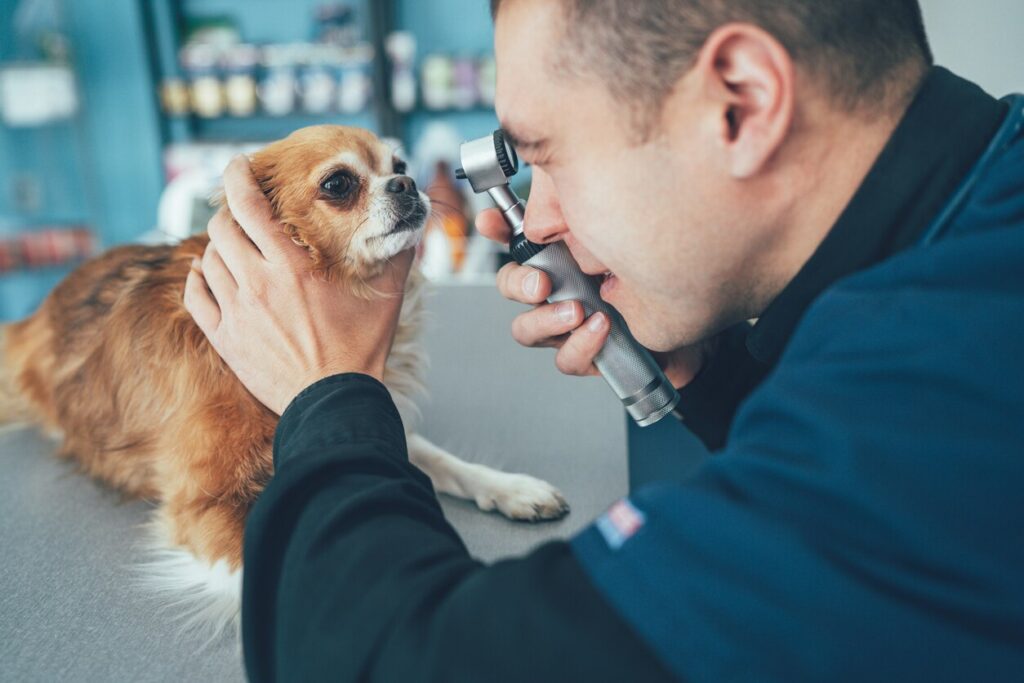
Your vet will examine your pet’s bulging eye and perform eye tests to determine the extent of the damage and other potential hidden injuries, depending on how the proptosis occurred. The examination will include checking light reflexes and eye pressure, as well as looking for signs of corneal injury.
If the proptosis resulted from a traumatic event, your vet may recommend additional diagnostic tests, such as X-rays of the skull and chest, blood work, CT scans or MRIs, to screen for potential serious related injuries.
Treatment
When considering the best course of action for proptosis, it’s important to factor in the prognosis. Dogs with a better prognosis for vision after surgery are short-nosed dogs with minimal trauma, dogs that have normal eye reflexes, and dogs that received immediate treatment.
There is a higher chance of chronic pain and blindness despite surgery if the dog has a ruptured eye, bleeding inside the eye, a rupture of three or more muscles that hold the eye in place, or nerve rupture. If your dog has these complications, your veterinarian may recommend surgically removing the eye.
Globe Replacement of Eye
When the veterinarian recommends replacement of the eye, the surgery is referred to as either globe replacement or temporary tarsorrhaphy. Depending on the surgeon’s choice, the dog will be fully anesthetized or heavily sedated during the surgery. The surgical site area is shaved and surgically prepped, and the eye is carefully repositioned back in the socket. The eyelids are then sutured together to secure the eye in its proper place.
Options for Eye Removal
In cases where the surgeon recommends removal of the eye, there are two options.
Enucleation
The first option is enucleation. Under anesthesia, the surgeon removes the eye and sutures the eyelid closed. This typically provides relief from pain very quickly after surgery. With this option, for the remainder of the dog’s life they will have the appearance of that eye being closed, and the area will look sunken.
Prosthetic Eye
If the pet parent prefers to have a prosthetic eye placed, a referral to a veterinary ophthalmologist is required. Under anesthesia, the veterinary ophthalmologist will remove the internal contents of the eye and place a prosthesis, which is a black ball, inside the shell of the remaining eye.
Although this artificial eye does not provide vision, there is still technically an eye and the eyelids can still open and close. The eye may look dark or cloudy after the procedure. While this procedure relieves the pain associated with proptosis, ongoing eye care, such as the use of eye drops, may be needed. Surgery would still be needed to properly position the artificial eye.
Recovery and Management
For both types of eye removal surgery, the surgeon may prescribe an anti-inflammatory pain reliever along with optional antibiotics. Also, make sure your dog wears an e-cone or recovery collar throughout the entire recovery period to prevent any disturbance of the delicate stitches while they heal. When taking your dog on walks in the future, make sure to use a harness rather than a collar to minimize the risk of proptosis recurring.
Following surgery, you may notice some swelling, bruising, and the seeping of red-tinged fluid at the incision site, which should decrease within a few days. However, if you see increased redness, swelling, bleeding, cloudy discharge, or more pain, reach out to your veterinarian.
Recovery for Eye Repositioning or Prosthesis Placement
If the eye was put back in place, replaced, your dog may need frequent eye drops, including drops to keep the eye dilated, antibiotic drops, and, if necessary, drops for glaucoma. Expect a recheck appointment in a few days and another one in two to three weeks to have the stitches removed.
Recovery for Enucleation
If the eye was removed, you won’t need to give any eye drops. Expect a recheck appointment in 10–14 days for the removal of stitches.
Prevention of Proptosis in Dogs
Pet parents of brachycephalic dogs need to be vigilant to prevent the following situations for their pets: accidents to the head, dog fights, and squeezing of the neck (such as scruffing, tight hugging, or the use of choke collars). These dogs should always wear a harness for walks, not a collar.
For all dogs, regardless of breed, pet parents should do their best to prevent dog fights, head or eye trauma, and excessive strain on a choke collar.
Proptosis in Dogs FAQs
Can a dog live with proptosis?
While a dog could survive with proptosis, the condition is extremely painful, and the dog’s quality of life would be poor.
Will a dog’s proptosis heal on its own?
Because the eyelids fold back and prevent the eye from going back into the socket, proptosis never heals on its own. A dog with proptosis needs surgery as quickly as possible to correct this condition.
Featured Image: iStock.com/filadendron
References
Ali KM, Mostafa AA. Clinical findings of traumatic proptosis in small-breed dogs and complications associated with globe replacement surgery. Open Veterinary Journal. 2019 Oct;9(3):222-229. Epub 2019 Aug 4. PMID: 31998615; PMCID: PMC6794399.
Foote BC, Sebbag L. Diagnosis and treatment of ocular proptosis in dogs and cats. Today’s Veterinary Practice. Jan/Feb 2019.
Michelle A Kutzler. Proptosis of the Globe. Cote's Clinical Veterinary Advisor: Dogs and Cats ebook. 4th Edition. Elsevier; 2019.