Dog Ear Infections


megaflopp/iStock / Getty Images Plus via Getty Images
Summary
Ear infections are one of the most common type of infections in dogs and typically affect the outer ear (otitis externa).
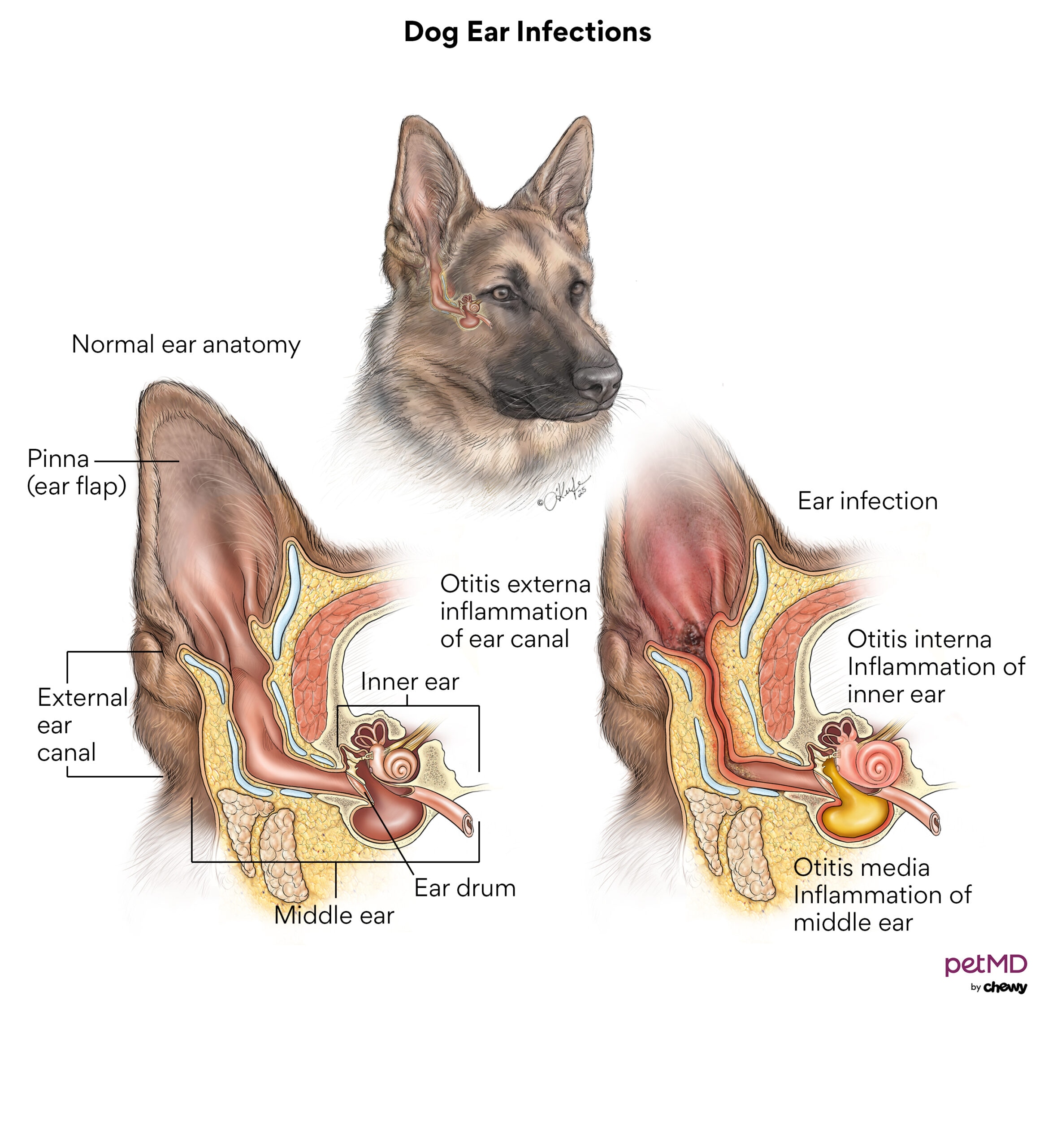
To download this medical illustration, click here.
It’s normal for small amounts of microscopic bacteria and yeast to live in a dog's outer ear canal, but when a buildup of debris occurs—or the normal, healthy ear canal is compromised—bacteria and yeast can overgrow and cause an infection.
Any dog can develop an ear infection, but the five breeds with the highest rate of ear infections are:
Symptoms
Common signs of dog ear infections include:
-
Redness
-
Odor (a yeasty, corn chip-like smell)
-
Itching/scratching at ears
-
Discharge
-
Scabs or crusting around the ear flap
-
Swelling of the ear flap (aural hematoma)
Dogs may also experience hearing loss or balance issues. Rarely, a dog ear infection may affect a pup’s appetite if your dog is having system-wide effects. Dogs may have an infection in one or both ears.
Types
The anatomy of a dog's ear starts outside the head and moves in as follows: Ear flap (pinnae), ear canal, ear drum, middle ear, inner ear.
Otitis is divided into three types based on the location of a dog’s ear infection:
- Otitis externa: inflammation of the ear canal
- Otitis media: inflammation of the middle ear
- Otitis interna: inflammation of the inner ear
Otitis externa is the most common dog ear infection, as this part of the ear is most exposed to the outside world. Ear infections can be acute (quick onset) or chronic (recurrent).

What’s the Difference Between a Dog Yeast Ear Infection vs. Bacterial Infection?
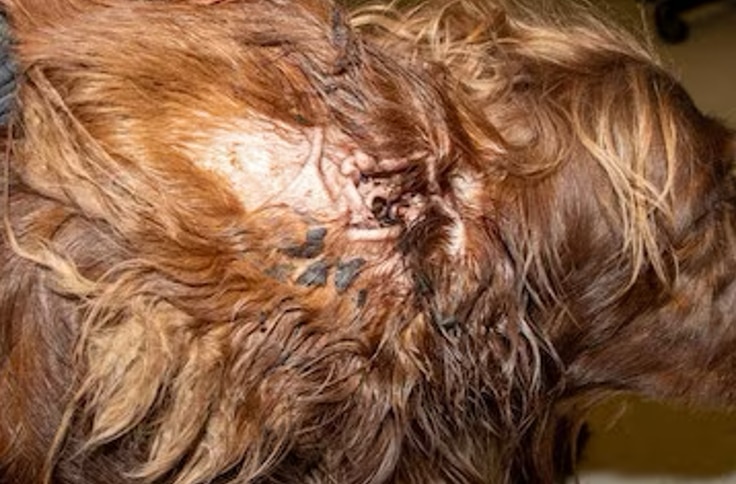
A yeast infection and a bacterial infection in dogs can look the same to the naked eye. To determine the difference, your veterinarian can take a sample of the ear discharge. When examined under the microscope, your vet can distinguish between a bacterial and yeast ear infection by the microbes they see.
Yeast ear infections tend to have a distinct odor and have a darker brown discharge. Bacterial ear infections are usually a lighter brown or yellow color. Most dogs have a yeast infection when they have an otitis externa. Infections of the middle and inner ear are usually bacterial.
Causes
Several factors can cause dog ear infections.
Often, an underlying problem causes the normal protective barrier in a dog’s ear to stop working properly. Once the ear becomes moist or inflamed, it's easy for bacteria or yeast to overgrow and cause an infection.
A few common causes of infection include:
-
Foreign bodies (such as grass awn or foxtails) that get into the ear
-
Endocrine issues such as hypothyroidism
-
Polyps (fleshy growths inside the ear canal)
-
Trauma to the ear
These issues can make the ear canal vulnerable to a bacterial infection and/or a yeast infection.
When a dog is in pain and scratching and shaking excessively, an aural hematoma can develop. This is seen in the earflap, where ruptured blood vessels leak blood that clots, causing swelling and pain.
Diagnosis
Your vet will need to test the ear debris or perform scans of your dog’s ear to choose the right treatment for your pup.
These tests may include:
-
Cytology: This test uses special stains on the swab of debris to color the microscopic bacterial cells or yeast. Viewing these under the microscope can identify the specific cause of infection.
-
Culture/sensitivity testing: This test uses special medium/broth to grow and identify the specific bacteria or yeast that are causing the infection. It also tests which medications will be effective in eliminating the infection.
-
Blood testing: This test may be needed to check for endocrine disease as an underlying condition.
-
Skull X-rays, CT scan, or MRI: These tests may be needed to assess the extent of severe or inner ear disease in your pup.
Treatment
Once the details of your dog’s ear infection are known, treatment will likely consist of multiple elements that may include topical, oral, or surgical therapies.
Topical
Depending on the infection’s type and severity, an ear cleaner may be recommended that could be medicated or non-medicated.
Typically, cleaning a dog's ears with an ear cleaner will be recommended every day or every other day while treating an ear infection. Ear medications are typically recommended once or twice a day for seven to 10 days, so it’s important to follow your veterinarian’s specific instructions.
Ear cleaner should be used before applying prescribed medications—you don’t want to clean out the medications.
Ear medications will likely come in the form of ear drops with an applicator. Depending on the type of ear infection, ear medications may be an antibiotic, anti-fungal, or both. Some medications also include topical steroids to help with the itch.
Ask your veterinarian if you should wait a certain length of time after cleaning to apply the ear drops.
Oral
Depending on the severity of your dog's ear infection, an oral antibiotic, antifungal, steroid, or anti-inflammatory medication may be used.
Surgical
Ears that have had severe chronic disease may no longer respond to medical treatments, often because the ear canal is scarred closed. The goal of surgery for these dogs is to open the ear canal or sometimes to completely remove all diseased tissue. This procedure is called a total ear canal ablation (TECA) and ventral bulla osteotomy (VBO).
Can You Treat Dog Ear Infections Without a Vet?
While there are no effective home remedies for dog ear infections, an over-the-counter medicated ear cleanser can help a mild infection. Veterinary treatment and prescription medication is often required to restore a healthy ear canal and treat a significant ear infection.
Recovery and Management
Most dogs recover uneventfully from ear infections. However, if your dog is having frequent or chronic ear infections, your vet will likely recommend additional testing to determine if there is an underlying cause.
Long-term management may include weekly preventative ear cleaning and/or a diet change, as food allergies can be an underlying cause of infections.
Prevention
Regular grooming, ear cleaning, and ear maintenance are important parts of pet care. Routine ear cleansing is especially important if your dog loves to swim.
Cleaning is best accomplished with a vet-approved ear cleaning product made specifically for pups. These typically have been specifically formulated for effective pH ranges for dogs and contain drying agents.
Dog Ear Infections FAQs
Can a dog ear infection heal itself?
Most often, a dog ear infection will not go away on its own. All types of otitis require a veterinarian to evaluate the infection and the eardrum.
If the eardrum is ruptured, certain cleaners and medications can be damaging to a dog's middle ear.
What happens if a dog’s ear infection goes untreated?
Untreated ear infections can result in damage to a dog’s hearing and ear. Ear infections can progress to systemic illness and cause additional symptoms such as not eating or lethargy.
Ear infections are painful for your pup. If you think your fur baby may have an ear infection, make an appointment to see the vet right away.
Can a dog ear infection spread to a pup’s brain?
It's extremely rare but possible for an ear infection to spread into the brain. Most ear infections in dogs are of the external ear—meaning in the area from the ear flap (pinnae) to the ear drum.
However, dogs can also get middle and inner ear infections, though less commonly. If a dog has a severe inner ear infection, it's possible that the infection could invade or extend into their brain.
Are dog ear infections contagious?
It depends on the cause, but most dog ear infections are not contagious.
However, if the cause is ear mites, these parasites are extremely contagious. With ear mites, all pets in the home must be treated simultaneously.
References
Top Dog and Cat Claims of 2018. Embrace Pet Insurance, www.embracepetinsurance.com/about-us/press-media/press-release-detail/2019/01/10/top-dog-and-cat-claims-of-2018.
Brooks, W. DVM, DABVP: 9/30/2020 (revised) 1/1/2001 (published). Veterinary Partner, Ear Infections (Otitis) in Dogs.
Rothrock K. DVM: 5/19/2019 (revised), Morgan, RV. DVM, DACVIM, DACVO: 7/19/2003 (initial author). Veterinary
Information Network, VINcyclopedia of Diseases: Otitis Externa, General Information.