Ascites in Dogs


What Is Ascites in Dogs?
Ascites, also known as an abdominal effusion or free abdominal fluid, is a serious, possibly life-threatening medical condition in which a dog’s abdomen fills up with fluid. The abdomen contains important organs such as the liver, pancreas, stomach, intestines, spleen, and urinary bladder, with little to no fluid surrounding them. When a dog has ascites, these organs are free-floating in the abdomen.
There are a wide variety of reasons why a dog would develop ascites, most of them related to major organ failure within the abdomen or from other areas of the body. Ascites is a secondary condition that develops from an underlying medical problem.
The amount and type of fluid that accumulates in the abdomen can vary depending on the underlying condition. With large amounts of fluid, the abdomen enlarges and pushes on the chest cavity. This can cause the lungs to not be able to expand fully, causing trouble breathing or even respiratory failure.
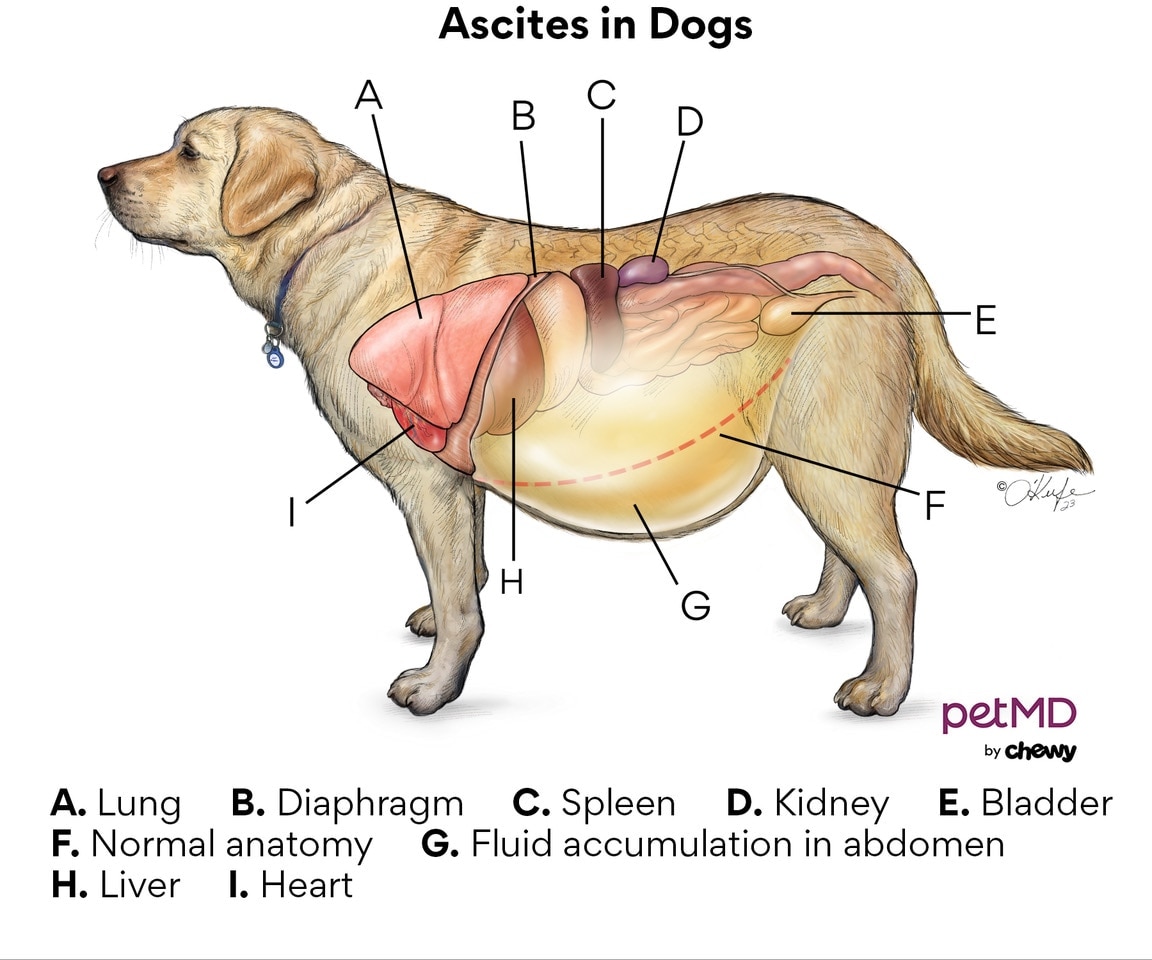
Click here to download this medical illustration.
Symptoms of Ascites in Dogs
When there are small amounts of fluid in the abdomen, the signs can be the same as with general , and at times can be mild. With larger amounts of fluid and more serious underlying causes, the symptoms can become more severe. Some include:
-
Decreased appetite or anorexia
-
Vomiting or retching
-
Diarrhea, increased or decreased frequency of bowel movements
-
Weakness
-
Distended abdomen
-
Weight gain
-
Restlessness
-
Excessive panting
-
Increased thirst, increased urination
-
Pain upon palpation of the abdomen
-
Vocalizing when laying down
-
Pale, blue, or purple gums
-
Fainting (syncope)
-
Coughing
-
Rapid, shallow breathing
-
Difficulty breathing (dyspnea)
Causes of Ascites in Dogs
Since ascites is an accumulation of fluid in the abdomen, it causes bloating. This secondary condition indicates a more serious primary cause, which should be examined by your veterinarian as soon as possible. Common primary conditions that cause ascites in dogs are:
-
Heart disease: right-sided heart disease (most common cause of free fluid in the abdomen of dogs), right-sided congestive heart failure, heartworm disease, dilated cardiomyopathy, and pulmonic stenosis.
-
Liver: chronic liver failure and hepatitis; portal hypertension
-
Proteins: low protein concentrations (decreased albumin); protein losing enteropathy (gastrointestinal protein loss) and protein losing nephropathy (kidney disease); nephrotic syndrome (kidney disease).
-
Trauma to a dog’s body: can cause organs to burst, leaking fluid into the abdomen; urine leaking from the bladder or urinary system causes a uroabdomen; and damage to the liver or spleen causes free-floating blood in the abdomen.
-
Peritonitis: this is an infection in the lining of the abdominal wall that can lead to free-floating fluid in the abdomen.
-
Poison: rat poison ingestion can cause a dog’s blood to clot improperly. This is another cause of free-floating blood in the abdomen.
-
Cancer: It causes free-floating fluid in the abdomen for a variety of reasons, from a ruptured organ, pressure on major blood vessels, or inflammation due to a tumor—all of which can cause blood or other bodily fluids to cause ascites.
How Veterinarians Diagnose Ascites in Dogs
If your dog has any abdominal enlargement or is showing signs associated with free-floating fluid in the abdomen, they should be examined by a veterinarian as soon as possible.
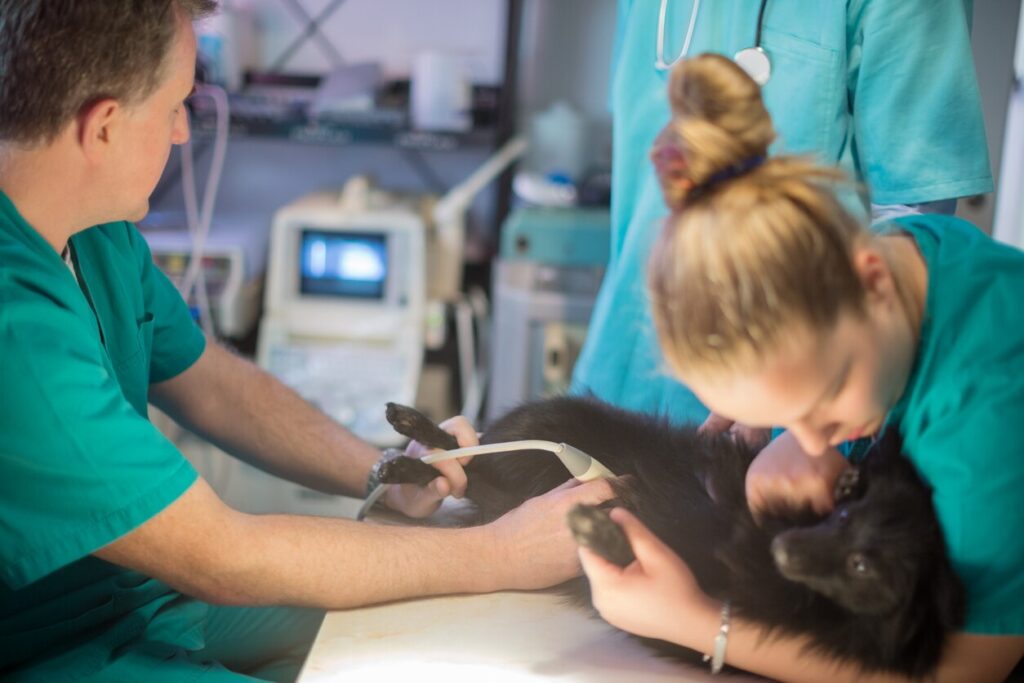
Your veterinarian will perform a complete physical examination of your dog. Ascites may be detectable on palpation (the process of feeling or touching) of the abdomen or with an abdominal ultrasound or x-rays.
The type of fluid in the abdomen depends on the underlying cause. If your dog is stable and not in any distress, your vet can take a sample of the fluid with a small needle passed through the abdominal wall. They will then look at the fluid under a microscope and try to determine what kind of fluid is present. This will help them target the possible primary medical condition causing the free-floating fluid in the abdomen. It is also important to run baseline lab work such as a complete blood count (CBC), chemistry panel, and urinalysis to evaluate your dog and help determine the underlying cause of the ascites
Treatment of Ascites in Dogs
Once your veterinarian has diagnosed your dog’s condition, often the first step in the treatment plan is to remove the fluid. This is not often a cure, as the fluid will likely build back up again, but it can help establish the cause of the ascites.
The treatment plan will remove the abnormal fluid and also address the underlying medical condition. Sometimes a surgical procedure is necessary to treat the primary cause, such as a tumor or damaged organs. Not all causes of free-floating fluid in the abdomen require surgery, but almost all dogs with ascites do need to be hospitalized while being treated.
Intravenous (IV) medications such as the diuretics furosemide and spironolactone are often given to help absorb some of the fluid. Diuretics are often most helpful when right-sided heart disease or heart failure is the cause of the ascites. With anemia and low protein levels, a blood or plasma transfusion is often necessary.
Medications to help with liver and kidney dysfunction are also important, if necessary. Your dog might require a special diet for the rest of their life, such as with protein loss from a gastrointestinal condition or right-sided heart disease.
Recovery and Management of Ascites in Dogs
Given the wide range of probable causes of ascites, a prognosis can only be made once an underlying diagnosis is determined. Surgery may be needed to manage some of the emergency causes of abdominal fluid. In other cases, the condition may be managed with medication. There are some conditions that cause ascites that are manageable or even curable.
Unfortunately, some conditions may not be treatable. Although ascites is not always caused by a life-threatening condition, it can often indicate a very poor outcome, especially in older dogs and those that may be diagnosed with cancer.
If your dog has a distended abdomen it should never be ignored, as it may be a sign of a serious disease. It is also crucial that you follow your veterinarian’s advice for a possible quick recovery.
Featured Image: iStock.com/zoranm


