Cardiac Arrest in Dogs: Causes and What To Do



Capuski/iStock / Getty Images Plus via Getty Images
Summary
Cardiac arrest in dogs, better known as cardiopulmonary arrest, is a failure of both the respiratory and circulatory (heart) systems. Breathing and normal blood flow stops, and a dog’s heart ceases to beat.
As a result, tissues and cells become deprived of oxygen, which leads to multiple organ failure and in some instances, the dog’s death. Cardiac arrest can occur in any age, breed, or sex of dog.
Cardiac arrest in dogs is the most significant kind of medical emergency and requires urgent veterinary intervention for any hope of survival.
Symptoms
The most notable symptom of cardiac arrest in dogs is a lack of heartbeat or pulse. Additional symptoms may include:
-
Unresponsiveness
-
Gums and skin look blue
-
Hypothermia, or cool to the touch
-
Changes in breathing rate, effort, rhythm, or simply not breathing at all
-
Dilated, fixed pupils
Causes
There are several causes of cardiac arrest in dogs. Some cases may go undiagnosed, especially if a post-mortem exam isn’t performed to find cause of death.
Some common causes include:
-
Heart disease, either from infection like heartworms, tumors, arrhythmias, or congestive heart failure
-
Electrolyte abnormalities—abnormalities of sodium, chloride, and potassium, often secondary to other diseases causing changes in fluid balance
-
Metabolic disease, such as kidney or liver failure, or diabetic ketoacidosis (DKA)
-
Respiratory disease
-
Hypothermia
-
Hypoxemia (low levels of oxygen in the blood)
-
Critical illness, such as end-stage cancer
Diagnosis
Cardiac arrest in dogs is easy to diagnose, even without specialized equipment. Physical examination of the heart and lungs will determine the lack of a heartbeat.
Veterinarians will often recommend additional diagnostics, such as pulse oximetry (saturation of oxygen in the blood), blood pressure, capnography (carbon dioxide measurement and ventilation status), and an EKG to further confirm the diagnosis.
Of course, if possible and appropriate, your veterinarian may suggest other testing, such as blood work, X-rays or ultrasound, urine testing, or toxicology panels to determine the underlying cause.
Pet parents should notify their veterinarian about any medication their dog is taking, any known trauma or toxins possibly ingested or exposed to, any underlying conditions, and previous diagnoses.
All this information is useful to determine the appropriate treatment measures, which could mean the difference between life and death.
Treatment
Cardiac arrest in dogs is life-threatening and requires immediate intensive hospitalization and support.
CPR needs to be performed immediately; think of the acronym CAB: C-chest compressions; A-airway; B-breathing.
Two types of CPR can be performed:
-
Open-chest CPR, where the chest is surgically cut open and the heart grasped and compressed. This method, when appropriate, tends to offer a limited, greater success rate and is only performed at a referral or specialty clinic, given the advanced skill and post-recovery care and cost.
-
Closed-chest CPR, more commonly performed, occurs with external cardiac massage through chest compressions.
Once compressions are started, the veterinary team will attempt to secure the airway by passing an endotracheal tube through the trachea (windpipe) so pure oxygen can be delivered.
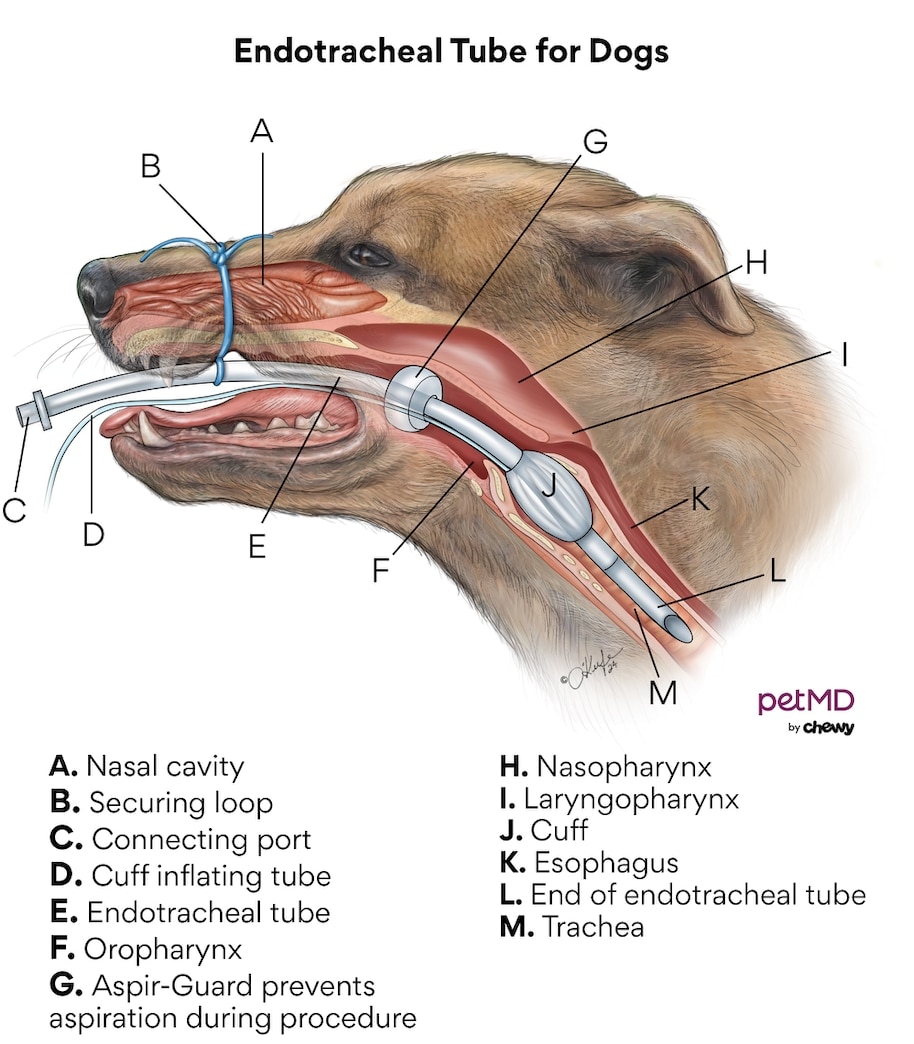
Then, an assistant mechanically breathes for the patient. Intravenous (IV) access is attempted, so that emergency drugs can be given to try to help a dog’s heart beat and increase their heart rate.
However, treatment of dogs with cardiac arrest may not be appropriate for every patient.
If there is a high likelihood for a poor quality of life after resuscitation or a significant debilitating disease process, a DNR (do not resuscitate) order can be given by the pet parent.
Speak with your veterinarian about the recommendation best suited for your dog.
Recovery and Management
Unfortunately, statistics are against a dog surviving a cardiac arrest event; only about 5% to 10% survive to go back home.
Dogs that do initially survive often (68%) experience re-arrest within hours, so your dog will need to be aggressively monitored and provided 24-hour cardiac and respiratory support—usually for several days.
Electrolyte abnormalities, pain, arrhythmias, blood pressure, and breathing are all issues that will need to be monitored and treated, as it’s likely there may be complications of cardiac arrest and CPR.
Additionally, your dog will need to be treated for any trauma sustained during CPR, such as broken ribs, hemorrhage (bleeding), and bruising, as well as treated for the underlying cause, if known.
Unfortunately, if your dog does survive, he may have irreversible and long-term complications, such as:
-
Kidney failure
Your dog may also have other issues, all attributed to the lack of oxygen (even for a few minutes) to those tissues.
Prevention
Unfortunately, cardiac arrest in dogs isn’t always preventable, even in a veterinary hospital. Being prepared for an emergency can certainly decrease stress and allow for quick- acting and potentially increased survival rates.
Have the phone number and address of a local veterinary hospital—along with a condensed copy of your dog’s medical records—nearby or stored on your phone. In the event of an actual arrest, chest compressions are the best thing you can do for your dog until you can get him to a veterinary ER.
Speak with your veterinarian or find local groups that train pet parents in this skill so you can be better prepared. Typically, you can find CPR training events listed on your town’s website or social media pages.
When admitted to the hospital, especially in an intensive care setting, have a designated CPR code (open-chest CPR, closed-chest CPR, DNR) for your dog.
Speak with your veterinarian now, prior to an emergency, about creating an individualized end of life care plan, which should include a CPR code.
Cardiac Arrest in Dogs FAQs
Can a dog be saved from cardiac arrest?
Yes, however, studies show that only about 5% to 10% of dogs will survive and be able to go home.
Dogs suffering from anesthetic-related cardiac arrest tend to have a better prognosis.
What does it mean when a dog goes into cardiac arrest?
Simply put, cardiac arrest means that the dog’s heart is in the process of stopping and needs immediate CPR. That's because when the heart ceases to beat, oxygen that is supplied by the lungs fails to circulate throughout the body, leading to the death of cells and tissues.
If your dog shows symptoms of distress or isn’t breathing properly, take him to the nearest veterinary hospital as soon as possible. Remember, time is critical.
References
Dazio V, Gay J, Hoehne S. Cardiopulmonary resuscitation outcomes of dogs and cats at a veterinary teaching hospital before and after publication of the RECOVER guidelines. Journal of Small Animal Practice. 2023;64(4), 270–279.
Hofmeister E, Brainard B, Egger C, Kang S. Prognostic indicators for dogs and cats with cardiopulmonary arrest treated by cardiopulmonary cerebral resuscitation at a university teaching hospital. Journal of the American Veterinary Medical Association. 2009;235(1), 50–57.
Kass P, Haskins S. Survival following cardiopulmonary resuscitation in dogs and cats. Journal of Veterinary Emergency and Critical Care. 1992;2(2), 57–65.
Wingfield WE, Van Pelt DR. Respiratory and cardiopulmonary arrest in dogs and cats: 265 cases (1986–1991). Journal of the American Veterinary Medical Association. 1992;200(12), 1993–1996.





