Mitral Valve Disease in Dogs: Signs, Causes, and Treatment
SPONSORED BY


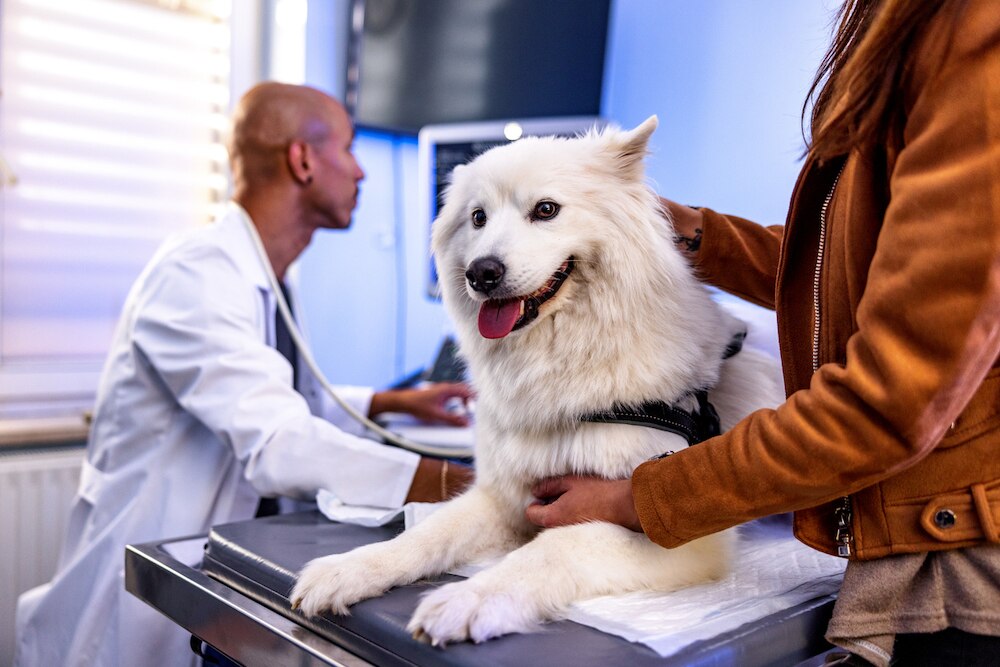
Mitral valve disease in dogs is a heart condition that commonly affects older small breeds. It develops when the heart’s mitral valve becomes thickened, weakened, or misshapen (usually due to age-related degeneration), causing blood to leak backward in the heart.
Dogs with mitral valve disease may show no outward symptoms at first. Typically, a heart murmur is the first sign in the early stages. If left untreated, canine mitral valve disease can progress to congestive heart failure, at which point, dogs would show symptoms like coughing, rapid breathing, and decreased appetite.
Early diagnosis and medication such as Vetmedin-CA1 can slow progression, and even advanced stages can often be managed to improve comfort and extend the dog’s life span.
Key Takeaways
- Mitral valve disease is the most common heart disease in dogs, particularly small dogs.
- It occurs when the heart’s mitral valve degenerates, causing blood to leak backward in the heart.
- Symptoms include coughing, difficulty breathing, and fatigue, but early stages can be asymptomatic and some dogs may never progress into heart failure.
- Early diagnosis and treatment can delay symptoms and increase survival time and maintain quality of life.
- If you have a high-risk dog, have your vet check for a heart murmur, which is often the first clue.
What Is Mitral Valve Disease in Dogs?
Generally speaking, mitral valve disease is when the mitral valve inside the heart doesn’t seal properly, allowing blood to leak through.
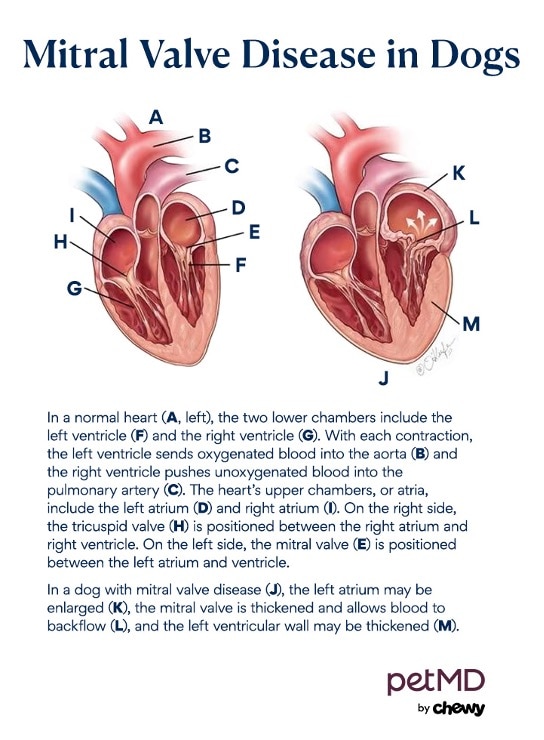
To understand mitral valve disease in dogs, think about the heart as a pump. The left side of the heart pumps freshly oxygenated blood from the lungs to the rest of the dog’s body. The mitral valve is a regulator of the blood flow between the two left chambers, the atrium and the ventricle.
When it is working correctly, the mitral valve prevents any backflow of blood from the ventricle back into the atrium when the heart muscle contracts.
With mitral valve disease, the valve does not function as well, and blood leaks in the wrong direction when the muscle contracts. A small amount of backflow is not an issue, but often, over time, the valve becomes thicker and stiffer, positioning itself in the wrong way (prolapse), and the volume of backflowing blood increases.
As a result, the heart becomes a less efficient pump. The heart muscle will try to compensate by getting thicker (hypertrophy), which increases the overall size of the heart.
In some dogs, mitral valve disease will progress enough so that fluid begins to accumulate in the lungs simply because the heart cannot keep up. Accumulation of the fluid in the lungs is known as pulmonary edema. Its presence indicates the dog is in congestive heart failure.
Two other names for mitral valve disease in dogs:
- Degenerative mitral valve disease
- Canine myxomatous mitral valve disease
Symptoms of Mitral Valve Disease in Dogs
Early in the disease, there will be no symptoms. In later stages, you may see:
- Exercise intolerance (tires easily or after little effort)
- Cough
- Rapid breathing – increased respiratory rate
- Increased effort in breathing
- Clear nasal discharge
- Unable to rest comfortably, moving around
- Decreased appetite
- Weakness or collapse/fainting (syncope)
Causes of Mitral Valve Disease in Dogs
The cause of mitral valve disease in dogs is unknown, though the disease has an inherited component in some breeds.
Mitral valve disease is the most common heart condition that occurs in dogs, especially smaller-breed dogs as they age. Research has shown that 85% of small-breed dogs will have mitral valve disease by the time they reach 13.
Mitral valve disease is likely to have a genetic component because it is seen frequently in Cavalier King Charles Spaniels, Dachshunds, Miniature Poodles, Toy Poodles, and many other breeds.
How Veterinarians Diagnose Valve Disease in Dogs
- A physical exam evaluates the heart for a murmur (an abnormal “swishing” sound), which is the earliest sign of mitral valve disease. Murmurs are detected and classified (graded) when your veterinarian listens to your dog’s chest with a stethoscope.
- Medical history is reviewed by your veterinarian to note any recent changes in breathing, cough, or differences in behavior that could indicate progressing mitral valve disease.
- Radiographs (X-rays of the chest) are performed to check heart size and shape, as well as evidence of fluid in the lungs.
- NT ProBNP testing (a cardiac biomarker) is done on blood samples to detect strain or abnormal stretch of the heart muscle. Elevations indicate that disease is present and severe enough to cause heart muscle changes.
- Echocardiograms (ultrasounds of the heart), usually done by a veterinary cardiologist, show the heart muscle and valves and measures heart function. They are considered the best way to diagnose mitral valve disease.
- ECGs (electrocardiograms) check for arrhythmias (abnormal electrical activity).
- Blood pressure measurement is done to check for high blood pressure.
- Complete blood counts, chemistry panels, and urinalysis are lab tests done to monitor health, organ function, and kidney values. These tests are especially important if dogs are taking medications or if there are issues with blood pressure.
Mitral Valve Disease Stages
Veterinary cardiologists have created a classification system to categorize the severity and to mark progression of the disease.
- Stage A: No disease or symptoms noted yet, but dogs in this group are at high risk of developing the disease (dogs of a small size typically under 44 pounds).
- Stage B1: Dogs in this stage have very minimal leakage of blood between the atrium and the ventricle (soft heart murmur), no enlargement of the heart muscle or very mild enlargement of the heart, and no symptoms.
- Stage B2: More leakage is present (moderate to loud heart murmur), the heart is abnormally distended and enlarged significantly, but no symptoms. This stage is usually when medication is prescribed.
- Stage C: In this stage, dogs have congestive heart failure, with symptoms, and require medications for treatment. Stage C pets are treated with standard medication doses, and depending on the severity, may require hospitalization with supplemental oxygen for initial treatment.
- Stage D: In this stage, dogs have congestive heart failure and are not responding to standard doses of the medications needed to treat them. Very aggressive doses of medications are used, but often there is limited response. Dogs in Stage D require hospitalization for oxygen support and IV medications to try to improve their condition.
Treatment of Mitral Valve Disease in Dogs
Treatment is dependent on the stage of disease progression. Dogs in Stages A or B1 require monitoring and no medication. Stages B2, C, and D require medication.
Medications:
- Vetmedin-CA1 (active ingredient pimobendan) is conditionally approved by the FDA for dogs with Stage B2 mitral valve disease, when the dog still does not have symptoms, to delay the onset and slow the progression of congestive heart failure. Studies have shown that Vetmedin-CA1 can extend dogs’ symptom-free days.
- Vetmedin (active ingredient pimobendan) is a medication used to improve the strength and function of heart muscle. It is FDA approved for dogs with symptoms of congestive heart failure.
- Furosemide and torsemide: These medications are diuretics, which remove fluid from the body and minimize the ongoing work and stress on the heart.
- Spironolactone: This is also a diuretic used to eliminate fluid. Spironolactone works in a different part of the kidney than furosemide, and they are often paired together in treatments to help maintain an electrolyte balance.
- Benazepril and enalapril are angiotensin-converting enzyme inhibitor (ACEI) medications. They protect the kidneys from some of the secondary effects of heart disease and also control high blood pressure.
Supportive care:
For dogs in acute congestive heart failure, hospitalization with supplemental oxygen and injectable medication is often needed to stabilize their condition.
Once they are stable on oral medication, they can be cared for at home by their families. It is very important that they are closely monitored. Supportive care typically includes:
- A nutritious diet specially formulated for heart health. Diets such as Hill’s Prescription Diet h/d Heart Care, Purina Pro Plan CC CardioCare, and Royal Canin Early Cardiac Veterinary Diet help protect the heart function and maintain the well-being of dogs in congestive heart failure. A veterinary cardiac diet helps maintain normal blood pressure, minimize fluid retention, replenish lost nutrients in dogs receiving diuretics, support liver and kidney function, and provide immune system support.
- Plenty of rest. Dogs should not overexercise, but if they have the energy, short walks and some playtime are fine.
- Unlimited access to drinking water and extra potty breaks. The diuretic medications will make them more thirsty than usual.
- Specially formulated dog treats. Therapeutic treats, including Hill's Prescription Diet Soft Baked Soft & Chewy Dog Treats and Hill's Prescription Diet Original Crunchy Dog Treats, are formulated for dogs with heart disease. Other treats and table foods should be avoided.
- Omega-3 fatty acids. There is evidence that supplemental omega-3 fatty acids are helpful for dogs with heart disease. Many veterinary diets have omega-3 fatty acids included, or your veterinarian can recommend an omega-3 dog supplement.
Why Early Treatment of Mitral Valve Disease Matters
Early detection and intervention in dogs with mitral valve disease is critical to delay the onset of symptoms, maintain quality of life, and increase survival time.
High-risk breeds should have routine veterinary examinations to detect a heart murmur as early as possible.
If a murmur is diagnosed, then your vet will perform an examination every six months to monitor the loudness (grade) of the murmur. Chest X-rays are used to determine the stage of mitral valve disease in the dog.
Even without outward signs of illness, dogs in earlier stages of mitral valve disease need checkups every six months and chest X-rays yearly.
Depending on your dog’s condition, your vet may prescribe Vetmedin-CA1 to help delay the onset of congestive heart failure. This medication must be given twice daily, even if your dog is not having symptoms, in order to delay progression into congestive heart failure.
Recovery and Management of Mitral Valve Disease
Mitral valve disease may or may not progress to the extent that it needs to be medically managed.
It is important that if a murmur is identified, it is monitored regularly by your veterinarian, with echocardiograms and additional recommendations if needed. This helps track disease progression and ensure treatment begins at the appropriate time to delay more serious symptoms.
New research is being conducted to explore how diet may help support dogs with heart disease. Dogs with heart disease need adequate protein in their diets and should not be obese, as this increases stress on the heart. Cardiac diets are often formulated with controlled sodium and added omega-3s, and may include nutrients such as medium-chain triglycerides (or MCTs, a nutrient sourced from vegetable oils that are digested rapidly to provide energy for the body), magnesium, and vitamin E are to support overall heart and muscle health.
While valve repair and replacement technologies are becoming more available, mitral valve disease generally is considered a managed disease, with monitoring and treatment done to prevent the dog’s condition from advancing to the next stage. The prognosis varies widely, and some dogs will remain in Stage B1 and their lifespan will not be shortened. Other dogs progress steadily into advanced stages.
Once a dog reaches Stage C (congestive heart failure), prognosis varies widely. With appropriate medications and monitoring, many dogs can enjoy a good quality of life for months to years, but some will progress more quickly. Your veterinarian’s goal is to adjust treatment over time to control symptoms and maintain quality of life for as long as possible.
Mitral Valve Disease in Dogs FAQs
How long do dogs live with mitral valve disease?
The majority of dogs with asymptomatic mitral valve disease (Stage B1 and B2) will live for one to five years or longer. Dogs who progress into congestive heart failure may live for another six to 14 months or longer.
Predicting an individual dog’s lifespan is difficult. It depends on how early the disease was diagnosed and how it responds to the medications and treatments. That’s why regular recheck appointments and tests are important.
How do you treat mitral valve disease in dogs?
Mitral valve disease in dogs is treated with either monitoring (in the earlier stages of the disease) or medications and supportive care (in the moderate or advanced stages of the disease).
How much does it cost to treat mitral valve disease in dogs?
The cost of treatment of mitral valve disease in dogs is highly specific to your dog and depends on your dog’s health status, the stage of disease they are currently in, and their individual medical needs. If your dog is on heart medications, the cost of treatment can vary between $100–300 monthly depending on your dog’s weight and the dosage required, with additional costs for diagnostic testing, emergencies, and follow-up vet visits.
References
Keene BW, Atkins CE, Bonagura JD, et al. ACVIM consensus guidelines for the diagnosis and treatment of myxomatous mitral valve disease in dogs. J Vet Intern Med. 2019 Apr;33(3):1127-1140
Boswood A, Gordon SG, Häggström J, et al. Effect of Pimobendan in Dogs with Preclinical Myxomatous Mitral Valve Disease and Cardiomegaly: The EPIC Study-A Randomized Clinical Trial. J Vet Intern Med. 2016 Nov;30(6):1765-1779.
Kittleson, Mark D., DVM, PhD, DACVIM-Cardiology. Myxomatous Atrioventricular Valve Degeneration in Dogs and Cats. Merck Veterinary Manual. Revised Jan 2023. Modified May 2025.
De Madron, Eric, King, Jonathan N., et al. Survival and echocardiographic data in dogs with congestive heart failure caused by mitral valve disease and treated by multiple drugs: A retrospective study of 21 cases. Can Vet J. 2011 Nov;52(11):1219–1225.


