Catahoula Leopard Dog



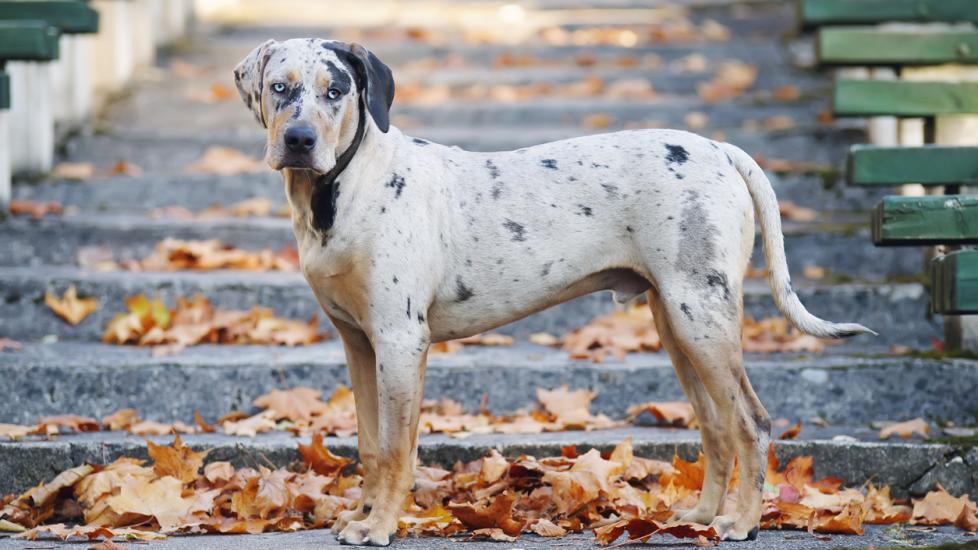
The Catahoula Leopard Dog is named for a Choctaw Nation word meaning “sacred lake” and originated in Louisiana near Catahoula Lake. These pups, who are also called Catahoula Hog Dogs and Catahoula Curs, were bred as working dogs to track and drive hogs and cattle from Southern swamps. Their hardworking and independent nature is still present today.
Catahoulas are striking-looking dogs, often with brindle or merle coats and bright blue eyes. They have a muscular build, with adults standing 22–24 inches and weighing 50–95 pounds. While their size and independent nature means they need lots of guidance and training from their pet parents, Catahoula Leopard Dogs can make loving and loyal companions.
Caring for a Catahoula Leopard Dog

Catahoula Leopard Dogs have been bred to be hard workers, enduring the swamps and forests of the South for their stock work. This means that when they’re not working, Catahoulas have high energy needs that must be met.
Catahoulas are best in homes with ample space and fenced yards to allow for lots—lots—of exercise. If their energy needs are not met, they can become destructive, digging and chewing to keep themselves busy. But while pet parents will spend a lot of time keeping their Catahoula Leopard Dog’s paws moving, grooming this shorthaired breed is relatively hands-off.
Catahoula Leopard Dog Health Issues
The majority of Catahoula Leopard Dogs are healthy. But, as with all dog breeds, certain health issues have been known to occur.
Hip Dysplasia
Hip dysplasia is when the bones of the hip joint don’t properly align. This causes rubbing and grinding of the bones that, over time, results in joint deterioration and loss of function. Hip dysplasia can be a hereditary condition that affects Catahoula Dogs, but it can also be exacerbated by other factors such as exercise habits, weight, and nutrition. These conditions can be diagnosed with X-rays, and treatment varies depending on severity.
Deafness
Congenital sensorineural deafness is an inherited condition that causes deafness in dogs. Affected Catahoula Leopard Dog puppies are born with it, though deafness may not be apparent until later in life.
The cause of this disorder is not completely understood, but there is a correlation between the dog’s coat color and deafness. Catahoula Leopard Dogs with mostly white fur may be more likely to inherit the disorder.
There is currently no treatment available for this disease, and reputable breeders will screen for this in their lineage. While deafness does not directly affect a dog’s quality of life, deaf Catahoula Leopard Dogs can be challenging to train and require an experienced home.
Eye Problems
Catahoula Leopard Dogs can be predisposed to eye conditions. Like their propensity for deafness, their eye problems can also be correlated to the color of their coat. Notably, merle dogs can inherit conditions such as:
-
Microphthalmia (a condition where the eye is smaller than it should be)
-
Blindness
What To Feed a Catahoula Leopard Dog
Selecting the best diet for a Catahoula Leopard Dog comes down to the needs of the individual dog. While it’s always important to select a diet with high-quality ingredients that’s approved by the Association of American Feed Control Officials (AAFCO), it’s best to discuss diet with your dog’s veterinarian, as they can make recommendations based on your pup’s specific medical history.
In general, Catahoula Dogs do well on a large-breed diet that’s appropriate for their current life stage (puppy, adult, or senior).
How To Feed a Catahoula Leopard Dog
Most Catahoula Leopard Dogs do not require any special feeding instructions. Typically, feeding two meals—in the morning and evening—is good for this breed. Catahoula Leopard Dog puppies should be fed more frequently, up to four times a day on a set schedule. A working Catahoula Dog may require a diet with a higher fat/protein ratio.
How Much Should You Feed a Catahoula Leopard Dog?
It’s important to follow the feeding guide provided by your specific dog food so your Catahoula receives the appropriate essential daily nutrients. Your vet can provide further guidance to keep your pet at a healthy weight.
Nutritional Tips for Catahoula Leopard Dogs
For Catahoula Dogs that have hip dysplasia, joint supplements containing glucosamine and chondroitin can help keep their joints healthy. Additionally, omega-3 supplements can both protect joint health and help keep their skin and coat healthy.
Behavior and Training Tips for Catahoula Leopard Dogs
Catahoula Leopard Dog Personality and Temperament
As working dogs, Catahoula Leopard Dogs have abundant energy stores. If they are not working, they require at least one or two hours of exercise every day—which should not be limited to walking. Running, fetching, or dog sports such as agility are great ways to exercise a Catahoula Dog’s mind and body. A Catahoula Dog that is not given the exercise it needs will often become destructive.
Because of their history, it might be challenging to introduce a Catahoula to another pet. That said, some can do well in a home with other dogs and cats if they’ve been raised with them. Their loyalty to their family makes them great family dogs, especially in homes with older children who understand how to interact with dogs. But smaller children may be accidentally knocked down or stepped on by this rambunctious breed, so always supervise interactions between kids and Catahoula Leopard Dogs.
Catahoula Leopard Dog Behavior
Their instinct for independence can make Catahoulas wary of unfamiliar people or animals, so early training and socialization are essential. While Catahoula Leopard Dogs don’t tend to bark, they can be known to dig and chew when bored and therefore need ample time to play, ideally in a securely fenced-in yard.
Catahoula Leopard Dog Training
Catahoula Leopard Dogs were bred for their independence and ability to work in tough conditions. As free-thinkers, training can be challenging; however, as with all breeds, consistency paired with positive reinforcement provides the best outcomes.
Along with training, Catahoula puppies need early and consistent socialization to as many different people, places, and animals as possible. This is crucial for helping them learn that new experiences aren’t something to be suspicious of.
Fun Activities for Catahoula Leopard Dogs
Catahoula Leopard Dog Grooming Guide
Catahoula Leopard Dogs are low-maintenance when it comes to grooming because of their short and shiny coat. Those coats do shed, but weekly brushing can help keep the fur off your clothes and furniture.
Skin Care
Skin care for a Catahoula Leopard Dog can vary from dog to dog. That said, this breed does not typically have sensitive skin. Bathing is necessary only every few months, to help keep their skin healthy and coat shiny.
Coat Care
Catahoula Leopard Dogs have a short, smooth coat that sheds moderately. Weekly brushing can help to reduce the amount of flying fur.
Eye Care
Some Catahoula Leopard Dogs can develop tear stains. To take care of this, gently rub your dog’s eyes routinely with a damp cloth or dog-safe wipe.
Ear Care
To maintain healthy ear canals and prevent infections, pet parents need to clean their dog’s ears. This should be done with a veterinarian-approved ear cleanser any time a Catahoula Leopard Dog has been in water, such as after swimming or a bath.
Considerations for Pet Parents
A Catahoula may not be a great match for first-time pet parents, but they can thrive in homes with a family that can meet their physical and mental needs. The Catahoula Leopard Dog is a very intelligent and loyal dog, but their high energy means they need a family with an active lifestyle. A bored Catahoula Dog will be a destructive Catahoula Dog.
Their energy, size, and playful temperament make them a good match with older children, and they’re eager companions for any outdoor adventure. Once they’re tired, Catahoula Leopard Dogs love nothing more than to hang out with their people.
Catahoula Leopard Dog FAQs
How long do Catahoula Leopard Dogs live?
Catahoula Leopard Dogs have an average lifespan of 10–14 years.
Is a Catahoula Leopard Dog a good family pet?
Catahoula Leopard Dogs make loving companions for active families who can exercise this high-energy pup for at least an hour per day. But take note: While Catahoulas are gentle with children, they might be too energetic for babies and toddlers.
What was the Catahoula Leopard Dog bred for?
The Catahoula Leopard Dog was bred to track and flush wild hogs from Southern swamps and forests. They are the only dog breed to originate in Louisiana and are recognized as the Louisiana State Dog.
What is the price of a Catahoula Leopard Dog?
A Catahoula Leopard Dog can cost $600–$900 from a reputable breeder.