Cat Dieting: How to Help Your Cat Lose Weight



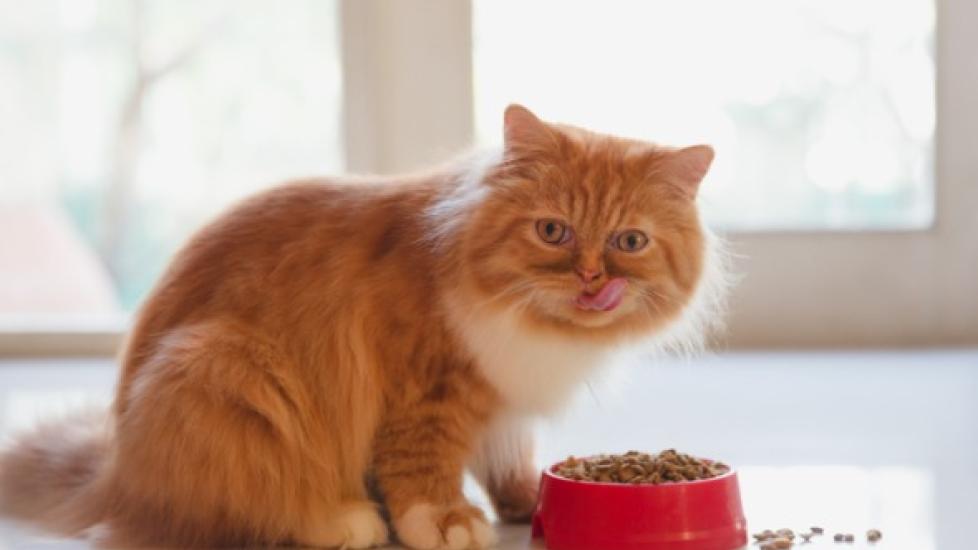
Prior to starting your cat’s weight loss journey, talk to your veterinarian about how to do this safely. Cat dieting is not as simple as restricting food, and rapid weight loss can be very dangerous. Any cat weight loss plan should be a collaboration between you and your vet.
Here are a few ways that you can help your cat lose weight and maintain a healthy lifestyle.
How to Help Your Cat Lose Weight Safely
First, speak with your veterinarian before putting your cat on a diet. They will help you establish a cat dieting plan that supports gradual, healthy weight loss without restricting food intake too drastically.
Severe cat food restriction and rapid weight loss can actually make your pet very sick, causing a serious disease in cats called hepatic lipidosis, or fatty liver disease.
Calculating Your Cat’s Body Condition Score
The ideal weight for a cat is determined by their body condition score. This is an objective measurement of your cat’s body composition based on the visibility of their ribs, presence of a “waist,” and how easily their vertebrae can be felt.
Once a body condition score has been assigned, your veterinarian can help you establish your pet’s target weight and daily calorie intake goal using the following formula for resting energy requirement (RER):
70 x (body weight in kg)0.75=RER
How Much Weight Should a Cat Lose Each Week?
Cats should not lose more than 1-2% of their total body weight per week.
By reducing their calorie intake to 80% of their RER, you should see a weekly weight loss rate of 1-2% (this may vary slightly depending on the individual cat).
Your veterinarian can help you figure out all of these calculations for calorie intake and weight loss, plus portion sizes. Weigh your pet weekly to ensure that your cat is on track with your vet’s plan. If your cat’s weight loss is greater than 2% per week, increase their calorie consumption by 10% with the help of your vet. If the weight loss is less than 1% per week, reduce their calorie consumption by 5-10%.
If at any point your cat stops eating, please have them examined by your veterinarian.
3 Methods for Helping Your Cat Lose Weight
Here are a few tips for supporting your cat’s weight loss goals in a safe and controlled way.
Cat Weight Loss Food
Your vet can help you determine the right food, portions, and feeding schedule for your cat.
Most cat weight loss diets will be a combination of either:
High fiber/low fat—A higher fiber content can support satiety and increase bulk, allowing your cat to consume more and feel fuller.
High protein/low carbohydrate—This diet can delay stomach emptying, which also leaves your pet feeling fuller.
The higher water content in wet food can help with weight loss by increasing the volume of food without increasing the calorie count.
Exercise
Calorie restriction is important for weight loss, but increasing your cat’s activity level also plays a role.
You can support your cat’s weight loss through exercise by:
- Scheduling playtimes (laser pointers or wand toys)
- Adding vertical spaces for jumping (cat trees or cat shelves)
- Giving your cat puzzle toys (treat balls or puzzle feeders)
Automatic Feeders and Treat Balls
Using an automatic feeder can help get your pet get accustomed to scheduled meals. This can help with weight loss and long-term weight management.
Using treat balls or food puzzle toys to dispense your cat’s meal can also help slow down your cat’s eating while providing stimulation and exercise.
Featured Image: iStock.com/pat138241