Broken Bones in Cats: Signs, Treatment, and Recovery



dardespot/E+ via Getty Images
Broken bones in cats can happen in the blink of an eye—from a fall from the top of the fridge, being hit by a car, or even a rough landing during playtime.
Cats are such stoic animals that it might not be evident right away if your cat has a broken leg or your cat's front paw is broken. Recognizing the signs of broken bones in cats and seeking prompt veterinary attention can make a big difference in their recovery and long-term prognosis.
Key Takeaways
- Broken bones in cats can result from falls, trauma, or accidents and may not always be obvious.
- Signs include limping, swelling, behavior changes, vocalizing, and decreased appetite.
- Prompt veterinary care—often involving splints, surgery, or strict rest—is essential for proper healing.
Can Cats Break Their Bones?
Yes! Cats can break their bones.
Bones in cats are structurally similar to those in humans. They provide support for body movement and protect internal structures like organs. Bones also contain marrow, where new red and white blood cells are created.
Although cats are usually graceful animals, they don’t always land on their feet and as a result may break a bone.
Most Common Types of Bones Breaks in Cats
Cats can break any bone. The most common bone breaks include:
-
Fractures of the femur (thigh bones)
-
Tibia (shinbone)
-
Pelvis
-
Jawbone
-
Paw
Breaks are generally classified by type of bone, area of bone, severity (how many bone pieces broken), and pattern (angle) of fracture.
Health Tools
Get quick answers with our vet-created Symptom Checker
Symptoms of Broken Bones in Cats
Cats are good at concealing their pain.
This can make it difficult to care for a sick or injured cat. Most cats that have broken bones show at least subtle signs of discomfort.
Some of the symptoms to look out for are:
-
Vocalization. This includes crying, grunting, increased meowing, or growling.
-
Change in movement. Cats who aren’t walking as much or at all, not putting weight on a specific limb, not flicking their tail, or are holding their tail limply.
-
Change in behavior. This includes not wanting to jump, stretch, or scratch as they normally do; not grooming themselves, or growling and hissing when petted
-
Decreased appetite. Cats who avoid food may have a broken jaw or are experiencing pain when getting to their food bowl.
-
Swelling.
What To Do if Your Cat Breaks a Bone
If you suspect your cat has a broken bone, make sure that you are safe when interacting with them.
No matter how gentle your cat normally is, cats may bite and lash out when in pain.
Severe breaks and injuries can cause your cat to go into shock. If your cat is experiencing the following symptoms, take them to the emergency vet immediately:
-
Severe pain
Cover any area that is bleeding or where there’s visible bone with a clean cloth. Wrap your cat carefully in a towel or blanket and take them for treatment.
Don’t try to set any broken bones yourself. Bones should be disturbed as little as possible until your cat is examined by their vet.
Keep all other pets and children away from your injured cat.
How Veterinarians Treat Broken Bones in Cats
How broken bones in cats are treated depends on which bone is fractured, its location on the bone, and the type of fracture present.
Other factors include your cat’s age, weight, and overall health, how old the injury is, and if other injuries are present.
Veterinarians treat broken bones in cats using the following methods:
-
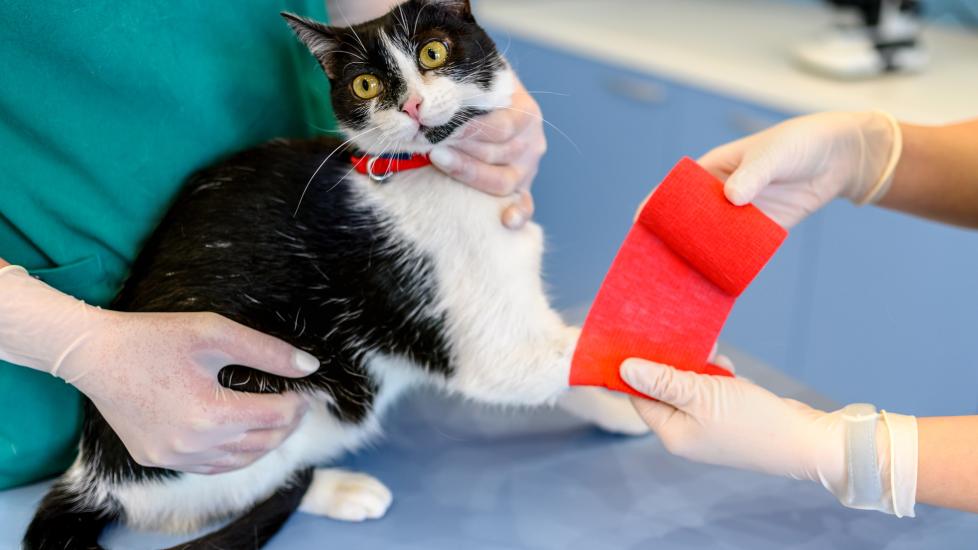
Splints/casts are used to stabilize certain fractures where the joints above and below the fracture can be immobilized. Splints and casts require frequent bandage changes by your veterinarian.
-
Surgery may be needed to realign bones. Rods, plates, screws, or wires are used to stabilize the fracture or hold misplaced bones in a stable position. All open fractures, where the broken bone is visible through a wound, require surgical repair.
-
Amputation may be considered with very severe fractures. It may be recommended as the fastest way to get your pet healthy and pain-free. Fortunately, most cats do well with amputation of a limb or tail and return to normal faster than those that had stabilization surgery.
-
Crate/cage rest is needed for some simple fractures, where the bones are still normally aligned. These can be treated by severely restricting movement. This option can have side effects, which your veterinarian can explain to you. Cage rest is also a very important step of recovering from orthopedic surgery in cats.
If surgical correction or amputation is needed to treat your cat, you may be referred to a veterinary surgeon.
Recovery and Management of Broken Bones in Cats
Regardless of the type of repair or treatment, your cat will need rest following a fracture.
Your veterinarian will tell you the length and kind of rest your pet will need.
It’s typically recommended that you remove toys, cat trees, and other items that encourage movement until your cat is cleared for normal activity by your vet.
Cats with a broken bone usually also need pain and anti-inflammatory medication (such as Onsior, buprenorphine, and gabapentin) while they recuperate at home, and open fractures generally also require treatment with antibiotics.
If your cat has a cast or splint, keep the bandage material clean and dry.
Splints also require regular bandage changes; but if it becomes wet or dirty, it should be changed sooner.
Bandage changes must be done by your veterinarian—the process can be painful for your cat and sedation may be needed.
Cats that have had bone surgery and those that have casts or splints will most likely be given a recovery collar to prevent them from chewing on their stitches or bandages.
Broken bones in cats typically heal in six to 12 weeks depending on the type of fracture, its location, your cat’s age and health, and the treatment rendered.
Cats that are older, are overweight or obese, have other medical issues such as diabetes or heart disease, or have complex fractures usually take longer to heal.
Your veterinarian will recommend periodic X-rays to monitor the healing process.
Broken Bones in Cats FAQs
How long do cat bones take to heal?
Broken bones in cats can take anywhere from six to 12 weeks to fully heal.
The degree of the broken bone, its location, your cats age and health status and the amount of movement are all things that affect how long it can take to heal a cats broken bone.
Do cats' broken bones heal on their own?
Cats are incredible healers and while not recommended, they can heal from a minor bone break on their own.
Stable fractures (without movement or hairline fractures) and those that are small and do not majorly affect a cat’s mobility might heal on their own.
How much does a broken bone cost for a cat?
Depending on the type of correction your cats broken bone needs, the cost can vary greatly.
Surgical correction is much more expensive (thousands) while bandaging or splinting might cost less initially; the cost does add up over time when going for routine bandage changes and X-rays (hundreds to thousands).
Can I treat a cat's broken bone at home?
A cat’s broken bone should never be treated at home.
A broken bone should always be assessed by your cat’s veterinarian to determine how to manage their pain and prognosis successfully.