Demodectic Mange in Cats (Demodex Mites)


What Is Demodectic Mange in Cats?
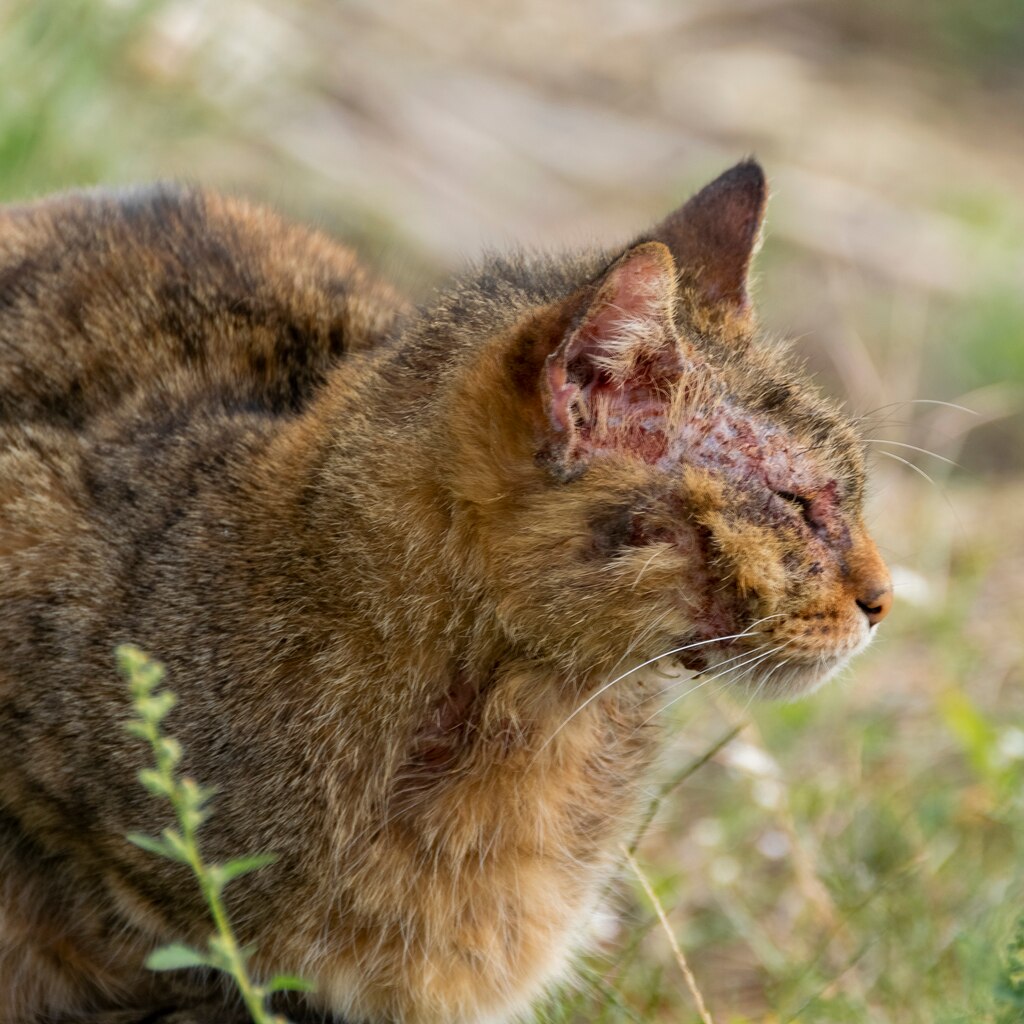
Demodicosis, or demodectic mange, is an inflammatory skin disease in cats that can cause itching, excessive ear debris, headshaking, sores, and hair loss.
It is caused by various types of microscopic Demodex mites that can infect your cat’s skin. There are three types of Demodex mites that affect cats: Demodex gatoi, Demodex cati, and a rare species of Demodex that is not named.
Demodex mites can also affect other animals in your house, but the mites are species specific. This means that Demodex mites that affect your dog can’t transfer to cats and vice versa.
Causes of Demodectic Mange in Cats
Demodectic mange is caused by these three types of Demodex mites:
-
Demodex gatoi. This type is usually seen in healthy cats. They live in the top layer of skin and are contagious to other cats.
-
Demodex cati. These mites usually occur in cats that have a suppressed immune system because of an underlying disease or condition. They can be found in hair follicles and sometimes in the ear canals of affected cats.
-
A rare and unnamed species of Demodex. This type of Demodex is very rare, but it has been associated with underlying disease. These mites can also be found in hair follicles.
Symptoms of Demodectic Mange in Cats
Symptoms that are seen depend upon the species of the mite on your cat.
Demodex Gatoi Symptoms
The most common symptom of Demodex gatoi is itching/overgrooming, which may lead to hair loss and skin scaling. You may also see crusts and sores on your cat as a result of too much licking and scratching.
Demodex Cati Symptoms
Skin issues from Demodex cati can be confined to one area, or they may be spread all over your cat’s body. Common skin issues include redness, scaling, crusting, and hair loss. The itching may be mild to severe. In some cats, excessive ear debris and ear irritation/headshaking may be the only symptoms.
Diagnosis of Demodectic Mange in Cats
The diagnosis of demodectic mange involves testing for mites and other steps depending on the findings and the type of mite.
Demodex Gatoi
Demodex gatoi can be diagnosed by using skin scrapings or tape to collect skin and debris that can be examined under a microscope. Fecal testing to look for mites or eggs may also be useful.
However, Demodex gatoi can be extremely hard to find. If your vet suspects an infection, but can’t locate the actual mites, they may recommend going ahead with treatment. A positive response to treatment would confirm the diagnosis.
Demodex Cati
Demodex cati is generally easy to find on deep skin scrapings, which are examined using a microscope. The mites may also be found on ear swabs that are examined under a microscope.
Cats with Demodex cati often have underlying diseases that suppress the immune system. This can include feline viral diseases (FeLV, FIV), cancer, diabetes, or toxoplasmosis. In these cases, your vet should run further diagnostics to determine an underlying cause.
Treatment of Demodectic Mange in Cats
All species of Demodex mites should respond to the same treatments. Products that are generally effective for the treatment of Demodex in cats include 2% lime sulfur dips weekly for several weeks or at least two applications of Bravecto® or Revolution Plus®. No product is specifically licensed for the treatment of Demodex in cats, but the flea medications are effective.
Because Demodex gatoi is contagious to other cats, all cats that have been exposed to an affected cat should be treated.
Recovery and Management of Demodectic Mange in Cats
Treatments are generally successful at eliminating Demodex gatoi mites, but the itching may persist for several weeks after the mites are dead.
Your cat’s response to treatment for Demodex cati depends upon identifying and treating any underlying disease that is suppressing your cat’s immune system.
Demodex mites cannot survive in the environment, so environmental treatment is not necessary. These mites are not contagious to humans or dogs.
Featured Image: iStock.com/Alikaj2582


