Cat Tooth Abscess


What Is a Cat Tooth Abscess?
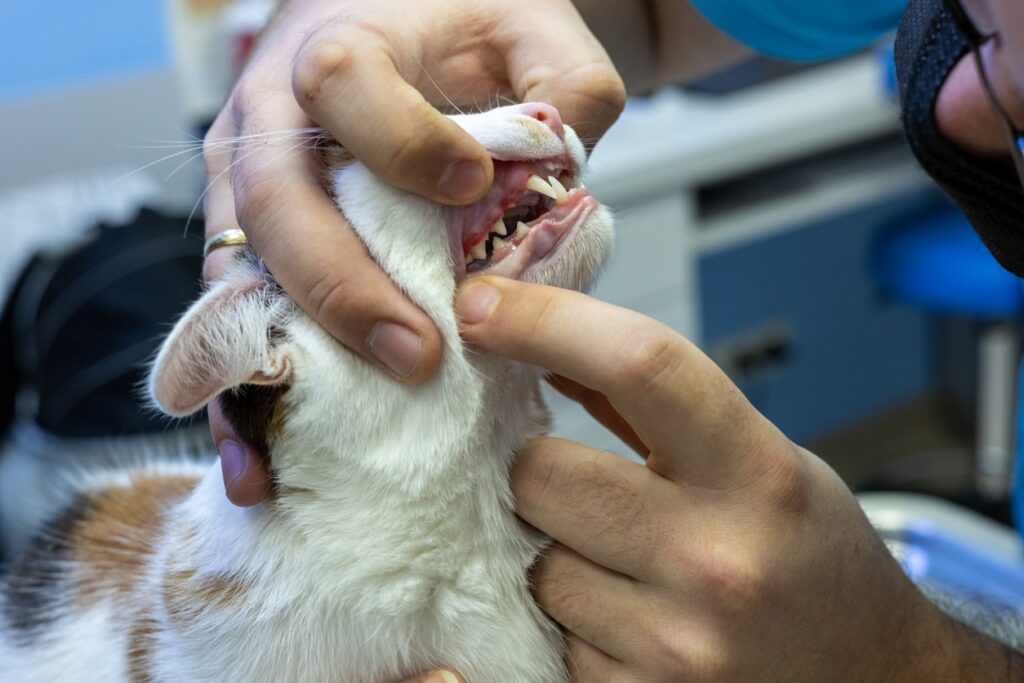
A cat tooth abscess is an inflammatory reaction to infection from a dead tooth. This infection around the root of the tooth leads to destruction of the bone. The painful bony infection and inflammation can spread to the soft tissues of the face and create a swelling of the cheek or chin. The swelling may break open, and blood-tinged liquid or pus may drain out.
Here are some definitions that can help you understand what your vet has to say about cat tooth abscess:
-
Abscess: an area of inflamed and infected tissue, usually due to a bacterial infection
-
Pulp: the collection of nerves, blood vessels, and soft tissue that live inside a tooth
-
Tooth root apex: the end of a tooth root that connects the pulp’s nerves and blood vessels to the rest of the body
-
Canine tooth: the larger, sharper tooth in the front of the mouth that is used for grabbing and biting. Though the name may make you think of dogs, cats have four canine teeth.
Symptoms of a Cat Tooth Abscess
Many cats with fractured teeth have no obvious symptoms and fractured teeth are found in a routine veterinary exam.
The following symptoms may occur for a cat with a tooth abscess:
-
Facial swelling
-
Dropping of food while eating
-
Difficulty picking up food
-
Preferring soft food over kibble
Causes of Cat Tooth Abscesses
The most common cause of a tooth abscess is a fractured tooth. When a tooth breaks and the pulp is exposed, it becomes inflamed and dies due to an invasion of bacteria from the mouth. While it is true that not all fractured teeth lead to abscesses, they all require treatment from your vet.
Teeth have an enamel covering on the outside that acts as a hard shield to protect the pulp. Cat enamel is very thin, only 0.1-0.3mm thick—much thinner than humans. Any fracture of a tooth is likely to cause exposure of the tooth pulp. Canine teeth are the most commonly fractured in cats.
How Veterinarians Diagnose a Cat Tooth Abscess
Your vet may suspect a cat tooth abscess if there is a fractured tooth, facial swelling, or a draining sore on the gumline. To make the diagnosis, the vet will put your cat under anesthesia to perform a tooth-by-tooth exam of the whole mouth and take X-rays of each tooth above and below the gumline.
Technically, sampling the tissue around the root is the only way to confirm a tooth abscess. But dental X-rays combined with the tooth exam allow your veterinarian to evaluate the mouth and make a diagnosis.4
In the end, all fractured teeth are dead and require treatment by your vet to prevent an abscess from forming and your cat from being in pain.
Treatment for Cat Tooth Abscesses
Treatment for a cat tooth abscess with depend on the diagnosis. The most common treatment for this condition will be tooth extraction. Tooth extraction will most likely include:
-
Pain medications to relieve your cat’s pain while waiting for tooth extraction
-
Antibiotics to treat the infection
-
Extraction with anesthesia and a local nerve block to numb the area, with stitches to hold the site together while the gum heals
Recovery and Management of Cat Tooth Abscesses
After anesthesia for extraction of the infected tooth, your cat will be on soft, canned food for about 14 days. This is to prevent hard food from disrupting the stitches during the healing period. You will need to keep toys, hard treats, and other chew objects away from your cat during this time to prevent healing complications.
The best way to prevent future abscesses is to have your cat’s mouth evaluated under anesthesia with a tooth-by tooth-oral exam and full mouth dental X-rays every year or as directed by your vet.5 Since cats don’t generally let us know when their mouth hurts, this allows your veterinarian to work with you to make sure your cat isn’t hiding any potentially painful areas. Young cats with fractured canine teeth can be treated with root canal therapy to maintain the structure and use of the tooth.
Other diseases that can affect cats and cause oral pain include
-
Tooth resorption
-
Gingivitis
-
Periodontal disease
These are all more common in older cats and are also diagnosed with dental X-rays and an oral exam under anesthesia.
Cat Tooth Abscess FAQs
How do I know if my cat has a tooth abscess?
If your cat has a tooth abscess, you may notice a swelling suddenly developing on her cheeks or chin. These swellings can drain blood-tinged or pus-like fluids.
Can a cat tooth abscess heal on its own?
Unfortunately, a cat tooth abscess cannot heal until the dead tooth is removed by your vet.
How can I treat cat tooth abscess at home?
A tooth abscess requires veterinary care and cannot be treated at home. Your vet may prescribe antibiotics and pain medication to keep your cat comfortable before the tooth is pulled, but that procedure will need to be done in the vet’s office under anesthesia.
References
1. Thorne S, Johnston N, Adams VJ. Successful Use of MTA Fillapex as a Sealant for Feline Root Canal Therapy of 50 Canines in 37 Cats. J Vet Dent. 2020;37(2):77-87.
2. Crossley DA. Tooth Enamel Thickness in the Mature Dentition of Domestic Dogs and Cats—Preliminary Study. J Vet Dent. 1995;12(3):111-113.
3. Soukup JW, Mulherin BL, Snyder CJ. Prevalence and nature of dentoalveolar injuries among patients with maxillofacial fractures. J Small Anim Pract. 2013;54(1):9-14.
4. Lobprise HB, Dodd JR. Wiggs’s Veterinary Dentistry: Principles and Practice. Second edition. John Wiley & Sons, Inc; 2019.
5. Bellows J, Berg ML, Dennis S, et al. 2019 AAHA Dental Care Guidelines for Dogs and Cats*. J Am Anim Hosp Assoc. 2019;55(2):49-69.
Featured Image: iStock.com/Andrzej Rostek


