Cat Mouth Ulcers: Symptoms, Causes, and Treatment


SbytovaMN/iStock/Getty Images Plus via Getty Images
Cat mouth ulcers are small sores on the gums, inside of the cheek, lips, throat, palate or tongue.
Cat mouth sores are painful and can lead to drooling and decreased appetite. Sometimes affected cats will have terrible breath or have odd tongue movements.
Let’s explore some common causes of mouth ulcers in cats and what can be done about it.
Key Takeaways
- Cat mouth ulcers are painful lesions inside the mouth that can cause drooling, bad breath, and difficulty eating.
- Common causes include dental disease, viral infections, allergies, and autoimmune or metabolic conditions.
- Treatment depends on the cause and may include dental care, medications, or even full-mouth tooth extractions in severe cases.
Summary
A cat mouth ulcer is a break in the skin or mucous membrane (lining), with eventual loss and death of the tissue.
Often, a cat mouth ulcer appears as a highly inflamed, erosive (loss of tissue), reddish lesion.
In cats, oral ulcers—or ulcers that affect any of the lined surfaces of the mouth such as gums, palate, tongue, lips, inner cheeks, or pharynx—are a common medical condition with various causes, some of which are not well understood. These can cause significant pain for your cat.
If your cat has stopped eating because of their mouth ulcers, this is considered a medical emergency. Seek emergency veterinary care immediately.
Types of Mouth Ulcers in Cats
Some of the most common mouth ulcers in cats include:
-
Viral ulcers. Some viruses, like calicivirus, will cause painful ulcers in the mouth.
-
Uremic ulcers. These ulcers occur due to a buildup of uremic acid and are seen in some cats with kidney failure.
-
Rodent ulcers. Also known as eosinophilic granuloma complex, this type of ulcer arises due to an underlying allergy.
-
Kissing ulcers. Stomatitis is an inflammatory condition triggered by plaque, also called feline chronic gingivostomatitis (FCGS), and leads to painful lesions inside the mouth.
-
Chemical/toxin ulcers. Exposure to certain toxins, like eating plants that have calcium oxalate crystals, can lead to ulceration of the tissue in the mouth. Pothos, philodendron, and dieffenbachia are common culprits for this type of ulcer.
-
Neoplastic ulcers. Some cancers, like squamous cell carcinoma, can lead to an initial ulceration inside the mouth before it progresses to a tumor-like tissue.
Health Tools
Get quick answers with our vet-created Symptom Checker
Symptoms
Symptoms of cat mouth ulcers include:
-
Reluctance to eat or dropping of food
-
Pawing at the mouth or rubbing face on the floor
-
Unkempt hair coat due to lack of grooming
-
Swollen gums
-
Excessive drooling or blood-tinged saliva
-
Pain or aggression when pet parent tries to open or close the mouth
Causes
The most common cause of cat mouth ulcers is periodontal disease or related conditions, such as tooth root abscesses, cysts, and stomatitis.
Other causes, though less frequent, include:
-
Infections such as herpesvirus, calicivirus, feline leukemia virus (FeLV), or feline immunodeficiency virus (FIV)
-
Inflammatory and allergic conditions, such as eosinophilic granuloma complex
-
Metabolic diseases, such as kidney disease/uremia
-
Toxins/chemical agents, including certain kinds of plants
-
Burns (electrical and thermal)
-
Radiation therapy
-
Trauma and foreign bodies
Diagnosis
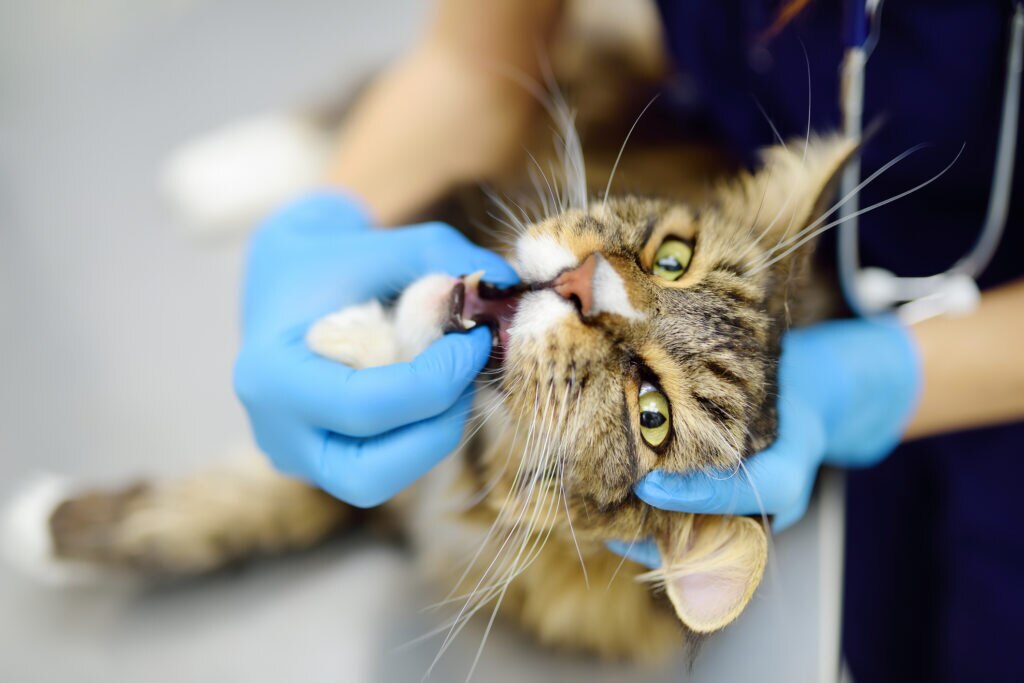
To diagnose cat mouth ulcers, your vet will look for symptoms and perform a physical exam.
Your vet will look inside your cat’s mouth for any sores. Sometimes, a cat’s pain is extreme enough that they won’t allow a good oral exam.
Mild sedation may be necessary to be able to look in the back of the mouth.
The underlying cause may not be easy to find, and additional tests may be needed to reach a diagnosis, including:
-
Blood work (CBC, internal organ function, and FeLV/FIV screening)
-
Dental cleaning and oral radiographs (X-rays) performed under anesthesia
-
Biopsies, in which a piece of the ulcerative tissue is surgically removed and sent for evaluation
-
Cultures
-
Viral PCR testing
Treatment
Treatment for cat mouth ulcers often depends on the underlying cause.
-
For periodontal disease and its associated complications, vets will recommend a thorough and professional anesthetic dental cleaning and radiographs.
-
For cats suffering from stomatitis, they will most often require tooth extraction, and in some cases will require extraction of all teeth.
-
For cats unable to undergo anesthesia or have teeth extracted, medical management can temporarily alleviate symptoms. However, this will not cure the condition, and the cat will continue to suffer long-term.
-
Medications that may be prescribed include:
- Antibiotics, such as Clavamox, clindamycin, or metronidazole
-
Steroids, such as prednisolone
-
Immunosuppressive drugs, such as cyclosporine
-
Immune modulators, such as interferon
Because cat mouth ulcers are painful, pain medication—like gabapentin or Onsior—may be prescribed at the onset of treatment.
For severe cases, a feeding tube may need to be surgically placed and maintained until your cat is feeling well enough to eat on their own.
At home, dental care is highly encouraged for long-term management. Optimal cat dental care includes:
-
Daily brushing
-
Antiseptic rinses or gels, such as Vetoquinol Dentahex Dog & Cat Dental Rinse
-
Dental diets, like Hills t/d Dental Care diet
Speak with your veterinarian about the best option for your cat.
Additionally, for those cats who have allergies (including eosinophilic granuloma complex), your veterinarian will most likely prescribe a change of diet, such as a novel protein diet or a hydrolyzed diet, where the protein is broken down into smaller molecules that are less likely to trigger an immune response.
Keeping your cat on strict flea and tick prevention will also be recommended, as well as allergy testing.
Recovery and Management
Many pets affected by cat mouth ulcers can go on to live normal lives once the underlying condition is resolved and/or managed.
Most commonly, a few weeks is all cats need to get better. Just because they developed ulcers in the past doesn’t necessarily mean they are prone to getting them again.
A small percentage of cats suffering from stomatitis may require long-term intervention with medications, even after full-mouth extractions.
Cats that have or are predisposed to allergies will often be managed long-term with medications and directions to adhere to a veterinary diet, like Royal Canin Hydrolyzed Protein diet.
Mouth Ulcers in Cats FAQs
What are home remedies for cat mouth sores?
Wet food can be helpful for cats suffering from oral ulcers to avoid anything hard scraping the sensitive tissue.
What do ulcers look like in a cat's mouth?
Ulcers look like red, inflamed sores inside the mouth.
Are cat mouth ulcers contagious?
Mouth ulcers are generally not considered contagious, however there are some viruses that are contagious, like feline calicivirus, that can lead to ulcers in the mouth.
Calicivirus can readily be spread from cat to cat, but it’s not contagious to humans.
How can pet parents prevent mouth ulcers in cats?
Routine dental care, vaccination, and annual lab work is the best way to prevent mouth ulcers in cats.
Are mouth ulcers painful for cats?
Yes, mouth ulcers are painful for cats.


