Hookworms in Cats



The following may contain Chewy links. PetMD is operated by Chewy.
What Are Hookworms in Cats?
Hookworms are one type of intestinal parasite that can affect cats and kittens. Their name comes from their hook-like mouth parts that anchor them into the wall of the intestines, allowing them to feed on fluids and blood from their host to get nutrients.
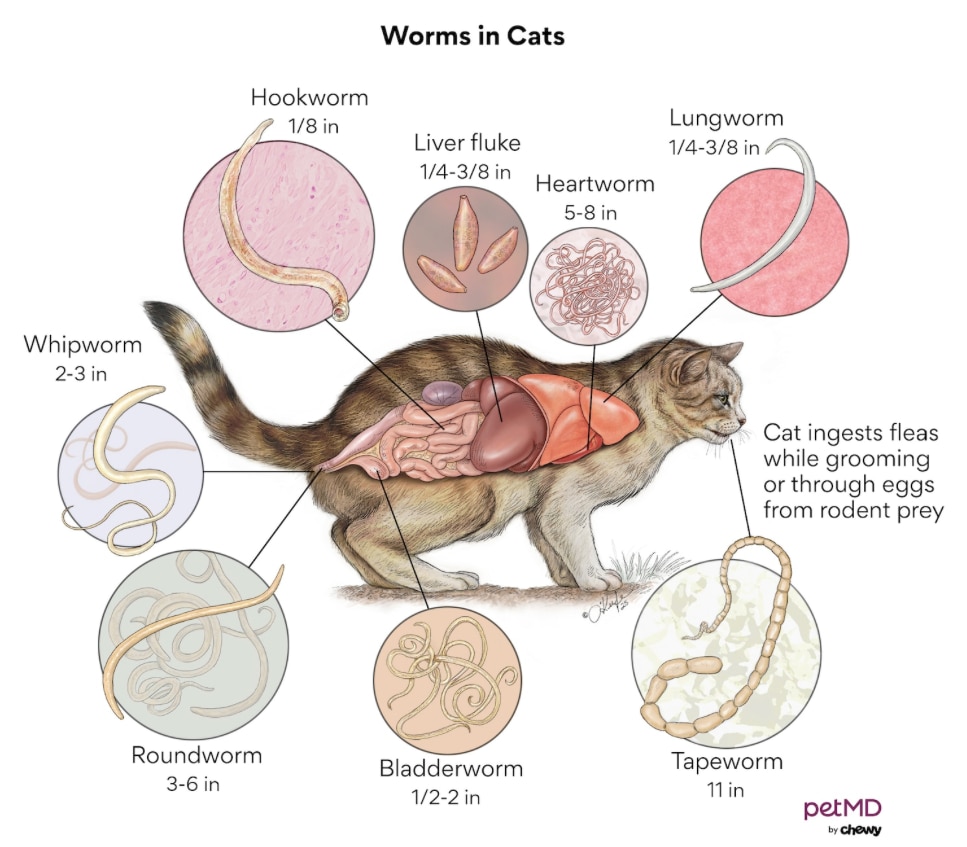
Click here to download this medical illustration.
These parasites cause damage to the areas of the intestines where they feed, and they can release a blood thinning compound that causes bleeding into the gastrointestinal tract.
Symptoms of Hookworms in Cats
There are several possible symptoms of hookworm infection, including anemia, digested blood in the stool (black tarry stool), weight loss, and poor hair coat quality. Cats can experience blood loss due to hookworm feeding. This can lead to anemia, which is more common in kittens than in adult cats.
Hookworms are very small compared with some other types of intestinal parasites. They are barely visible to the naked eye, so they are not typically seen in stool. Proper fecal testing is needed to diagnose this issue and properly treat it.
Causes of Hookworms in Cats
Cats can get hookworms in many ways, including:
-
Ingestion: Cats can get hookworms by eating vertebrates, such as rodents, or by eating cockroaches that are carrying hookworm larvae. Kittens can get hookworms through their mother’s milk as well.
-
Larvae (eggs) picked up in the soil: Hookworm larvae hatch and can stay alive in the ground for several weeks or even months. When a cat ingests these immature hookworms—sometimes by licking their feet after walking outside—most larvae move to the intestinal tract and stay there.
-
Larvae burrowing into cat’s skin: Once they burrow through the skin, they migrate to the lungs and trachea, where they are coughed up and swallowed.
Hookworms are more common in warm, moist environments, as well as environments with overcrowding and poor sanitation.
How Veterinarians Diagnose Hookworms in Cats
When your veterinarian checks your feline friend for hookworms, a stool sample is needed. This can be collected at the clinic, but it is less stressful for your kitty if you bring a sample with you from home. Your veterinarian has fecal collection cups available to help you collect a sample.
Once they have the sample at the clinic, hookworms can be diagnosed via a fecal flotation. This is a test oftentimes performed in the clinic, but it can also be sent out to a reference lab. Fecal flotation involves the stool being mixed in a special solution, sitting for about 10 minutes, and then being examined under the microscope. This leads to diagnosis via microscopic examination of the feces.
Treatment of Hookworms in Cats
Treatment for hookworms is generally safe and inexpensive. There are several potential treatment options for feline hookworms, using the following medications that may be prescribed by your vet:
-
Moxidectin
Two treatments of the medication prescribed by your veterinarian, given 2-3 weeks apart, are generally required since the medications will not kill larvae. The second treatment is needed to kill any larvae that transformed into adult parasites during that time.
Recovery and Management of Hookworms in Cats
After the second dose of dewormer, recovery is rather quick and prognosis is good for full recovery from hookworm infection. While your pet is being treated for hookworms, please continue to promptly remove all feces from the litter box or yard and wash your hands after handling feces. During this time, feces can still pass hookworms on to other pets in the environment.
Prevention of Hookworms in Cats
Several measures should be taken to prevent infection or reinfection of hookworms in cats. As kittens, it is ideal for them to be treated with a veterinary-approved and prescribed dewormer by 2-3 weeks of age.
It is important to keep all cats on monthly preventatives, no matter whether they are indoors only, have access to a porch, or have full access to the outdoors. Even with indoor cats, there is a risk of hookworm infection.
Hygiene is a very important factor in hookworm control and prevention. Cat feces should be promptly and appropriately disposed of, and always wash your hands after handling cat feces. It is important to promptly treat any diagnosed worms as soon as they are detected.
Hookworms in Cats FAQs
Can indoor cats still get hookworms?
Yes. Indoor cats can be exposed to carriers such as rodents or cockroaches. It is also possible for people to track parasites inside on their shoes or belongings.
Can cats transfer hookworms to humans?
Yes, via their feces. Children should not be allowed to play in potentially contaminated areas, such as non-covered sandboxes or beaches, since cats can use these areas as their own personal litter box. While feline hookworms may not affect humans internally, they can cause a disease called cutaneous larva migrans, a migration of hookworms into the skin of humans.
References
-
Brooks, W. Hookworms in Cats and Dogs. Veterinary Partner. March 2021.
-
Ward, E, Panning, A. Hookworm Infection in Cats. VCA Animal Hospitals.
Featured Image: iStock.com/Vacharapong Wongsalab