Progressive Retinal Atrophy (PRA) in Cats



What Is Progressive Retinal Atrophy (PRA) in Cats?
Progressive Retinal Atrophy (PRA) is a genetic disorder of the retina that can, over time, lead to blindness in both eyes.
Considered rare in cats, PRA affects the retina which converts light to electrical and chemical signals. These signals are transmitted through the optical nerve to the brain to form pictures. The retina is composed of specialized photoreceptor cells called rods and cones. Rods function better in dim lighting and help detect motion and shapes, while cones work better in bright light and have a greater sensitivity to detect colors.
Types of PRA in Cats
Progressive Retinal Atrophy is a general term for several inherited disorders affecting the retina. However, the disorders can be grouped into two main types. The types differ in when PRA develops and whether the inherited gene is recessive (requiring a recessive gene from each parent) or dominant (only one gene is required).
- Photoreceptor degeneration. Photoreceptor cells gradually deteriorate, with symptoms developing around three to five years of age. This type is recessively inherited and plays a role in rod development.
- Photoreceptor dysplasia. This form is only seen in Abyssinian cats, occurring when photoreceptor cells do not develop properly early in a kitten’s life. Symptoms develop early, with blindness within a few months of birth. This type has a dominant mode of inheritance.
Symptoms of Progressive Retinal Atrophy (PRA) in Cats
Most cats will begin to experience night blindness initially, because the condition affects the rod photoreceptor cells first. Vision loss will gradually worsen over the months and years. PRA affects both eyes.
Other symptoms you may notice include:
- Disorientation and bumping into objects
- Difficulty finding food and water bowls, or toys
- Reluctance to go up or down stairs, or enter a dark room
- Reclusive at night
- Dilated pupils
- Sluggish pupillary light reflexes, as well as diminished or loss of other eye-related reflexes
- Greater reflectiveness (sheen) of the eye
- Cataracts, which often manifest as white-opaque crystalline deposits in the eyes, occur usually as a secondary complication
Causes of Progressive Retinal Atrophy (PRA) in Cats
PRA is an inherited condition, meaning one or both parents have a gene that causes the condition. Abyssinians are the breed most often associated with PRA. Other breeds predisposed to PRA include:
Males and females are equally affected, and because this condition is inherited, it is most noticeable in kittens and younger cats.
How Veterinarians Diagnose Progressive Retinal Atrophy (PRA) in Cats
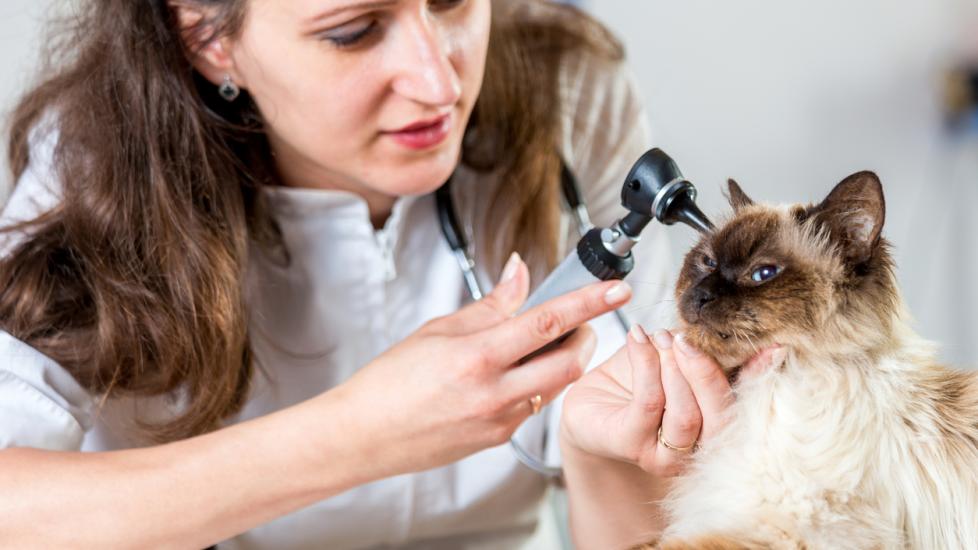
Your veterinarian may initially suspect PRA during a routine eye exam, especially in kittens because there are notable changes in the appearance of the retina. Diminished or absent eye reflexes may be noted as well, but they may not always show up in the earlier stages of the disease, and a referral to a veterinary ophthalmologist may be necessary.
The ophthalmologist often will evaluate the eye with specialized lenses and may recommend a more advanced procedure called electroretinography (ERG), in which electrical signals are measured against the retina and recorded. This test can determine if the retina is functioning properly.
Other tests such as blood work, urine testing, blood pressure analysis, testing for feline leukemia virus (FeLV) and feline immunodeficiency virus (FIV), and taurine blood levels may be recommended. The results from these tests not only provide a baseline but can also help exclude other conditions that also cause blindness.
Additionally, there are genetic/DNA tests available which can identify carrier animals so breeders can make well-informed ethical breeding decisions. Affected cats should not be bred.
Treatment of Progressive Retinal Atrophy (PRA) in Cats
Although no effective treatment or cure exists, it does not cause pain. No medications or supportive care, other than some environmental modifications, are required and it does not require future follow-up visits.
Over time, your cat will become blind, and if you notice your pet bumping into objects or seems to be disoriented, reach out to your veterinarian for advice on how to manage this new development.
Recovery and Management of Progressive Retinal Atrophy (PRA) in Cats
Most cats adapt well to this condition because the loss of vision is progressive, and cats have time to adapt and learn to rely on their other senses. The key to managing this condition is ensuring a safe home environment:
-
Minimize relocating furniture
-
Block off access to the stairs, pools, etc.
-
Keep the floor free from clutter
-
Keep your cat indoors
-
Apply padding to sharp edges and corners
Be sure to get your cat’s attention prior to approaching or petting her to prevent startling her. Voice commands can be useful when navigating around the home.
Proper diet is important, as well as including the amino acid taurine in their diet. This ingredient can be helpful in preventing retinal disease. Most commercially prepared diets have enough taurine already included. Be sure to look for diets that are AAFCO approved or ask your veterinarian for recommendations.
Progressive Retinal Atrophy (PRA) in Cats FAQs
How common is PRA in cats?
Thankfully, PRA is an uncommon condition in cats, but purebreds are at a higher risk especially Abyssinians. Responsible breeding can play a role in reducing this disease in the cat population.
What causes PRA in cats?
PRA is an inherited condition. The defect is attributed to either the CRX or CEP290 genes, which play a role in proper retina function, as the retina of the eye converts light into electrical impulses which further creates vision.
Can PRA be cured in cats?
Unfortunately, there is neither a treatment nor cure for this condition, but it does not cause the cat pain. Cats can adapt to their blindness and can continue to have a good quality of life.
Featured Image: iStock.com/Mordolff
References
Hyungchul Rah, David J Maggs Thomas N Blankenship, Kristina Narfstrom, Leslie A Lyons. Early-onset, autosomal recessive, progressive retinal atrophy in Persian cats. Investigative Ophthalmology and Visual Science. 2005; 46(5): 1742-7. doi:https://doi.org/10.1167/iovs.04-1019.
Narfstrom, Kristina. Progressive retinal atrophy in the Abyssinian cat. Investigative Ophthalmology and Visual Science. 1985; 26(2): 193-200.